
Geoglossaceae
Geoglossaceae
Geoglossaceae is a family of sac fungi within the order Geoglossales. It is crucial to clarify that these fungi are not plant pathogens and do not cause diseases in agricultural crops.
What the section contains
Geoglossaceae
These organisms are predominantly saprotrophic, meaning they derive nutrients from decaying organic matter rather than living plant tissues.
They inhabit the soil and leaf litter, playing an essential role in the decomposition process and the cycling of nutrients within the ecosystem.
The mycelium of these fungi explores the soil structure, contributing to the breakdown of complex organic compounds into simpler forms.
Because they do not colonize or feed on living plants, they are classified as beneficial or neutral organisms in the context of agronomy.
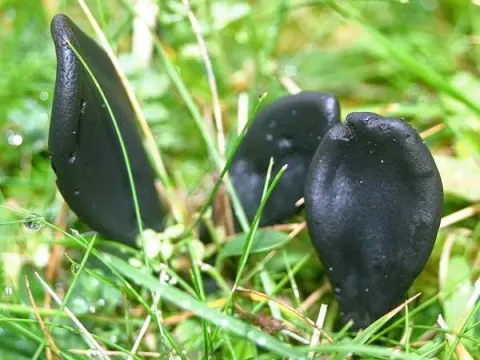
The primary visual sign of these fungi is the emergence of their characteristic fruit bodies, commonly referred to as "earth tongues."
The fruit bodies are typically club-shaped, spatula-shaped, or tongue-shaped, which distinguishes them from other soil-dwelling organisms.
Their color palette ranges from brownish-black to jet-black, making them distinct when emerging from mossy or grassy ground.
They are relatively small, often ranging from 2 to 10 centimeters in height, and tend to grow in isolated groups or small clusters.
Unlike parasitic fungi, they do not produce spots, lesions, blight, or any other form of tissue damage on crops or garden plants.
Geoglossaceae development is highly dependent on moist conditions and the presence of rich organic substrate in the soil.
They thrive in undisturbed habitats, such as damp meadows, grasslands, and forest edges where the soil structure remains intact.
Optimal conditions for fruiting typically occur during cooler periods with high humidity, often in late summer or autumn.
Soil compaction and high levels of agrochemical inputs negatively affect their population, as they require a stable soil microbiome.
They are sensitive to environmental changes and are often considered indicators of undisturbed, healthy soil ecosystems.
There is no evidence that Geoglossaceae pose any threat to crops, vegetables, or ornamental plants, as they are not parasitic.
Their biological function involves the decomposition of dead plant material, which supports long-term soil fertility and health.
They do not compete with crops for nutrients in a way that would inhibit growth or result in yield loss.
Farmers do not need to implement any eradication strategies, as these fungi do not cause economic damage.
Their presence is a sign of ecological diversity rather than a symptom of agricultural disease or field infestation.
No control or protection measures are required against Geoglossaceae because they do not damage plant health.
To support a healthy soil ecosystem, it is advisable to maintain organic matter levels and avoid unnecessary heavy fungicide application.
Integrated pest management strategies should focus on pathogenic fungi while preserving the beneficial saprotrophic fungal diversity.
If these mushrooms are observed in a field, it indicates that the soil environment is rich and structurally healthy.
There is no need for specialized anti-fungal treatments, as they pose no risk to the productivity of the agricultural operation.