
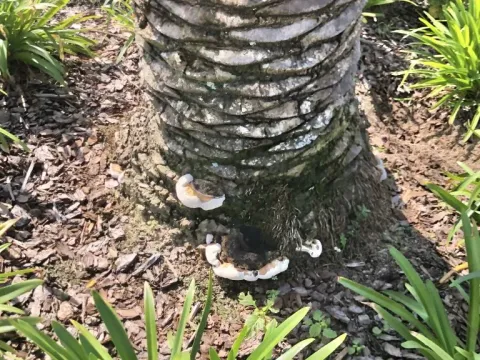
Ganoderma butt rot
Ganoderma zonatum
The causal agent of this disease is the wood-decaying basidiomycete fungus Ganoderma zonatum. This pathogen belongs to the Ganodermataceae family and primarily functions as a decomposer of lignin and cellulose within the woody tissues of palms.
What the section contains
Ganoderma butt rot
The fungus infiltrates the palm through the roots or wounds at the base of the trunk. Once inside, the fungal mycelium colonizes the vascular system, gradually compromising the structural integrity of the plant by breaking down its internal tissues.
The biological cycle involves the production of reproductive structures known as conks or fruiting bodies. These bracket-like formations emerge near the base of the trunk, where they release millions of spores that can travel through the air and water.
Ganoderma zonatum is a slow-growing pathogen, which often leads to a delayed manifestation of symptoms. It is highly resilient and capable of surviving in the soil or within decomposing palm stumps for many years.
The disease causes a white rot, characterized by the enzymatic degradation of plant fibers. As the fungus consumes the cellulose and lignin, the internal structure of the trunk loses its mechanical support, leading to a state of internal decay.
The most distinctive visual symptom is the development of a mushroom-like conk at the base of the palm trunk. These fruiting bodies are often semicircular, shelf-like, and feature concentric zones, typically appearing within one meter of the soil line.
The canopy of the palm begins to show signs of stress as the disease progresses. Older leaves at the bottom of the crown will yellow, wilt, and droop prematurely, hanging down the trunk in a characteristic fashion.
Growth significantly slows down or stops completely. New fronds that do emerge are often smaller and more chlorotic than those of a healthy palm, reflecting the impairment of the plant's vascular water transport.
Upon closer inspection or sectioning of an infected trunk, one can observe significant decay. The wood becomes soft, discolored, and fibrous, losing its density and strength as the fungus digests the structural support of the palm.
In some instances, particularly in humid environments, the area near the base of the trunk may exhibit localized exudates or a distinct, pungent odor of decay. Eventually, the palm becomes structurally unstable, increasing the danger of toppling over.
The primary prerequisite for infection is the presence of Ganoderma zonatum spores in the soil, which can be introduced by wind, water, or contaminated tools. The disease is most prevalent in tropical and subtropical regions.
High soil moisture and humidity provide ideal conditions for the spores to germinate and for the mycelium to spread effectively. Palms located in areas with poor drainage are particularly susceptible to this pathogen.
Physical injuries to the lower trunk or roots are a major risk factor. Wounds created by lawn mowers, trimmers, or during pruning activities serve as easy entry points for fungal spores to reach the vulnerable interior tissues.
The age and density of the palm planting also impact spread. In crowded landscapes, the fungus can easily move between adjacent trees through the contact of root systems or by spreading spores in a localized microclimate.
The persistence of the fungus in buried woody debris or old roots means that new plantings in the same spot are at high risk. The pathogen remains active until the last remnants of infected organic matter are completely decomposed.
Ganoderma butt rot is currently considered a fatal disease. There are no systemic fungicides or medical treatments capable of reversing the decay caused by this fungus once it has established itself inside the tree.
The greatest danger is the risk of sudden structural collapse. Because the fungus degrades the base of the trunk, the tree can fall without warning, creating significant safety hazards for pedestrians and property nearby.
Economic impact is substantial, as infected palms represent a total loss. Beyond the cost of the plant itself, owners must invest in professional removal services, which are complex and expensive due to the need for stump removal.
The disease also degrades the aesthetic value of public parks and residential landscapes. Once a palm is lost, the soil remains contaminated, complicating the process of replanting and limiting the selection of plant species.
Furthermore, if left unchecked, the presence of the fungus in a landscape increases the pressure on remaining healthy palms. The continuous production of spores can lead to a long-term decline of palm populations in the area.
Management of Ganoderma butt rot is strictly based on prevention. Gardeners and arborists must prioritize protecting the trunk base from any form of mechanical injury to keep the pathogen out.
Rigorous sanitation of all pruning tools is essential. Blades, saws, and other equipment must be sanitized with disinfectants, such as bleach solutions or isopropyl alcohol, after working on each palm to prevent spore transfer.
Regular inspections are necessary to identify the conks early. If fruiting bodies are observed, the palm should be professionally removed as soon as possible, ensuring that the roots are extracted to reduce the remaining inoculum in the soil.
Proper irrigation management is key to maintaining a healthy environment. By ensuring excellent soil drainage, you can reduce the moisture levels that favor the growth and activity of the fungus.
When a tree is removed, all woody debris, including the stump and major roots, must be completely extracted from the ground. Avoid replanting palms in the exact same location until the soil has been treated or several years have passed.