
Ganoderma root and stem rot
Ganodermataceae
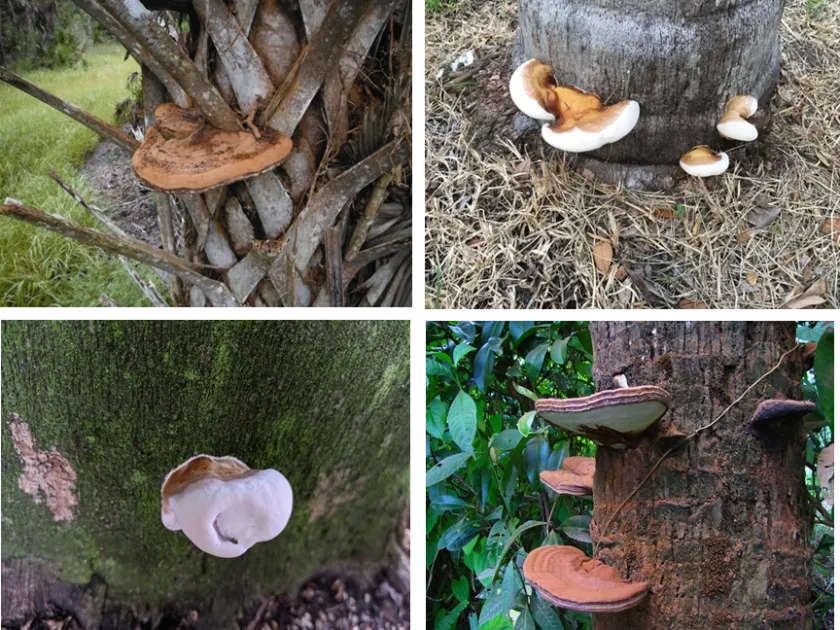
Description
Symptoms
The most visible manifestation is the presence of shelf-like or hoof-shaped fungal fruiting bodies (conks) emerging from the base of the trunk or root flare.
Leaves on infected trees often appear chlorotic, sparse, and smaller than those on healthy specimens, signaling a decline in overall tree vigor.
Internally, the infected wood reveals a bleached, spongy, or fibrous appearance, which is the classic diagnostic indicator of white rot.
Structural failure is a major symptom; trees may snap or uproot unexpectedly due to the loss of tensile strength in the lower trunk and root system.
- Conspicuous conks at the trunk base.
- Crown dieback and leaf yellowing.
- Spongy, white wood decay visible in cross-section.
- Root system fragility.
Pathogen
The disease is caused by various species within the Ganodermataceae family, with Ganoderma lucidum and Ganoderma applanatum being the most recognized pathogens.
These fungi are wood-decay organisms that produce specialized enzymes capable of breaking down the complex structure of lignin and cellulose within tree tissue.
Pathogens typically enter the plant host through wounded roots, broken branches, or natural fissures in the bark caused by environmental stress or pests.
The mycelium grows internally, systematically destroying the structural integrity of the sapwood and heartwood, which effectively starves the tree of nutrients.
These fungi are saprotrophic in nature, meaning they can continue to thrive on dead organic matter, making them persistent residents in soil environments.
Conditions for development
High moisture levels in the soil and atmosphere provide the perfect conditions for the proliferation and spread of Ganoderma spores.
The development of these fungi is favored in warm, humid climates, particularly where poor site drainage leads to water accumulation around the roots.
Trees that are already stressed due to drought, over-crowding, or mechanical injury are significantly more susceptible to successful fungal colonization.
Spore dissemination occurs primarily via wind and splashing water, meaning that once a fruiting body is present, surrounding trees are at high risk.
Excessive soil compaction and incorrect mulching techniques that bury the root flare can also contribute to creating a favorable environment for the pathogen.
Why it matters
Ganoderma fungi are highly destructive, as they cause irreversible damage to the structural components of trees, leading to long-term decline and death.
The economic impact is substantial, especially in fruit orchards where infested trees must be removed, resulting in a loss of productive capacity.
Beyond crop loss, the risk of falling branches or whole trees poses a significant safety hazard to infrastructure and human life in public and private spaces.
The infection is progressive and often remains hidden until structural integrity is critically compromised, making early detection extremely difficult.
The pathogen is difficult to eradicate once established in the root zone, potentially contaminating the site for years and impacting future plantings.
Protection
Proper arboricultural maintenance is the best defense, focusing on reducing physical wounds and preventing the stress factors that invite fungal entry.
If an infection is detected, affected trees should be removed, including as much of the root system as possible, and all wood should be disposed of away from the site.
Sanitation is critical; tools used on infected plants must be sterilized with appropriate disinfectants to prevent the transmission of fungal spores.
Improving soil aeration and drainage around the base of the tree can help maintain vigor and discourage the growth of wood-decay fungi.
While no chemical cure exists for internal decay, balanced fertilization and regular monitoring can assist in maintaining tree defenses against opportunistic infections.
Discussion
No discussions yet — be the first.