
Ganoderma orbiforme
Ganoderma orbiforme
Description
Symptoms
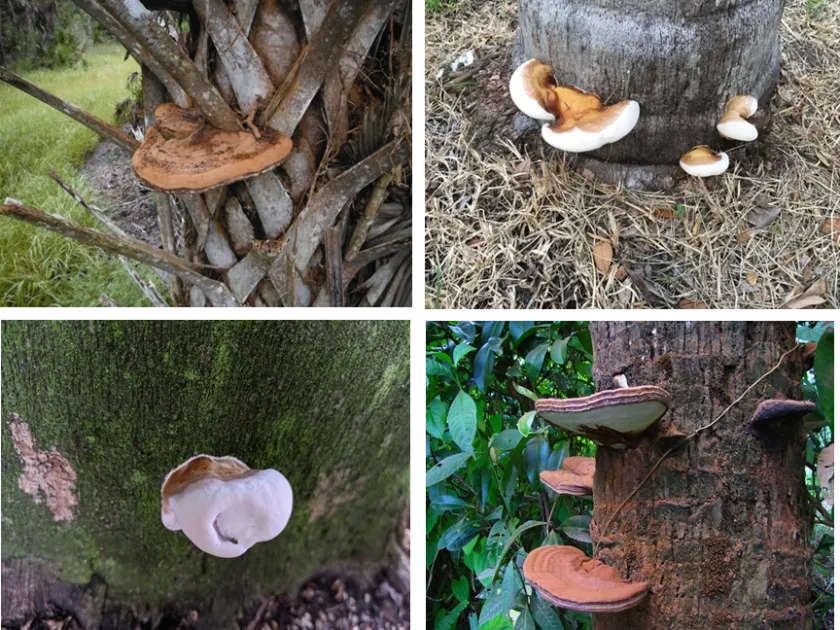
The most visible symptom of an infection is the emergence of bracket-like or rounded fruiting bodies on the trunk surface, usually appearing near the base of the tree or at old injury sites.
These fruiting bodies often display a tough, varnished or matte surface, varying in color from dark brown to reddish-brown, and can be found singly or in clusters.
Internal wood decay manifests as white rot, where the timber loses its density and turns spongy or fibrous. This structural breakdown is often hidden until the later stages of the disease.
General tree health declines, characterized by thinning foliage, chlorosis, dieback of the canopy branches, and a noticeable reduction in overall yearly growth rates.
As the rot progresses through the core of the trunk, the risk of windthrow increases significantly, as the tree loses the mechanical strength required to withstand environmental stress.
Pathogen
Ganoderma orbiforme is a fungal pathogen belonging to the Basidiomycota phylum. It functions as a wood-decay fungus, specifically associated with white rot, and is known for its ability to degrade lignin and cellulose.
The fungus typically invades living trees through bark wounds, pruning cuts, or root system injuries, establishing itself as a parasitic agent that gradually consumes the wood's structural components.
Biological reproduction involves the production of spores within woody, perennial fruiting bodies (conks). These spores are dispersed via wind and rain, allowing the pathogen to spread to neighboring host trees.
Once established, the mycelium spreads throughout the heartwood and sapwood. This internal colonization is what enables the fungus to weaken the tree’s structural integrity over several years.
This species is highly persistent and can survive in various environmental conditions, making it a challenging pathogen to manage in both wild forest settings and managed garden landscapes.
Conditions for development
High moisture levels are critical for the development of Ganoderma orbiforme, providing the necessary environment for spore germination and mycelial growth.
Open wounds on the bark serve as the primary entry points for the pathogen. Poor pruning practices that leave large, untreated wounds significantly increase the risk of infection.
Trees that are already stressed due to drought, soil compaction, or nutrient deficiencies are far more susceptible to colonization compared to healthy, vigorous specimens.
Proper aeration is essential; environments with high humidity and stagnant air encourage the growth of the fungus and facilitate the spread of spores within the garden or forest.
The fungus thrives within a moderate temperature range, though it exhibits significant resilience to seasonal fluctuations, allowing it to remain active across different climate zones.
Why it matters
The primary concern regarding this pathogen is its insidious nature. It often goes unnoticed for years while it actively destroys the tree from the inside out.
It poses a severe threat to ornamental and timber trees, leading to premature mortality and significant financial losses for garden owners or forestry management.
Infected trees act as reservoirs for the fungus, constantly releasing spores that threaten the health of surrounding plants, potentially leading to widespread outbreaks.
Beyond the loss of the plant itself, the presence of diseased trees creates a safety hazard. Falling branches or sudden trunk failures can cause damage to surrounding property or pose risks to pedestrians.
The persistence of the fungus in stumps and roots means that even after a tree is removed, the site may remain hazardous to new plantings unless appropriate decontamination is performed.
Protection
Preventive care is the most effective strategy. This includes maintaining optimal tree health through proper fertilization, watering, and monitoring for pests to ensure trees remain vigorous.
All pruning should be performed using clean, sanitized tools. Large cuts must be protected with wound dressings to prevent the entry of fungal spores into the fresh tissue.
Regular visual inspections, especially during spring and autumn, are crucial for early detection. Monitoring the base of the trunk for any fungal growth can help catch infections early.
If an infection is identified, remove all affected wood and fruiting bodies. If the disease is advanced, the entire tree must be removed and the root system excavated to prevent further spread.
- Remove and destroy all infected plant materials by burning.
- Sanitize all pruning tools with a bleach solution or alcohol.
- Improve soil drainage to reduce local humidity levels.
- Consult with a professional arborist for advanced surgical removal techniques.
Discussion
No discussions yet — be the first.