
Gardenia Diaporthe blight
Diaporthe gardeniae
Description
Symptoms
The earliest signs of infection appear as small, brownish lesions on the stems, particularly near the nodes. Over time, these spots grow and often girdle the stem, leading to tissue collapse.
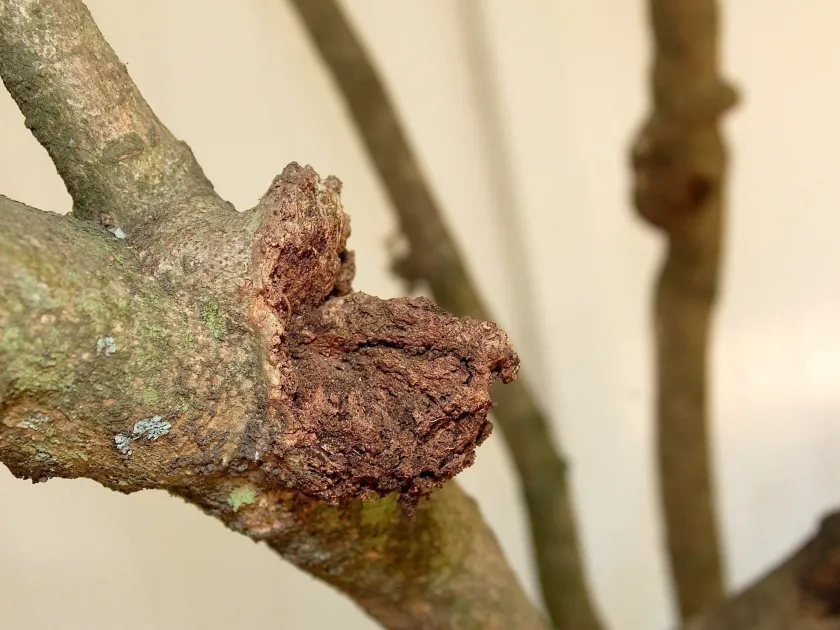
As the disease progresses, the bark on the affected stems develops deep cracks or cankers. The infected areas may exude a sticky substance that eventually dries into a hard, dark-colored crust.
Leaves situated above the infection point begin to yellow and wilt, even if soil moisture is adequate. This wilting is a classic symptom of the vascular blockage caused by the fungal mycelium.
Closer inspection of the cankered areas reveals tiny, dark, pinhead-sized spots. These are the fruiting bodies of the fungus emerging through the epidermis to release new spores.
In severe cases, the entire stem distal to the infection site dies back. The plant becomes stunted, foliage falls off prematurely, and the overall vigor of the gardenia is severely compromised.
Pathogen
The causal agent of this disease is the fungus Diaporthe gardeniae, which belongs to the class of Ascomycetes. It is a specialized pathogen that specifically targets tissues of the Gardenia genus.
The fungus acts as a stem-invading pathogen. Once inside the host plant, it colonizes the vascular tissues and stem cortex, disrupting the internal physiological processes of the gardenia.
The pathogen completes its life cycle by forming fruiting structures known as pycnidia and perithecia. These structures release conidia, which are the primary units responsible for the spread of the infection in a greenhouse environment.
The fungus is highly adapted to the internal structures of gardenias. By systematically breaking down plant cells, it creates large necrotic zones that gradually expand if left untreated.
Biological survival of Diaporthe gardeniae is supported by its ability to persist in plant debris and greenhouse soil, making it a recurring threat for growers who do not practice strict sanitation.
Conditions for development
High relative humidity is the primary catalyst for the development and spread of Diaporthe gardeniae. In environments where airflow is stagnant, the risk of an outbreak increases significantly.
Optimal growth temperatures for the fungus typically range between 20°C and 25°C. These temperatures coincide with the comfortable range for gardenias, meaning the pathogen thrives alongside the host.
Wounds on the plant serve as the main entry points for the fungus. Mechanical damage from pruning, heavy handling, or insect feeding provides a direct pathway for spore germination.
Overwatering, especially when combined with cool temperatures, stresses the gardenia and reduces its natural defense mechanisms. A stressed plant is significantly more susceptible to successful fungal colonization.
Crowded planting conditions prevent moisture from evaporating from the stems and leaf axils. This creates a prolonged wet period that allows the fungus to infiltrate the plant's surface tissues easily.
Why it matters
Gardenia Diaporthe blight is considered a highly destructive disease because it targets the structural stems. Once the stems are girdled, the damage is typically irreversible, often requiring drastic pruning.
The primary impact is the systemic disruption of water and nutrient transport. This leads to the starvation of the plant, which is reflected in the loss of buds and a total cessation of flowering.
The blight significantly diminishes the aesthetic appeal of the gardenia. Dead stems and blackened cankers make the plant unsightly, which is particularly detrimental in ornamental gardening.
If untreated, the infection can spread throughout the entire plant, leading to total crown dieback. The pathogen acts rapidly under favorable conditions, often killing a plant within a single season.
For commercial growers, an outbreak of Diaporthe gardeniae represents a major economic threat, often requiring the destruction of entire plant batches to prevent further spread.
Protection
Strict sanitation is the first line of defense. Remove and destroy all infected plant parts, ensuring that you cut well into healthy wood to remove any latent mycelium.
Disinfect all pruning tools using alcohol or a bleach solution between every cut. This prevents the mechanical transmission of fungal spores from infected stems to healthy ones.
Improve greenhouse ventilation to ensure consistent airflow around the gardenias. This helps keep the stems dry and reduces the window of opportunity for fungal germination.
Application of systemic fungicides, particularly those belonging to the triazole or strobilurin families, can be effective in suppressing the disease if applied early.
Maintain optimal plant health through balanced fertilization and proper irrigation management. A strong, vigorous plant is naturally better equipped to withstand the encroachment of the Diaporthe fungus.
Discussion
No discussions yet — be the first.