
Ganoderma lucidum
Ganoderma lucidum
Description
Symptoms
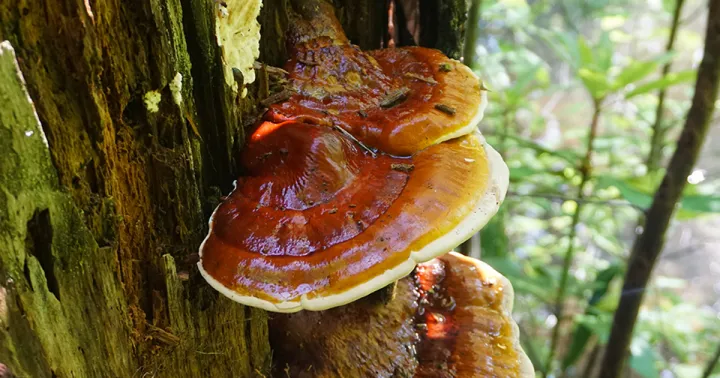
The most reliable diagnostic sign is the presence of the characteristic kidney-shaped, varnished fruiting bodies growing near the ground on the tree trunk.
The foliage of infected trees often appears thin, sparse, and yellowing, indicating that the root system is no longer functioning efficiently to supply nutrients.
Cross-sections of wood from infected trees reveal significant discoloration with light-colored patches and dark zone lines, marking areas of intense fungal decay.
The tree may show a visible decline in vigor, with noticeably stunted growth and branch dieback occurring over several consecutive growing seasons.
Root system failure is a common sign, leading to tree instability, where the tree may lean or tip over during minor storms due to the decay at its base.
Pathogen
The pathogen responsible for this condition is the fungus Ganoderma lucidum, widely recognized for its medicinal properties but also known as a destructive tree parasite.
This fungus typically enters a host through existing injuries in the bark or deep fissures in the root system caused by environmental stress.
Once established, the mycelium spreads through the woody tissue, secreting enzymes that decompose lignin and cellulose, which are the main structural components of wood.
The fruit bodies (conks) emerge at the base of the trunk or on roots, featuring a distinctive glossy, varnished appearance that changes color from yellow to dark red.
It is classified as a white rot fungus because the infected wood turns pale and becomes fibrous as the fungus systematically breaks down the host's integrity.
Conditions for development
Ganoderma lucidum thrives in environments with high humidity and moderate temperatures, which are optimal for spore production and mycelial growth.
Trees that have been weakened by drought, soil compaction, or excessive waterlogging are significantly more susceptible to infection by this fungus.
Mechanical damage caused by landscaping equipment or pruning tools often serves as the entry point for the fungus to bypass the tree's natural defenses.
Poor site sanitation, characterized by leaving decaying stumps or deadwood in the landscape, encourages the survival and spread of fungal colonies.
The proximity of healthy trees to infected ones allows the fungus to spread through root-to-root contact in the soil, creating localized infection hotspots.
Why it matters
The primary danger posed by Ganoderma lucidum is the long-term structural degradation of the wood, which permanently weakens the support system of the tree.
In forest or orchard settings, this disease can lead to significant economic losses by reducing both the lifespan and the fruit yield of the host trees.
There is a substantial safety risk in urban environments, as infected trees become hazardous and are prone to sudden failure, which can damage property or cause injury.
The disease is often progressive, meaning that once the fungus is established, the tree's chances of survival are low, often necessitating removal to prevent spreading.
It impacts the aesthetic value of landscapes, as infected trees lose their natural shape and vitality, leading to an overall decline in garden quality.
Protection
The most effective strategy is proactive monitoring and maintenance, which includes pruning correctly and sanitizing tools to prevent accidental wounds.
When infection is confirmed, infected trees and their stumps should be removed entirely, including as much of the root system as possible to minimize spore dispersal.
Applying appropriate fertilizers and mulch can help maintain tree health, though caution should be exercised to avoid piling mulch against the tree trunk.
- Remove and destroy fruiting bodies as soon as they appear to reduce local spore counts.
- Ensure adequate spacing between trees to prevent the spread of the fungus via root connections.
- Treat minor wounds with professional-grade sealants to prevent fungal entry.
Implementing a comprehensive tree care program that manages soil health and minimizes environmental stress is the best long-term defense against Ganoderma lucidum.
Discussion
No discussions yet — be the first.