
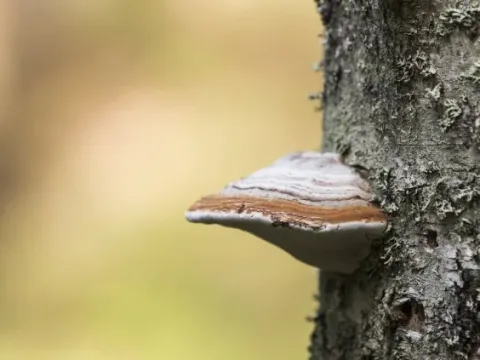
Ganoderma applanatum
Ganoderma applanatum
The pathogen is Ganoderma applanatum, a perennial wood-decay fungus classified as a basidiomycete. It is widely known for causing white rot in various hardwood and, occasionally, coniferous tree species.
What the section contains
Ganoderma applanatum
The fungus produces large, woody, bracket-like fruiting bodies that grow on the trunks or stumps of affected trees. These structures are often referred to as flat-topped conks.
Its biological mechanism involves the enzymatic breakdown of lignin and cellulose, which are the primary structural components of wood. This results in the characteristic white, spongy texture of the decayed wood.
Reproduction is facilitated by millions of microscopic spores released from the underside of the conks. These spores are wind-dispersed and infect host trees through wounds or exposed heartwood.
As the fungus colonizes the inner tissue, it creates extensive mycelial mats, slowly consuming the internal strength of the tree while the exterior may remain intact for years.
The most prominent sign is the presence of hard, shelf-like fungal brackets on the trunk, often near the base. These brackets can live for many years, adding new growth rings.
Internally, the wood exhibits a bleached appearance with distinct dark, wavy zone lines. The texture becomes soft, brittle, and loses its structural integrity, eventually crumbling easily.
Crown symptoms include sparse foliage, yellowing leaves (chlorosis), and tip dieback. As the disease progresses, the tree loses vigor and may drop branches prematurely.
Loose bark at the base of the trunk is a strong indicator of advanced decay. Beneath such bark, white fungal threads, known as mycelium, are often visible covering the wood surface.
Tree failure is a common sign of long-term infection. Since the fungus destroys the heartwood, the tree may snap suddenly during moderate winds, even if the leaves look relatively green.
The fungus thrives in high humidity and sheltered environments with limited airflow, which are ideal for spore germination and mycelial spread.
Mechanical wounding is the primary gateway for infection. Activities such as improper pruning, lawnmower damage, or storm injury expose the inner wood to fungal colonization.
Trees suffering from physiological stress—caused by drought, waterlogging, or soil compaction—are significantly more susceptible to infection by this pathogen.
The development of the fungus is most active during the growing season when temperatures are warm and moisture is sufficient to support rapid mycelial growth.
Neglected orchards or aging park trees provide the perfect substrate for the fungus to persist and spread to nearby healthy specimens over time.
The primary harm is the destruction of the tree's internal support system, leading to structural instability. This poses a significant safety risk in urban or residential areas.
Ganoderma applanatum acts as a source of inoculum, as its spores can easily travel long distances, threatening other susceptible trees within the landscape.
In terms of production, infected fruit trees suffer from reduced yield and vitality, eventually becoming unproductive before the tree dies completely.
The loss of valuable specimen trees or orchard components represents significant economic and ecological damage for landowners.
Treating advanced cases is generally ineffective, necessitating the removal of the tree and potential disinfection of the site to prevent further spreading of the pathogen.
- Remove and properly destroy infected trees, including the stump, if possible.
- Protect fresh pruning cuts with antifungal wound dressings to prevent spore entry.
- Minimize mechanical damage to trunks when performing maintenance near trees.
- Maintain tree vigor through appropriate fertilization and water management to enhance natural defenses.
- Conduct routine health assessments of trees to identify and manage infections at an early stage.