
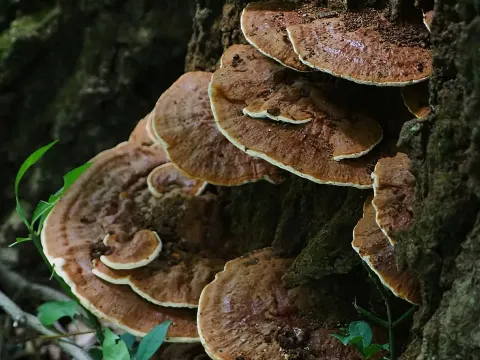
Ganoderma adspersum
Ganoderma adspersum
The causal agent of this disease is the fungus Ganoderma adspersum, a perennial basidiomycete that acts as a serious wood-decay parasite on various tree species.
What the section contains
Ganoderma adspersum
The fungus develops a long-lasting mycelium that penetrates deep into the tree's woody tissues, where it secretes enzymes to break down lignin and cellulose components.
Fruiting bodies are hard, woody, and shelf-like structures often found at the base of the trunk or on large structural roots of the host tree.
The upper surface of the bracket is characteristically covered with a thick layer of brown spores, which are released periodically to infect neighboring trees.
As a saprotroph, the fungus persists in dead wood, maintaining its presence in the soil and tree residues long after the host tree has collapsed.
The primary symptom is the presence of multi-year perennial fruiting bodies attached to the trunk, often showing distinctive concentric growth zones.
General signs of tree distress include crown thinning, yellowing foliage, and early leaf drop, which indicate that the root system or the trunk's vascular integrity is compromised.
Internal wood inspection reveals extensive white decay, causing the wood to become porous, light, and brittle, significantly reducing the tree's stability.
A fine dusting of brown spores, visible on the bark below the fruiting body, is a clear indicator of active colonization by the pathogen.
Advanced infections often result in noticeable stem swelling or necrosis near the base, indicating where the fungus has focused its internal attack.
The infection typically begins through mechanical wounds on the trunk or roots, where spores find the necessary environment to germinate and establish mycelium.
High humidity and poor soil drainage are critical factors that facilitate the rapid development and spread of Ganoderma adspersum in a habitat.
Neglected forest management, such as overcrowding or the failure to remove decaying timber, provides a consistent reservoir of spores for further infection.
Trees under abiotic stress, such as drought, nutrient deficiency, or urban pollution, become highly susceptible to penetration by this parasitic fungus.
Temperatures and environmental conditions typical of temperate forest zones support the continuous growth of this fungus throughout most of the year.
The most severe damage is caused by the progressive degradation of the tree's structural wood, leading to high risks of sudden trunk failure or windthrow.
The pathogen disrupts the tree's vital physiological processes, resulting in slow decline and ultimate death of the plant host.
In urban landscapes and orchards, the presence of this fungus poses a safety threat to property and people due to the risk of falling limbs or entire trees.
Economic losses are significant because affected trees often require expensive removal, and the pathogen can persist in the soil, preventing immediate replanting.
The fungal spread can affect an entire stand of trees if not managed, leading to long-term ecological and aesthetic degradation of the forested area.
Management involves early detection and the removal of infected trees, including stump and root extraction to minimize soil-borne inoculum.
Strict tree care practices are essential to avoid wounding the bark during routine maintenance, which significantly reduces the risk of initial fungal entry.
Regular health assessments of old and valuable trees help identify the presence of fruiting bodies at the early stages, allowing for better risk management.
Promoting tree vigor through appropriate fertilization and regular irrigation helps maintain the natural defense mechanisms of the plants against such pathogens.
In cases where surgical treatment of the wound is possible, ensure the area is properly cleaned and treated with protective fungicides to seal it from further spore colonization.