
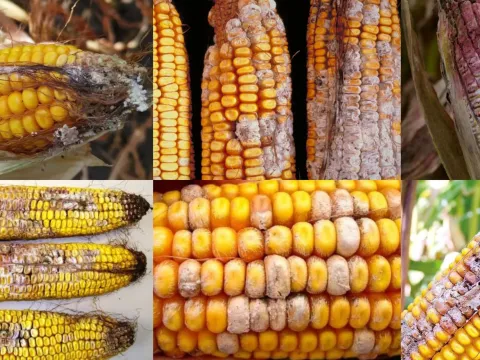
Fusarium ear rot
Fusarium subglutinans
The causative agent of this disease is the microscopic fungus Fusarium subglutinans, which belongs to the Ascomycota phylum. This pathogen has a broad host range, affecting essential crops like maize and pineapples.
What the section contains
Fusarium ear rot
The fungus is capable of surviving in soil and on crop debris, making it a persistent threat in agricultural fields. Its life cycle involves the production of microconidia and macroconidia, facilitating rapid spread.
In maize, the pathogen is most aggressive during the milk and dough stages of grain development, infecting ears through mechanical wounds or natural openings in the husks.
For pineapples, this species causes base rot and fruit rot, severely impacting the marketability of the produce and causing substantial post-harvest losses.
A significant biological characteristic of Fusarium subglutinans is its ability to produce harmful secondary metabolites known as mycotoxins, specifically fumonisins, which pose health risks to humans and livestock.
The initial signs of infection in corn include the emergence of a white or pinkish mold on the ears, composed of fungal mycelium. Over time, these infected areas darken and disintegrate.
Kernels affected by the fungus become shriveled and may develop a gray or brownish discoloration. In severe cases, the entire ear is colonized, with husks appearing stuck to the grain.
In pineapples, symptoms manifest as tissue softening, the appearance of water-soaked spots, and a characteristic unpleasant putrid odor during advanced stages of decay.
Seedlings infected with the pathogen often exhibit root rot, leading to stunted growth, yellowing foliage, and potential premature death of the young plants.
Cross-sections of stalks often reveal a browning of the vascular tissues, indicating that the fungal infection has become systemic within the plant.
High humidity and frequent rainfall, particularly during the flowering and grain-filling stages of corn, provide the ideal conditions for the disease to flourish.
Optimal temperatures for the fungus range from +20°C to +28°C. Rapid temperature fluctuations and nocturnal fog further stimulate spore production and dispersal across fields.
Poor agricultural practices, such as high-density planting, reduce air circulation and increase moisture accumulation around the ear and root zones, fostering fungal growth.
Infestations by insect pests, such as the European corn borer, are critical triggers, as they create entry points for the fungal spores to colonize the plant tissues.
A high initial inoculum density in the soil, resulting from continuous monocropping, significantly increases the risk of severe disease outbreaks throughout the growing season.
Fusarium ear rot causes massive economic losses, with yield reductions in maize ranging from 20% to 50% under favorable conditions for the pathogen.
Infected grain exhibits reduced germination rates, poor quality, and low nutritional value. Furthermore, the presence of mycotoxins renders it unsuitable for food or feed manufacturing.
For pineapple producers, this disease can lead to complete loss of consignments during shipping or storage, as the rot spreads quickly from infected fruits to healthy ones.
The disease impairs the plant's physiological functions, disrupting nutrient and water uptake, which causes premature senescence and loss of vigor in the crop.
International trade is often hindered by this pathogen, as strict phytosanitary regulations govern the allowable levels of mycotoxins in exported grain and fruit products.
The foundation of effective management involves treating seeds with systemic fungicides to protect the crop against soil-borne infections during the early stages of development.
Strict adherence to crop rotation is essential; maize should not be planted on the same field more frequently than every 3-4 years to break the pathogen's life cycle.
Agronomic practices, such as thorough incorporation of crop residues into the soil, accelerate their decomposition and significantly reduce the survival rate of the fungus.
Integrated Pest Management (IPM) is crucial, as controlling insects that damage ears and stems directly reduces the pathways available for the fungus to enter the plant.
Selecting resistant hybrids and ensuring prompt harvest followed by mechanical drying of grain to safe moisture levels are key to minimizing post-harvest losses and mold development.