
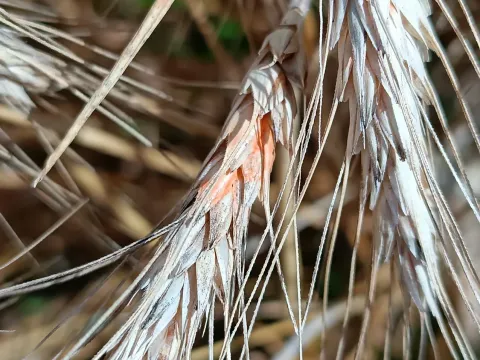
Fusarium head blight
Fusarium poae
Fusarium head blight is caused by the fungus Fusarium poae, a common pathogen belonging to the genus Fusarium. This fungus is known for its ability to persist in various environmental conditions and attack cereals during their most sensitive developmental stages.
What the section contains
Fusarium head blight
The fungus survives the winter as mycelium and spores on crop residues, in soil, and on infected seeds. It can thrive as a saprophyte on decaying matter, making it a persistent threat in most grain-growing regions.
Spore dispersal occurs primarily through wind currents, rain splash, and insect vectors. The fungus targets the spikelets, particularly during the flowering phase when the glumes are partially open, providing an entry point for infection.
Once inside the plant tissues, the fungus colonizes the rachis, obstructing the transport of water and nutrients to the developing kernels. This process is accompanied by the production of harmful mycotoxins.
While wheat is the most commonly affected host, Fusarium poae also poses a significant threat to barley, oats, rye, and maize, often resulting in widespread yield and quality losses across these crops.
The most recognizable symptom is the premature bleaching of spikelets. Affected parts of the ear turn white or light yellow, contrasting sharply with the healthy green parts of the spike as the crop approaches maturity.
Under humid conditions, a characteristic pink, orange, or salmon-colored mycelial growth appears at the base of the glumes. This represents the sporulation stage of the fungus, which facilitates further disease spread.
Grain development is severely impacted, resulting in shriveled, discolored, and light-weight kernels. In severe cases, the grains are completely empty or covered in a visible white or pinkish mold layer.
The rachis often turns brown or necrotic, causing the entire head to dry out prematurely. This can lead to lodging or grain shattering during harvest, significantly reducing total yield.
When examined under a microscope, infected tissues show dense mycelial branching. The presence of these fungal structures is a diagnostic feature used to distinguish Fusarium species in laboratory settings.
Fungal infection is heavily dependent on weather patterns during the flowering stage (anthesis). Frequent rain, high humidity, and moderate temperatures (+20°C to +25°C) are the primary triggers for epidemics.
The presence of infected crop debris, such as corn stalks or wheat stubble, acts as the primary reservoir for inoculum. Fields managed with minimal tillage often show higher disease incidence due to surface residues.
High relative humidity (typically above 75%) is essential for spore germination and colonization. During wet seasons, even a few days of rain during anthesis can lead to massive infection outbreaks.
Host susceptibility varies throughout the season, but the window of vulnerability is narrowest during the time when anthers are exposed. This creates a critical period for both infection and agricultural intervention.
Dense canopies and excessive nitrogen fertilization can create microclimates within the field that retain moisture longer, thereby increasing the risk of infection compared to well-ventilated stands.
The primary threat of Fusarium poae is the contamination of grain with mycotoxins. These toxic substances render the harvest unsafe for human consumption and animal feed, leading to strict market penalties or outright rejection.
Yield loss is significant, ranging from 10% to over 50% in severe cases. This is caused by both the reduction in kernel number and the decline in the weight and quality of the remaining grains.
Infected grain exhibits poor germination rates and low seed vigor. When used for sowing, it introduces the pathogen back into the field, causing seedling blight and further spreading the disease.
Technological quality of the grain is degraded, including lower protein content and poor baking characteristics. This reduces the value of the harvest for the food processing industry.
Beyond direct economic loss, farmers face increased costs due to intensive fungicide applications and the potential need for expensive drying and sorting equipment to manage infected lots.
Integrated management is essential, starting with cultural practices like crop rotation and the burial of residues. Avoiding planting susceptible crops after maize or wheat significantly reduces inoculum pressure.
Chemical control is most effective when fungicides (triazoles or strobilurins) are applied preventively at the onset of flowering. The timing must be precise to cover the period of anthesis.
The use of certified, disease-free seed treated with systemic fungicides is crucial to prevent seedling blight and ensure a healthy stand establishment from the very beginning.
Selecting varieties with genetic resistance to Fusarium head blight is a sustainable long-term strategy. Breeders continue to focus on traits that limit pathogen entry through the floral structures.
Managing insect pests that damage heads is an important secondary control measure. By keeping the spikelets intact, producers prevent the physical wounds that fungi use to penetrate the host tissues.