
Fusarium dry rot of potato
Fusarium sambucinum
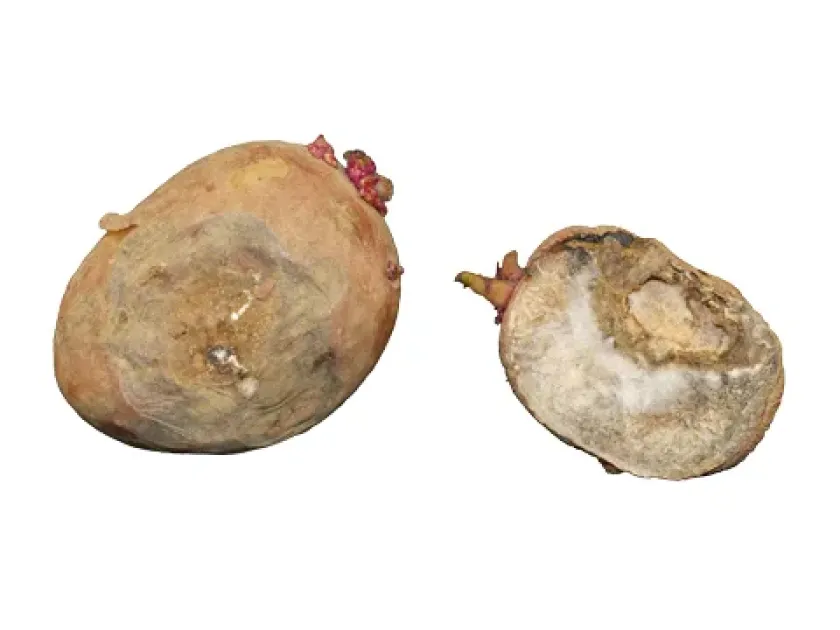
Description
Symptoms
Symptoms of dry rot typically appear during the storage phase, often 2–3 months after harvest. Small, dark, slightly sunken spots form on the tuber surface.
As the disease progresses, the skin becomes wrinkled, often showing concentric rings around the initial point of infection. The inner flesh of the tuber dries out.
Inside the affected area, the tissue becomes brittle and powdery. In later stages, fungal growth manifests as white, yellow, or pinkish tufts emerging from the hollow spaces.
When an infected tuber is cut open, a distinct line between healthy and necrotic tissue is usually visible. Unlike wet rot, dry rot usually lacks a foul odor.
- Dark, sunken lesions on the skin.
- Wrinkling of the epidermis in circular patterns.
- Powdery or fibrous decay of the internal flesh.
- Presence of colored fungal mycelium in voids.
- Significant weight loss of the tuber due to dehydration.
Pathogen
The causal agent of this disease is the fungus Fusarium sambucinum. It is a soil-borne pathogen that primarily affects potato tubers during the post-harvest storage period.
The fungus is a member of the Fusarium genus, known for its ability to infect tubers through wounds or natural openings such as lenticels created during harvest or handling.
The fungal mycelium colonizes the tuber tissue, secreting enzymes that degrade cell walls, which leads to the characteristic breakdown of potato tissue structure.
The pathogen produces resilient spores that can survive in the soil or in storage facilities for extended periods, making eradication extremely difficult.
Genetic diversity within the Fusarium population allows the fungus to adapt to various environmental conditions and show resistance to certain chemical treatments.
Conditions for development
Fusarium dry rot thrives under high humidity and moderate temperatures in storage. The pathogen is most active at temperatures ranging from +15°C to +25°C.
Poor ventilation leads to moisture accumulation and condensation on tubers, creating an ideal environment for spore germination and infection spread.
Mechanical damage during harvest serves as the primary gateway for the fungus. Tubers that are bruised or cut are significantly more susceptible to decay.
Inadequate drying of the crop prior to storage is a major factor that encourages the development of rot. Surface moisture allows the fungus to establish itself quickly.
High pile densities in storage facilities without proper airflow can lead to large-scale outbreaks, as the fungus spreads from infected to healthy tubers via contact.
Why it matters
Fusarium dry rot is one of the most economically damaging diseases for the potato industry, resulting in significant post-harvest losses if not managed correctly.
Infected tubers are unsuitable for human consumption and carry a high risk for further secondary infections by bacteria, potentially destroying the entire inventory.
The disease drastically reduces the quality of seed potatoes. Using infected tubers for planting facilitates the survival and spread of the pathogen in the field.
Substantial economic losses occur not only from the loss of produce but also from the labor and costs associated with sorting and disposing of infected material.
The persistence of Fusarium in the field limits crop rotation choices, requiring growers to implement strict phytosanitary measures for several years.
Protection
The primary control measure is the prevention of tuber damage during harvesting and transportation. Minimizing skin injuries reduces entry points for the pathogen.
Proper curing of potatoes immediately after harvest, at moderate temperatures and good airflow, is essential to allow skin suberization and healing of minor wounds.
Maintaining optimal storage conditions, including temperatures between +2°C and +4°C and controlled humidity, effectively suppresses the growth of the fungus.
Strict sanitation practices, such as disinfecting storage buildings and equipment before the new harvest, are vital to reduce the initial inoculum level.
Applying specialized fungicides as a pre-storage treatment and using certified disease-free seed are key components of an integrated disease management strategy.
Discussion
No discussions yet — be the first.