
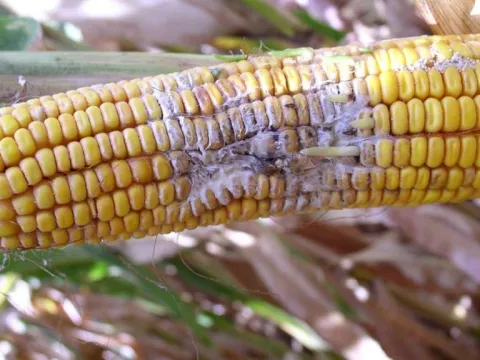
Fusarium ear rot of maize
Fusarium napiforme
The causal agent of this disease is the fungus Fusarium napiforme, which belongs to the group of imperfect fungi. This pathogen is known for its high adaptability to diverse agro-climatic conditions, making it a threat to corn production in many global regions.
What the section contains
Fusarium ear rot of maize
The fungus can persist for long periods in the soil, on crop residues, and be transmitted via contaminated seed material. Its life cycle involves the production of microconidia, macroconidia, and chlamydospores, which serve as the primary sources of infection.
The species Fusarium napiforme often interacts with other Fusarium species, complicating field diagnostics and requiring comprehensive laboratory analysis for precise identification. The pathogen typically enters plant tissues through wounds caused by insect feeding or mechanical injury.
A critical biological feature of this pathogen is its ability to produce a wide range of secondary metabolites, including dangerous mycotoxins like fumonisins. These substances accumulate in the grain, posing severe health risks to both livestock and humans.
The fungus primarily targets the generative organs of the corn plant, although systemic infection can occur under favorable conditions, allowing the pathogen to colonize stalks and roots, resulting in premature plant wilting.
The primary symptom is the development of a characteristic fungal growth on the ears, varying in color from white to pink or pale red. The infection often initiates at the ear tip and progresses downward toward the base.
Affected kernels appear dull, lose their natural luster, and may take on a grayish appearance. Tissue necrosis occurs at the infection sites, leading to shriveling and the structural degradation of the kernels over time.
Upon opening the husk, one can observe mycelial growth between kernel rows, which binds them together. In severe infections, the entire ear may deteriorate into a friable mass, rendering it unsuitable for industrial or feed purposes.
During the early stages of disease development, visual signs may be subtle, making timely detection difficult. Experienced agronomists note that infection is often accompanied by asynchronous kernel maturation.
- Cottony or powdery fungal growth on kernels
- Pink or reddish discoloration of infected areas
- Shriveling and darkening of affected kernels
- Mycelium spreading between kernel rows
- Uneven ripening and kernel cracking
The development of Fusarium napiforme is favored by moderately warm temperatures combined with high humidity during the critical grain filling and maturation stages. Rapid temperature fluctuations can also trigger disease outbreaks.
Insect damage, particularly by the European corn borer or corn earworm, plays a significant role in spreading the disease. These pests create entry points for the fungus while weakening the plant's natural defenses.
High-density planting, which reduces airflow and increases moisture retention around the ears, creates an ideal microclimate for fungal proliferation. Frequent rainfall before harvest also significantly increases the risk of infection.
Continuous corn cropping promotes the accumulation of a high pathogen inoculum in the soil. Leaving large amounts of crop residue on the field surface further increases the risk of primary infection in subsequent seasons.
Plant stress, such as drought during early vegetative stages or nutrient deficiencies, makes maize more susceptible to successful colonization by the pathogen.
Fusarium ear rot is a major cause of significant yield losses in corn production. Infected ears suffer from reduced grain weight and quality, directly impacting the profitability of the harvest per hectare.
The primary danger lies in the contamination of grain with mycotoxins. Grain infested with Fusarium species is often rejected for human consumption and can be harmful if used in animal feed formulations.
Affected kernels show reduced germination energy and seedling vigor. Using infected grain as seed stock for the following year increases the risk of stand loss and widespread disease in new fields.
Economic consequences include additional costs for grain cleaning and sorting, as well as potential penalties or rejection of loads during marketing due to mycotoxin levels exceeding safety regulations.
On a global scale, the prevalence of Fusarium ear rot limits export opportunities for producers and increases logistics costs due to the need for rigorous separation and screening of high-quality versus damaged grain.
The foundation of effective management is the selection of corn hybrids with proven genetic resistance to ear rot diseases. Modern breeding programs prioritize hybrids with tight husks that provide mechanical protection to the ear.
Crop rotation is a vital agronomic practice. Avoiding continuous corn cultivation interrupts the pathogen's life cycle and significantly reduces the total inoculum pressure in the field.
Thorough incorporation of crop residues into the soil accelerates decomposition and inhibits the survival of fungal spores. Deep tillage is considered an effective strategy for managing primary sources of infection.
Managing insect pest populations, such as the European corn borer, is crucial for reducing the frequency of infection. This involves integrated pest management (IPM) using biological or chemical control methods.
Utilizing high-quality, treated seed is essential to protect seedlings from soil-borne pathogens. Foliar fungicide applications during the silking stage can be effective in reducing infection risk when environmental conditions are conducive to disease outbreaks.