
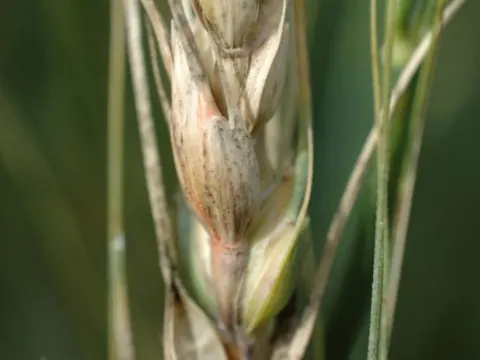
Fusarium head blight
Fusarium graminum
The causal agent of Fusarium head blight (FHB) is a complex of fungi from the Fusarium genus, with Fusarium graminearum (teleomorph Gibberella zeae) being the most prevalent and significant pathogen worldwide.
What the section contains
Fusarium head blight
This fungus survives in soil and on crop residues. It belongs to the Ascomycota class and can produce perithecia, allowing it to overwinter successfully in field environments.
Infection primarily occurs during the flowering stage of cereal crops, when anthers provide a conducive environment for conidia germination. The pathogen enters the head tissues and causes progressive decay.
The fungal life cycle is highly dependent on humidity and temperature. During its growth, the fungus synthesizes harmful secondary metabolites known as mycotoxins.
Unlike many other plant diseases, FHB targets the reproductive organs of cereals, directly compromising the quality and safety of the grain produced.
The most distinctive sign is premature bleaching of the entire head or specific spikelets against healthy green plants, a symptom often described as «blighted heads».
Under high humidity, a characteristic pink or orange fungal growth appears on the glumes, representing the mass production of macroconidia.
Internal tissues of the head are destroyed, causing grains to become shriveled, wrinkled, and often covered in white or pinkish mycelium.
In cases of severe infection, the rachis turns dark, and the head becomes fragile, making it prone to breaking under strong winds or rainfall.
- Premature bleaching of spikelets
- Pink or orange mold on glumes
- Shriveled and deformed kernels
- Brittle rachis tissues
FHB development is heavily favored by frequent rainfall and high humidity during the flowering phase of small grains.
Optimal temperatures for infection range from +20°C to +28°C. Extended periods of moisture on heads during flowering guarantee widespread infection across the field.
Crop residues from wheat, barley, or corn remaining on the soil surface serve as the primary reservoir for the pathogen to infect subsequent crops.
Poor crop rotation practices, specifically planting susceptible cereals after corn, significantly increase the disease pressure.
Cultivars with low genetic resistance combined with wet, warm weather conditions create an ideal environment for FHB outbreaks.
Fusarium head blight is one of the most destructive diseases in cereal production, causing substantial yield losses and severe degradation of grain quality.
Infected grains are frequently contaminated with mycotoxins like deoxynivalenol (DON), which are hazardous to human and animal health.
Because of these toxins, FHB-infected grain is often rejected at markets or requires expensive decontamination processes before it can be used for feed or food.
The disease reduces seed vigor and germination rates, leading to poor stand establishment and an increased risk of root rot in the following season.
The economic impact includes not only lower yields but also increased costs for grain handling, drying, and potential losses due to quality penalties.
Management focuses on planting resistant varieties and implementing strict crop rotation programs, avoiding wheat after corn or wheat.
Incorporating crop residues into the soil via tillage helps accelerate their decomposition, thereby reducing the amount of inoculum available for infection.
Applying fungicides during the flowering window is a critical intervention that can significantly reduce FHB incidence if the timing is precise.
Using high-quality seed treatments ensures protection against seed-borne pathogens and helps guard early-stage seedlings against root infections.
Monitoring weather forecasts during the critical flowering stage allows farmers to make informed decisions about the necessity of protective fungicide applications.