
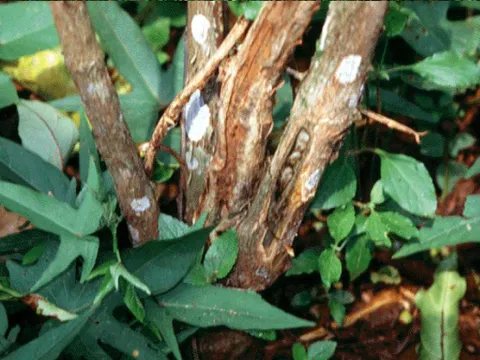
Fusarium dieback
Fusarium stilboides
The causative agent of the disease is the fungus Fusarium stilboides (teleomorph Gibberella stilboides). This pathogen belongs to the Ascomycota division and is a known menace in coffee-growing regions worldwide.
What the section contains
Fusarium dieback
The fungus is soil-borne and can also persist in woody tissues of the host plant. It reproduces via conidia and ascospores, which are easily disseminated by wind, rain splashes, and human activity during field operations.
Infection occurs mainly through natural wounds, cracks in the bark, or lesions caused by insects and mechanical damage from pruning or harvesting tools. Once inside, the fungus colonizes the vascular system and cortical tissues.
Fusarium stilboides is highly versatile and capable of causing various symptoms, ranging from localized leaf spots to systemic vascular wilting. Its ability to remain latent in host tissues allows it to survive for long periods under unfavorable conditions.
Genetic diversity within the species enables it to adapt to different coffee cultivars, making it a persistent challenge for plant pathologists and farm managers.
Symptoms often appear as circular or irregular necrotic spots on leaves and young shoots. Over time, these spots expand, often resulting in the death of the surrounding tissue and subsequent cracking of the bark.
One of the most characteristic signs is the formation of cankers (lesions) on the woody stems and branches. These cankers can lead to girdling, cutting off the supply of water and nutrients to the distal parts of the tree.
Premature abscission (drop) of flowers and fruit is common, significantly reducing the yield. Affected branches eventually show signs of dieback, where the tips dry out and become brittle, turning a characteristic grayish-brown color.
In high-humidity environments, a white or pinkish mass of fungal growth (sporulation) can be observed on the necrotic areas. This growth is a clear indicator of active infection and spore production.
Internally, the xylem and phloem tissues of infected branches display distinct browning or discoloration, indicating structural damage caused by fungal enzymes.
The development of Fusarium stilboides is heavily favored by warm temperatures and high relative humidity. Frequent rainfall and mist provide the water film necessary for the germination of fungal spores on plant surfaces.
Poor orchard management, such as overcrowding or inadequate pruning, restricts airflow and maintains a microclimate with high humidity, which accelerates the spread of the pathogen within the tree canopy.
Mechanical injuries resulting from careless harvesting or poorly maintained pruning equipment act as primary entry points for the fungus. Fresh wounds are especially vulnerable to colonization.
Optimal temperatures for the fungus typically range between +20°C and +28°C. Periods of persistent rainfall combined with these temperatures significantly increase the risk of disease outbreaks.
Plants suffering from nutritional deficiencies or those growing in waterlogged, poorly drained soils show increased susceptibility to the disease, as their internal defenses are compromised.
The primary economic harm is the reduction in coffee yield due to the loss of flowering buds and mature berries. This can lead to significant financial losses for coffee farmers.
The disease causes progressive dieback that can kill the entire tree if left untreated. This necessitates expensive replanting and increases the maintenance costs for the coffee plantation.
There is a degradation in the quality of the harvested coffee beans, as diseased trees cannot provide sufficient nutrients to the fruits, leading to uneven maturation and smaller berry size.
In addition to yield loss, the cumulative effect of the disease depletes the resources of the farm, as labor and funds must be diverted towards sanitation and chemical control measures.
If not contained, the pathogen can saturate the soil and woody residues of the plantation, making it extremely difficult to maintain the productivity of the site in the long term.
Sanitation is the most critical management strategy. This involves the systematic removal and destruction (preferably burning) of all dead and symptomatic branches to reduce the inoculum levels on the farm.
All pruning tools must be disinfected frequently using alcohol or bleach solutions to prevent the mechanical transmission of spores between healthy and infected trees.
Preventative applications of fungicides, particularly copper-based formulations, are recommended before the onset of the rainy season to protect wounds and potential infection sites on the bark.
Providing adequate nutrition and maintaining proper soil drainage helps improve the natural resistance of the coffee tree. Balanced fertilization, especially with potassium, strengthens the plant's cell walls.
- Prompt removal of diseased tissues.
- Disinfection of pruning equipment.
- Usage of tolerant or resistant coffee cultivars.
- Managing shade to improve canopy air circulation.
- Protection of the bark from mechanical damage during harvest.