
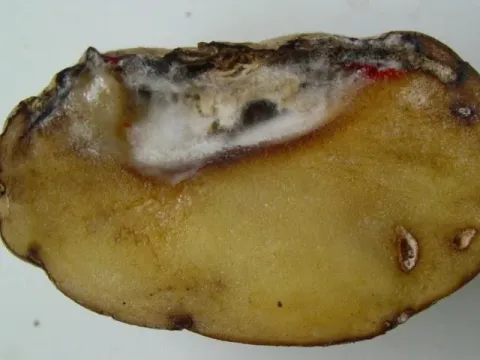
Fusarium dry rot
Fusarium trichothecioides
The causative agent of this disease is the fungus Fusarium trichothecioides, a well-known soil-borne pathogen. It is highly persistent and can survive for extended periods in plant debris, infested soil, and on the surfaces of storage crates and harvesting equipment.
What the section contains
Fusarium dry rot
The fungus typically enters tuber tissues through mechanical injuries, such as cuts, bruises, or cracks sustained during harvesting, handling, or grading. It can also colonize through lenticels and stolon attachment points.
This pathogen is characterized by its high reproductive capacity. It produces large numbers of conidia that are easily transported by air currents within storage facilities, leading to the rapid spread of the disease among healthy potatoes.
While primarily affecting potatoes, the fungus can also impact other solanaceous crops. However, it is most destructive during the long-term storage phase, where the environmental conditions often favor its rapid proliferation.
A major biological concern with this species is the synthesis of trichothecene mycotoxins. These toxic compounds render the affected tubers unsuitable for human consumption or animal feed, as they pose significant health risks.
The initial signs of the disease appear as small, slightly sunken patches on the tuber skin, which may be greyish-brown or dark brown in color. Over time, these areas dry out and shrivel, forming concentric folds on the surface.
Upon cutting an infected tuber, a cavity filled with loose, fluffy mycelium is typically visible. The mycelium can be white, pink, or yellowish. The surrounding tissue becomes dry, crumbly, and dark brown.
Under conditions of high humidity, tufts of fungal sporulation often appear on the surface of the lesions. These fungal pads vary in color from white to rose or yellow, depending on the stage of fungal development.
Unlike soft rot, dry rot does not produce foul odors or liquid tissue liquefaction. Instead, the tuber gradually loses weight, becoming light, dry, and easily crushed under pressure.
Often, secondary infections by bacteria may follow the fungal colonization, turning the dry lesion into a wet rot, which accelerates the decomposition process of the entire potato heap.
The fungus thrives in high humidity (above 80–85%) and moderate temperatures. The optimal range for active mycelial growth is between 15°C and 25°C (59°F–77°F).
Failure to implement a proper "curing period" immediately after harvesting is a primary driver of the disease. Without a period of 10–14 days at warmer temperatures, the tuber skin fails to heal wounds properly, leaving them vulnerable to infection.
Inadequate ventilation in storage facilities leads to condensation on tuber surfaces. This moisture is critical for the germination of fungal spores and the subsequent infection of the tubers.
The physical quality of the potatoes at harvest time is crucial. High levels of mechanical damage, caused by improper harvesting machinery or rough handling, significantly increase the risk of massive outbreaks in storage.
The disease may initiate in the field, particularly if wet and warm conditions prevail during the final weeks of potato growth, creating an inoculum load that is then brought into the storage facility.
The economic impact of Fusarium dry rot is primarily felt through significant storage losses. In severe cases, 30–50% of the stored produce can be lost, rendering the entire operation unprofitable.
Infected tubers lose their commercial value and cannot be used for seed purposes, as they show poor emergence and produce weak plants if they sprout at all.
The accumulation of mycotoxins in the tubers poses a danger to food safety. Consumption of such potatoes can lead to foodborne illness in humans and livestock.
The disease weakens the overall defense mechanisms of the tubers, making them more susceptible to other opportunistic pathogens and increasing the risk of complex rotting issues.
- Severe reduction in marketability of the produce.
- Loss of nutritional value of the harvested crop.
- Increased labor costs for sorting and discarding affected tubers.
- High potential for rapid cross-contamination of stored lots.
Preventative measures start with good agricultural practices, such as harvesting in dry weather and adjusting machinery to minimize mechanical damage to the tubers.
It is essential to allow for a curing period of 10–14 days at 15–18°C after harvest, which allows tubers to develop a protective layer over wounds and natural openings.
Applying effective fungicides as a seed treatment before planting or as a post-harvest treatment can reduce the incidence of the disease significantly.
Strict sanitation protocols for storage facilities are necessary. This includes cleaning and disinfecting surfaces and equipment to destroy any residual fungal spores from previous seasons.
Constant monitoring of storage conditions (temperature and humidity) is vital. Early detection of rot centers allows for the removal of infected tubers, preventing the disease from spreading throughout the storage unit.