
Fusarium head blight
Fusarium langsethiae
Description
Symptoms
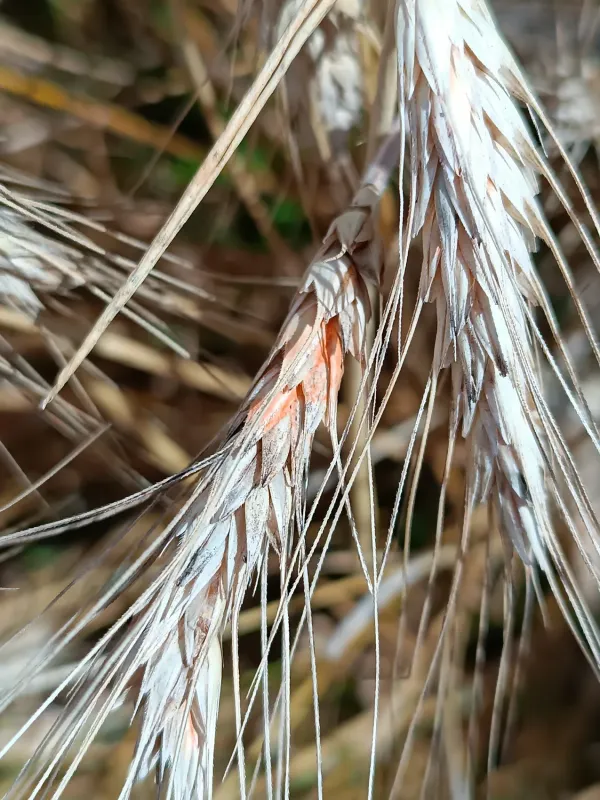
Infection by Fusarium langsethiae is often asymptomatic, lacking the typical "bleached head" symptoms commonly associated with other Fusarium species, which makes early detection difficult.
Symptoms often manifest as subtle discoloration of the glumes or slight browning of the spikelets, but in many instances, the infected head appears completely healthy.
Closer internal inspection of the kernels may reveal a light fungal mycelium, while infected grains often exhibit a dull appearance or a grayish, dusty color.
Grain quality degradation is a common internal symptom, where the seeds become shriveled, lighter in weight, and lose their natural luster due to fungal colonization.
Because the visual signs are so elusive, the presence of the pathogen is often only confirmed through laboratory testing for mycotoxins in the harvested grain.
Pathogen
The causative agent of this disease is the fungus Fusarium langsethiae, which is a specialized pathogen affecting various cereal crops, including wheat and barley.
This pathogen is characterized by its specific ecological niche and unique biological behavior compared to other common Fusarium species found in cereal fields.
The fungus primarily reproduces via microconidia, which are easily dispersed by wind, rain splashes, and insects during the critical flowering stage of the crops.
It possesses the ability to survive in soil and on crop residues for extended periods, acting as a persistent source of infection for subsequent growing seasons.
The species is highly notable for its capability to produce significant concentrations of T-2 and HT-2 toxins, which are harmful secondary metabolites.
Conditions for development
The development of Fusarium langsethiae is favored by warm and relatively dry weather conditions during the crop flowering period, distinguishing it from other moisture-dependent Fusarium species.
Optimal temperatures for spore dissemination and fungal growth range between 20°C and 25°C, making the disease a potential threat in various temperate regions.
Poor agricultural practices, such as short-term crop rotation or continuous monocropping of cereals, significantly contribute to the buildup of inoculum in the field.
Insects that damage the developing heads create entry points for the pathogen, dramatically increasing the susceptibility of the crop to infection during the grain-filling stage.
Reduced tillage systems that leave crop residue on the surface may foster the survival of the fungus, providing an easy pathway for the primary infection of new cereal crops.
Why it matters
The primary concern regarding Fusarium langsethiae is the accumulation of potent T-2 and HT-2 mycotoxins in the grain, which pose severe risks to human and animal health.
These mycotoxins are stable compounds that remain in the grain throughout harvesting, storage, and processing, rendering the affected material unsuitable for consumption.
Economic losses arise not only from reduced grain yield but also from the rejection of contaminated grain batches at elevators and the resulting market instability for the producer.
The presence of this fungus leads to significantly lower seed quality, which negatively impacts germination rates and plant stand uniformity in the following planting cycle.
Overall, the disease forces farmers to invest heavily in sanitation, grain cleaning, and testing, all of which substantially increase the costs of agricultural production.
Protection
Effective management of this disease requires an integrated approach that combines sound agronomic practices with targeted chemical applications during critical growth stages.
Crop rotation with non-host plants is essential to break the infection cycle and reduce the volume of the pathogen present in the soil and on crop debris.
- Implementation of long-term crop rotation plans.
- Deep burial of infected crop residues to limit spore release.
- Selection of resistant or less susceptible grain varieties.
- Application of systemic fungicides at the onset of flowering.
- Monitoring and control of spike-damaging insect pests.
Systemic fungicides, particularly those belonging to the triazole group, are highly effective in suppressing fungal growth if applied precisely at the flowering stage.
Regular phytosanitary monitoring and laboratory analysis of grain samples are vital tools for ensuring that harvested crops meet safety standards and are free from dangerous toxin levels.
Discussion
No discussions yet — be the first.