
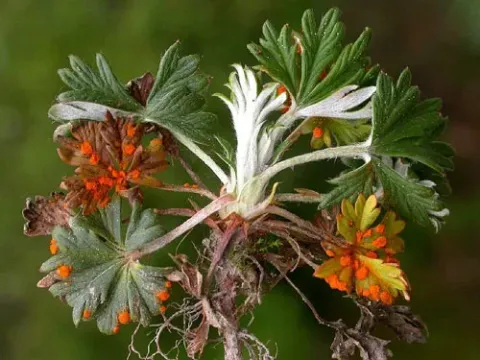
Potentilla rust
Frommeëlla tormentillae
The primary symptom of this disease is the appearance of small, bright yellow or orange pustules on the leaves, which are the hallmark of rust infections.
What the section contains
Potentilla rust
These pustules, known as aecia or uredinia, eventually rupture the leaf epidermis to release masses of powdery spores that can spread easily with wind or water splashes.
Infected leaves typically show signs of yellowing (chlorosis) around the infection sites, leading to premature drying and wilting of the foliage as the disease progresses.
In severe cases, the stems may also exhibit deformities or localized lesions where the pathogen has successfully established itself within the plant tissues.
The overall vigor of the Potentilla plant declines, resulting in stunted growth and a significant reduction in the plant's aesthetic value and flowering capacity.
The pathogen responsible for this condition is the fungus Frommeëlla tormentillae, an obligate biotroph that specifically targets plants in the Rosaceae family.
This fungus requires living plant tissue to complete its life cycle, deriving nutrients directly from the host cells and interfering with normal physiological functions.
The life cycle of the pathogen is complex and may involve multiple spore stages, allowing it to survive in various conditions and infect host plants throughout the growing season.
The fungal mycelium colonizes the intercellular spaces of the leaf, causing mechanical and chemical damage to the cells while suppressing the plant's natural defenses.
Spore dispersal is highly efficient, often triggered by environmental changes, ensuring the rapid spread of the disease throughout the entire planting area.
High humidity and moisture are the most critical environmental factors for the development of Potentilla rust, as free water on the leaves is necessary for spore germination.
Moderate temperatures ranging from 15°C to 22°C (approx. 59°F–72°F) provide the optimal metabolic environment for the fungus to multiply and spread.
Poor air circulation, often caused by overly dense planting or improper pruning, traps moisture and creates a microclimate conducive to heavy rust outbreaks.
The disease frequently persists in garden debris, such as fallen leaves from previous years, which serve as primary inoculum sources for the following spring season.
Plants under stress from improper irrigation, nutrient imbalances, or physical injury are more susceptible to invasion by the fungus compared to healthy, vigorous specimens.
The most immediate harm is the severe loss of foliage quality, rendering the Potentilla unsightly and unsuitable for high-end landscape displays or gardening.
Because the fungus destroys leaf tissue, the plant's ability to perform photosynthesis is greatly diminished, leading to reduced carbohydrate storage for the winter.
Premature leaf drop weakens the overall structural integrity of the plant, making it more vulnerable to secondary opportunistic pathogens and insect pests.
Increased susceptibility to cold damage is a common consequence, as weakened plants often fail to harden off properly before the onset of winter temperatures.
In severe or neglected cases, chronic infections can lead to the complete death of the plant, resulting in the loss of entire sections of decorative plantings.
Sanitation is the cornerstone of control; all infected leaves and plant debris must be collected and destroyed immediately to reduce the spore load in the garden.
Fungicidal treatments, particularly those based on copper or systemic triazoles, should be applied as a preventive measure or at the first sign of symptoms.
Promote good airflow by maintaining proper spacing between plants and performing regular pruning to prevent the canopy from staying wet for extended periods.
Optimize irrigation practices by using drip systems or watering at the base of the plant to avoid wetting the foliage, which is where the infection process begins.
Maintain plant health through balanced fertilization and stress management to ensure that the Potentilla has the resilience to withstand potential fungal pressure.