
Frommea
Frommea
The disease is caused by the fungus Frommea obtusa, which belongs to the order Pucciniales (rust fungi). It is a highly specialized pathogen that primarily targets plants within the Rosaceae family, such as cinquefoil and blackberry species.
What the section contains
Frommea
The life cycle of the pathogen is complex and involves multiple spore stages, including aeciospores and teliospores. These allow the fungus to adapt to different environmental conditions and persist in the host tissue.
Once the fungus colonizes the host plant, it grows within the intercellular spaces. It utilizes haustoria, specialized structures that penetrate the plant cells, to extract nutrients, effectively weakening the host's physiological functions.
Spore dissemination is predominantly driven by wind and rain splashes. This mechanism ensures that the pathogen can spread rapidly across a field or orchard, especially during periods of high humidity and precipitation.
The fungus is highly aggressive in temperate climates, where environmental parameters frequently align with the pathogen's requirements for infection and reproduction, making it a significant challenge for growers.
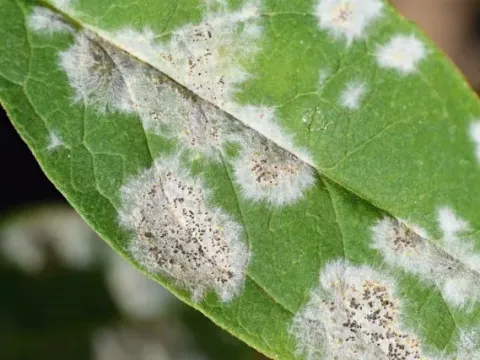
The primary clinical sign of Frommea infection is the appearance of distinct rust-colored spots on the leaves. These start as small, pale yellow or orange dots before expanding into larger, more conspicuous lesions.
During the peak of sporulation, these spots develop into dense, raised pustules on the abaxial side of the leaf. This spore mass often appears as a rusty, powdery substance that can be dislodged by physical contact.
As the disease progresses, infected foliage exhibits chlorosis, followed by curling and premature abscission. This reduction in the active photosynthetic surface area severely hampers the plant's growth and energy reserves.
Severe infestations may result in necrotic deformations of stems and shoots. In some cases, localized tissue death can girdle the stem, leading to the withering and death of entire vegetative branches.
- Yellowish to orange-rust pustules on leaves
- Leaf curling and deformation
- Premature leaf drop
- Stunted growth of new shoots
High relative humidity and moderate temperatures are the most critical factors favoring the development of the disease. Prolonged periods of rainfall or heavy dew provide the surface moisture necessary for spore germination.
Plantings with poor ventilation or high stand density are at a much higher risk of infection. Restricted airflow prevents leaves from drying quickly, maintaining a microclimate that promotes fungal colonization.
The pathogen thrives best at temperatures between 18°C and 22°C, though it is hardy enough to persist across a broader temperature range. Such conditions are typical for spring and autumn seasons in many temperate regions.
Shaded areas or plants suffering from nutritional imbalances—specifically excessive nitrogen—show increased susceptibility to infection. Lack of direct sunlight leads to thinner leaf cuticles, which the fungus penetrates with ease.
Overwintered plant debris, including fallen leaves and infected canes left on the soil, serves as the primary inoculum source for early-season infections, making sanitation vital.
Frommea infection causes significant economic losses by directly reducing both yield quantity and quality. The plant's inability to conduct photosynthesis efficiently leads to stunted fruit development and diminished sugar content.
Reduced vigor resulting from early defoliation significantly affects the plant's ability to store energy for the following season. This often leads to increased susceptibility to winter damage and potential plant mortality.
The aesthetic and commercial quality of the produce is compromised, making fruits unmarketable. Furthermore, in nursery settings, the presence of the pathogen often leads to the mandatory culling of entire batches of stock.
The systemic stress caused by the fungus weakens the plant's overall defense mechanism, making it easier for secondary pests and pathogens to invade, further compounding the damage.
If not managed correctly, the disease can become endemic to the site. The continuous cycle of infection requires long-term investment in protective treatments, increasing production costs significantly.
Cultural control is the first line of defense. Proper pruning, thinning of canopy density, and ensuring adequate spacing between plants are essential to promote drying of the foliage and reduce humidity.
Strict sanitation protocols must be followed, including the removal and destruction of all infected plant tissues. Cleaning the area around the plant base significantly reduces the initial spore load for the coming season.
Chemical control involving fungicides is often necessary in severe cases. Copper-based products, as well as systemic fungicides belonging to the triazole or strobilurin groups, are effective in inhibiting fungal growth.
Preventative spraying schedules should be aligned with the plant's growth stages, starting in early spring. Regular monitoring for the first appearance of pustules allows for timely intervention before the disease spreads.
Integrated management should also include the selection of resistant cultivars and the balanced application of fertilizers. A strong, well-nourished plant is inherently better equipped to resist fungal invasions.