
Frosty pod rot
Moniliophthora roreri
Description
Symptoms
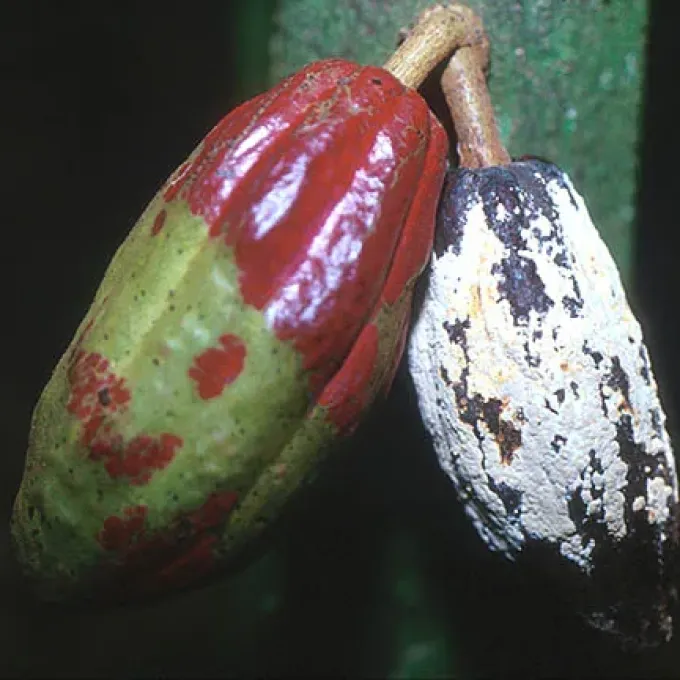
The first external sign of frosty pod rot is the appearance of dark, irregular spots on the pod surface. These spots enlarge rapidly, leading to the distortion of the pod's shape due to uneven tissue death and growth.
As the disease progresses, a dense, white, powdery layer of spores develops on the surface of the infected pod. This frosty appearance is what gives the disease its common name and serves as a primary indicator of high pathogen activity.
The interior of the infected pod undergoes severe degradation. The pulp surrounding the beans becomes hard, dry, and brown, while the beans themselves become blackened, stunted, and entirely unusable for cocoa production.
Premature ripening is a hallmark of the infection; the pods may appear fully mature from the outside long before they should, which is a deceptive symptom of the underlying internal destruction caused by the fungus.
- Dark, necrotic lesions on the pod shell
- Deformed and uneven pod growth
- Dense white or grey powdery fungal spores
- Internal pulp hardening and browning
- Total destruction of cocoa beans
Pathogen
The causative agent of the disease is the fungus Moniliophthora roreri, a basidiomycete. It is a highly specialized pathogen that exclusively infects the pods of the cocoa tree (Theobroma cacao).
The fungus reproduces through the massive production of conidia, which are tiny, wind-dispersed spores. These spores are remarkably resilient and can survive in the environment for extended periods, waiting for favorable conditions to germinate.
Infection occurs when spores land on young, developing cocoa pods. The fungus penetrates the epidermis, colonizes the internal tissues, and rapidly consumes the developing seeds, effectively turning the interior of the pod into a mass of fungal spores.
Unlike many other plant pathogens, it does not infect the leaves or the woody parts of the tree, which makes it a unique and devastating problem solely for the reproductive organs of the cocoa plant.
Research indicates that the rapid colonization of internal tissues is facilitated by the secretion of specific enzymes that degrade plant cell walls, allowing the mycelium to spread quickly throughout the pod.
Conditions for development
High humidity and consistent rainfall are the primary environmental drivers of this disease. Spore germination and infection are highly dependent on the presence of free water on the surface of the pods.
Poorly managed, dense canopy conditions restrict airflow and prevent the pods from drying out after rainfall, creating the perfect humid microclimate for the fungus to thrive and spread.
Optimal temperatures for mycelial growth range between 20°C and 25°C. Within this range, the pathogen can complete its cycle rapidly, leading to massive spore production and subsequent secondary infection waves.
The lack of proper orchard hygiene is a significant factor in disease escalation. Leaving infected, sporulating pods on the trees or the ground provides a continuous inoculum source that feeds the disease cycle.
Mechanical dispersal by insects, tools, and human contact during harvesting plays a critical role in spreading the disease across different parts of the orchard, even during periods of lower rainfall.
Why it matters
Frosty pod rot is widely considered the most destructive disease of cocoa globally. In severe cases, it can cause yield losses of up to 100%, leaving farmers with virtually no sellable product.
The economic impact is profound, especially for smallholder farmers who rely on cocoa as their primary source of income. Frequent losses can lead to the abandonment of plantations and localized economic crises.
Production costs rise significantly due to the necessity of constant monitoring and removal of infected pods. These labor-intensive practices increase the cost of production, making cocoa farming less competitive.
The disease also affects the quality of the cocoa supply chain, as even slightly infected pods, if harvested by mistake, can contaminate larger batches of healthy beans during the fermentation and drying process.
Given the pathogen's high reproductive rate, the persistent threat of frosty pod rot necessitates rigorous management protocols that must be followed strictly to maintain viable production levels.
Protection
The cornerstone of disease management is strict orchard hygiene. Frequent, regular removal and proper disposal of symptomatic pods before they produce spores are essential to reducing the inoculum level.
Cultural practices, such as regular pruning to open the canopy, improve aeration and sunlight penetration. This reduces the duration of leaf and pod wetness, which significantly hinders fungal infection.
Breeding and planting cocoa varieties with genetic resistance to Moniliophthora roreri represent the most sustainable and effective long-term strategy for managing the disease in cocoa-growing regions.
Chemical control with fungicides is generally difficult due to the large size of cocoa trees and the complexity of reaching every pod; however, it can be a part of an integrated management program when used correctly.
A comprehensive integrated pest management (IPM) strategy, combining biological control agents, resistant varieties, and community-wide coordination, remains the best approach to control the spread of frosty pod rot.
Discussion
No discussions yet — be the first.