
Frost's Bolete
Butyriboletus frostii
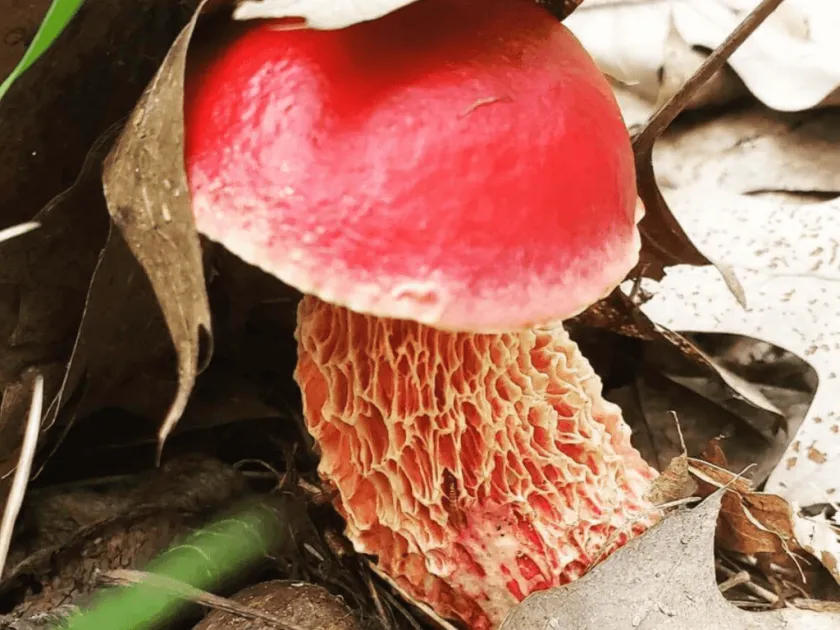
Description
Pathogen
It is important to clarify that Butyriboletus frostii, commonly known as Frost's Bolete, is a mycorrhizal mushroom and not a plant disease.
The fungus forms a mutually beneficial relationship with the roots of host trees, typically oaks, by facilitating nutrient and water uptake.
There is no evidence of this species acting as a parasite or pathogen; it does not cause lesions, decay, or structural damage to crops.
In forestry and agriculture, this organism is considered a marker of healthy soil ecosystems rather than a threat to vegetation.
The morphological characteristics of the fungus, such as its vibrant red cap and reticulated stem, are distinct from the pathogens typically studied in plant pathology.
Conditions for development
The growth and development of Butyriboletus frostii are heavily dependent on specific climatic factors and the presence of suitable host trees.
The fungus thrives in moist, temperate forest environments where there is a thick layer of organic leaf litter to support the mycelial network.
Adequate soil aeration and a stable pH level are necessary for the development of its fruiting bodies during the active season.
The health of the fungus is highly sensitive to the use of heavy chemical fungicides, which disrupt the essential mycorrhizal associations.
Environmental stability, characterized by consistent rainfall and mild temperatures, is the primary driver for the wide distribution of this species in its natural range.
Discussion
No discussions yet — be the first.