
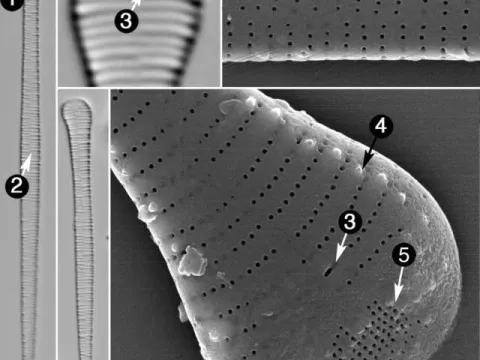
Asterionella formosa
Asterionella formosa
Asterionella formosa is a colonial diatom species widely distributed in freshwater ecosystems, forming distinctive star-shaped chains.
What the section contains
Asterionella formosa
While not a classical plant pathogen, it acts as a primary producer that can negatively influence water quality in irrigation reservoirs and aquaculture facilities.
These microorganisms possess a silica-based frustule, which necessitates specific nutrient conditions, particularly high silicate availability, for sustained growth.
The organism reproduces through binary fission, allowing it to rapidly colonize water bodies during favorable environmental conditions.
Its role in the ecosystem is that of a key component of spring phytoplankton, acting as an indicator of the trophic status of the water.
Growth of Asterionella formosa is strongly linked to the availability of dissolved nutrients, particularly silica, phosphorus, and nitrogen.
The species typically blooms during periods of thermal stratification or mixing, which redistribute nutrients within the water column.
Optimal light intensity is a critical factor, as these algae rely on photosynthesis to fuel their rapid population expansion.
Anthropogenic eutrophication, caused by fertilizer runoff from agricultural fields, significantly enhances the bloom potential of this species.
Moderate temperatures, often seen during early spring, provide the ideal physiological window for Asterionella formosa to outcompete other phytoplankton.
The excessive proliferation of this algae leads to drastic changes in dissolved oxygen levels, which can be detrimental to aquatic life in fish farms.
Decomposition of accumulated algal biomass results in secondary pollution, affecting water quality for irrigation purposes.
The formation of dense mats clogs physical filtration systems and pumping equipment, leading to high maintenance costs in agricultural water infrastructure.
Algal blooms alter the light penetration depth, negatively affecting submerged aquatic vegetation and overall ecosystem balance.
Specific secondary metabolites produced during high-density growth phases can potentially interfere with the irrigation of sensitive crops.
Proactive management of nutrient runoff from surrounding agricultural land is essential to prevent excessive nutrient enrichment in irrigation ponds.
Biological control methods, including the introduction of planktivorous fish, can effectively regulate the density of algal populations.
Water treatment using advanced filtration and UV sterilization is highly effective in managing algae levels in closed-loop irrigation systems.
The selective application of approved algaecides can be used as a targeted measure, provided that environmental impact guidelines are strictly followed.
Continuous monitoring of water chemistry, specifically phosphate and silica concentrations, allows for the early detection and management of potential bloom events.