
Exobasidium leaf spot
Exobasidium vaccinii
Description
Symptoms
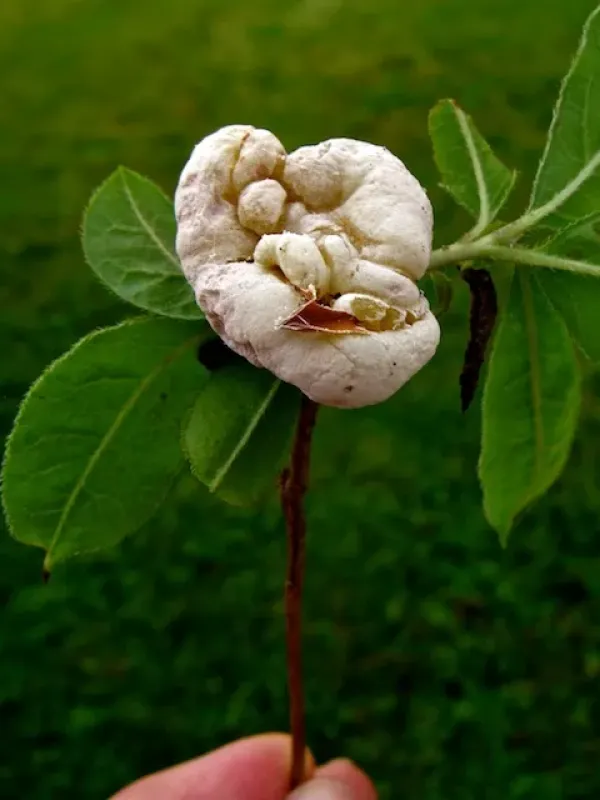
The most distinctive symptom is the development of thickened, fleshy, and distorted leaf tissue, often referred to as leaf galls or "puffed" areas.
These galls initially appear as pale green or yellowish spots, which then turn vibrant shades of pink, red, or even white as the spores develop.
A fine, powdery white or grayish bloom often covers the underside of the affected leaves, which is composed of millions of fungal spores.
Shoots and stems may become stunted, thickened, and twisted, frequently failing to produce new terminal growth during the active season.
In some cases, the infection spreads to the flowers and fruits, leading to abnormal development, discoloration, and eventual rotting of the harvest.
Pathogen
The disease is caused by the fungus Exobasidium vaccinii, a specialized pathogen that affects members of the Ericaceae family, such as blueberries, cranberries, and azaleas.
The pathogen is an obligate parasite that overwinters within the host plant tissue as mycelium, ready to emerge when favorable spring conditions arrive.
During the growing season, the fungus produces basidia on the surface of infected tissues. These basidia release spores that are easily spread by wind and splashing rain.
The fungus secretes plant growth regulators that induce cellular hypertrophy, causing the tissue to swell and deform into characteristic gall-like structures.
Because the fungus is systemic within specific branches or shoots, it can persist in the plant for several seasons if not properly pruned or treated.
Conditions for development
High relative humidity and moderate temperatures are the primary drivers for the rapid development and spread of Exobasidium vaccinii.
Poor air circulation within dense plantings prevents foliage from drying out quickly after rain or irrigation, creating a perfect microclimate for infection.
Shaded locations or poorly drained soils that retain excess moisture also promote fungal growth, allowing spores to germinate and penetrate plant tissues.
Extended periods of cool, wet weather in early spring are particularly critical, as this is when the new, tender growth is most susceptible to attack.
Lack of sanitation in the garden, such as leaving infected plant debris on the ground, allows the fungus to survive and reinfect the plants the following year.
Why it matters
The disease significantly reduces plant vigor by interfering with photosynthesis, as the deformed leaves cannot produce energy efficiently.
For fruit-bearing plants, the aesthetic and physical damage to berries leads to substantial yield losses and reduces the marketability of the produce.
In ornamental landscaping, the visual impact of distorted foliage and galls can render entire specimens unattractive and unfit for display.
Constant infection weakens the plant's overall immune system, making it more prone to secondary infestations by other opportunistic pathogens or pests.
Severe and untreated cases can lead to branch dieback or the eventual death of the entire plant if the fungal infection spreads significantly.
Protection
Sanitation is the first line of defense; growers should promptly prune and destroy all infected plant parts as soon as symptoms are noticed.
Applying copper-based fungicides or lime sulfur in late winter or early spring, before bud break, helps reduce the overwintering inoculum.
Improve air movement by thinning out dense foliage and maintaining appropriate spacing between plants to reduce the humidity around the leaves.
Avoid overhead irrigation, especially in the evening, to keep the foliage as dry as possible and limit the time available for spore germination.
Maintain plant health through balanced fertilization and appropriate site selection to ensure that bushes remain vigorous and resistant to fungal stressors.
Discussion
No discussions yet — be the first.