
Eustigmatophyceae
Eustigmatophyceae
Description
Symptoms
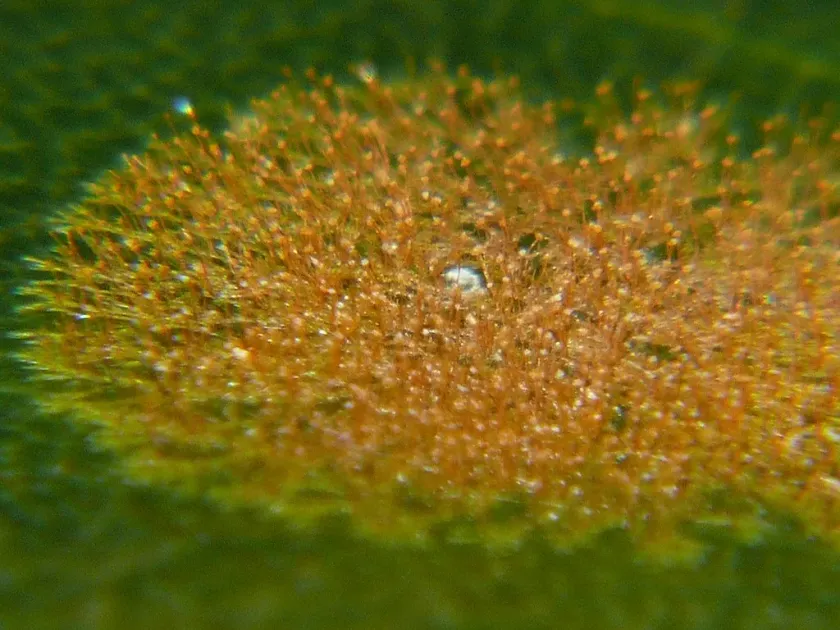
The primary sign of the appearance of Eustigmatophyceae is the formation of a dense green or dark green film on the surface of the substrate or moist soil.
In greenhouse environments and hydroponic systems, the development of a specific slimy coating on irrigation system components and plant roots is observed.
Visually, the infection manifests as a "bloom" on the surface, which eventually densifies and acquires a characteristic brownish hue.
When hydroponic crops are affected, algae can envelop the root system, preventing normal gas exchange and the uptake of nutrients.
Sometimes gas bubbles form on the substrate surface, indicating active photosynthesis and the metabolism of algal colonies.
Pathogen
The causative agent of the disease is unicellular microscopic algae of the class Eustigmatophyceae, distinguished by the specific structure of their chloroplasts.
These organisms contain chlorophyll «a» and violaxanthin pigments, which provide them with an intense green color even in low light conditions.
Biologically, they are photoautotrophic organisms capable of rapid reproduction through cell division in aquatic environments.
Eustigmatophyceae actively form biofilms that protect them from external adverse factors and allow them to attach to various surfaces.
In agronomic practice, they are often classified as associated organisms that negatively affect crop development in protected ground.
Conditions for development
The key condition for the rapid multiplication of Eustigmatophyceae is excessive moisture on the soil surface or substrate.
The presence of high levels of mineral nutrition, especially nitrogen and phosphorus compounds, creates a favorable background for their rapid growth.
The availability of direct or diffuse light, which ensures the photosynthesis process, is also an optimal development factor.
Poor ventilation and high relative humidity in greenhouses facilitate the moisture retention necessary for colonization.
Another risk factor is the use of recycled substrates that accumulate organic debris and algal spores.
Why it matters
The main danger lies in the competition of algae with cultivated plants for mineral nutrients, which reduces total yield.
By forming a dense coating, they mechanically block oxygen access to the roots, causing plant suppression and subsequent root rot.
In hydroponic systems, the development of these algae leads to clogging of nozzles, emitters, and filters, disrupting equipment operation.
Mass reproduction of algae creates an environment for the development of secondary pathogens, including fungal infections and bacterial rots.
Algal metabolic byproducts can alter the pH of the nutrient solution, creating unfavorable conditions for the growth of the main crop.
Protection
The primary protective measure is the regulation of moisture and the prevention of standing water on the substrate surface.
An effective prevention method is considered to be mulching the soil surface with opaque materials to limit light access.
In hydroponics, full light insulation of nutrient solution reservoirs is recommended to prevent algal photosynthesis.
In cases of severe infestation, algicides approved for specific agricultural crops are used to eliminate algal biomass.
Regular disinfection of equipment and flushing of irrigation systems with specialized cleaning agents helps to reduce the pathogen population to a safe level.
Discussion
No discussions yet — be the first.