
Eutypella canker
Eutypella prunastri
Description
Symptoms
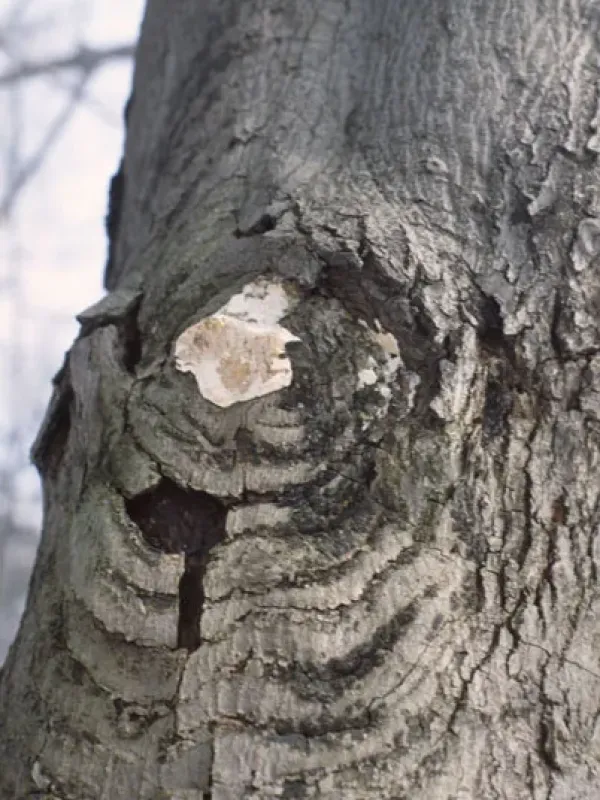
The primary symptom of Eutypella canker is the formation of characteristic sunken necrotic spots on the branches and trunk. In these zones, the bark loses its color and eventually begins to crack.
Over time, a deep canker forms at the site of necrosis, often surrounded by a pronounced callus ridge as the tree attempts to wall off the infection.
On the surface of the dead bark within the affected zones, tiny black, pimple-like structures may appear; these are the fungal stromata (fruiting bodies) breaking through the epidermis.
As the disease progresses, infected branches gradually wither. Foliage on these branches turns yellow, becomes stunted, drops prematurely, and the entire tree may show signs of overall decline.
If the infection reaches the trunk, the tree may die completely because the pathogen severely damages the conductive system, leading to irreparable metabolic disruption.
Pathogen
The disease is caused by the ascomycete fungus Eutypella prunastri, which belongs to the Sordariomycetes class. This pathogen specializes in attacking the wood and bark of stone fruit species, causing deep necrotic lesions.
The fungus life cycle involves the formation of stromata that erupt through the tree bark, becoming sites for the production of perithecia (fruiting bodies). Fungal spores are disseminated by wind and rain, landing on fresh bark wounds.
The infection is characterized by a prolonged period of development within woody tissues. The mycelium penetrates deep into the xylem, gradually disrupting the tree's sap flow and nutrient transport processes.
Biologically, Eutypella prunastri is considered a parasite capable of overwintering in affected tree parts, maintaining its infectious potential for several years.
The development of the pathogen typically initiates through mechanical bark damage, pruning cuts, or frost cracks, where the fungus begins its aggressive colonization of the host plant tissues.
Conditions for development
High relative humidity and moderate temperatures are the most favorable conditions for the spread of the fungus, as they promote active spore germination.
Weakened trees, suffering from drought stress, waterlogging, or nutrient deficiencies, are the most susceptible to Eutypella canker infections.
A key factor in disease development is the presence of open bark wounds. Any frost cracks, sunscald, or poorly executed pruning cuts serve as entry points for the infection.
Dense, poorly ventilated tree canopies create a microclimate with increased humidity, which significantly facilitates spore germination on damaged bark areas.
Spore dissemination occurs primarily during spring and autumn, when moisture on the bark surface persists long enough for successful infection to occur.
Why it matters
Eutypella canker causes significant economic damage to fruit yields, as infected branches eventually stop producing fruit and die, reducing the overall crop-bearing area.
If the main trunk is infected, the entire tree may perish within a few seasons, necessitating the removal and destruction of affected specimens from the orchard.
The disease leads to a substantial decline in the tree's immune system, making it vulnerable to secondary pests and diseases, which increases maintenance costs.
Infected wood becomes brittle, increasing the risk of major scaffold branch breakage under the weight of the fruit or during strong winds.
Economic losses arise not only from the loss of trees but also from the high labor costs associated with sanitary pruning and the safe disposal of infected plant material.
Protection
The primary control measure is the strict adherence to good orchard sanitation practices, including the thorough disinfection of pruning tools after working on infected trees.
Sanitary pruning must be performed in a timely manner: all infected branches should be removed, including a portion of healthy tissue, and destroyed by burning outside the orchard area.
All pruning cuts and mechanical wounds must be immediately treated with disinfectants and sealed with high-quality horticultural wound paint or natural-based sealants.
To prevent infection, maintain high orchard vigor through balanced nutrition and irrigation, which enhances the natural resistance of the trees.
During peak spore discharge periods (spring), the application of broad-spectrum fungicides permitted for use on stone fruit trees can be an effective protective measure for the bark.
Discussion
No discussions yet — be the first.