
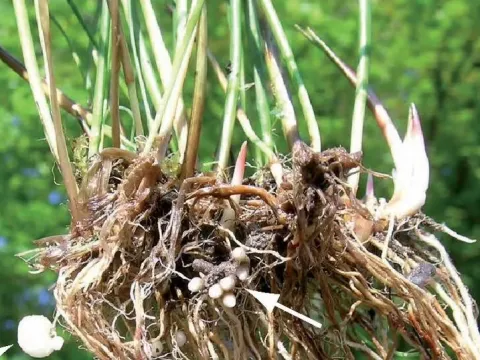
Entorrhiza fungi
Entorrhizales
The pathogens responsible for this disease are basidiomycetes belonging to the order Entorrhizales. Historically misclassified as smut fungi, they have been reclassified into a distinct group due to their unique morphology and specialized life cycle.
What the section contains
Entorrhiza fungi
These organisms are obligate biotrophs that specifically target the root systems of their host plants. The infection occurs within the root tissues, where the fungus remains hidden, developing internally before producing spores.
The life cycle of the pathogen is intricately linked to the host plant's physiological signals. Spores can remain dormant in the soil for several years, waiting for the presence of root exudates from susceptible plant species to trigger germination.
Inside the roots, the fungus forms specialized hyphae that penetrate both between and inside plant cells. This invasion triggers the plant to undergo abnormal cellular division, which leads to the formation of pathological root structures.
Entorrhizales are highly host-specific, primarily affecting plants within the Cyperaceae (sedges) and Juncaceae (rushes) families, which makes their ecological niche quite narrow but significant in specific environments.
The primary symptom of infection is the development of galls — localized swellings or tumors on the roots. The shape and size of these galls can vary greatly depending on the host species and the severity of the infection.
Affected plants often display stunted growth and a general lack of vigor. Because the root system is compromised, the plant cannot efficiently uptake water and nutrients, which inevitably impacts the development of the above-ground parts.
Upon cutting open the root galls, one can often find dense sporogenic tissues. These structures serve as the main reproductive center for the fungus, allowing it to produce vast quantities of spores for future dispersal.
Yellowing, loss of turgor, and premature wilting of leaves are common signs seen in plants with heavily infected root systems. This occurs as a secondary response to the damaged water-conducting tissues of the roots.
In advanced stages, the infected roots may decay, causing the plant to lose stability or die off completely as the pathogen destroys the structural integrity of the root system.
High soil moisture is the most significant factor facilitating the spread and development of the disease. Water helps transport fungal spores through the soil and brings them into contact with new roots.
Temperature plays a crucial role in the infection process. Moderate temperatures during the growing season generally provide the optimal environment for the fungus to colonize root tissues effectively.
Infected soil and crop residues are the primary reservoirs for the pathogen. Due to the high persistence of spores, the fungus can remain a threat to susceptible crops for long periods if left untreated.
Poorly drained, compacted, or acidic soils create an environment that favors Entorrhizales development. Lack of adequate soil aeration weakens the plant's natural defenses, making it easier for the fungus to invade.
Continuous cropping of susceptible species on the same field inevitably leads to an accumulation of inoculum, resulting in progressively worse disease outbreaks over successive years.
The disease causes significant losses in biomass production and overall crop quality. Plants forced to divert energy into coping with the pathogen exhibit reduced growth rates and lower economic yield.
In pasture and forage crops, the presence of these fungi reduces the nutritional value and palatability of the vegetation for livestock, which can have negative implications for agricultural operations.
The infection leads to patchy stands as individual plants die off or become severely weakened, allowing weeds or less desirable plant species to encroach upon the field, thus reducing the biodiversity of the ecosystem.
Long-term infestation of the soil lowers land productivity. Reclaiming such fields requires intensive soil management and multi-year breaks from planting susceptible species to clear the infection.
Increased susceptibility to secondary stresses, such as drought, frost, or other opportunistic pathogens, is a common indirect harm caused by the weakening of the plant's root system.
Crop rotation is the most effective management strategy. By alternating with non-host species, growers can reduce the spore density in the soil and disrupt the life cycle of the parasite.
Sanitation practices are vital, including the removal and destruction of heavily infected plant material and the thorough cleaning of farm equipment to prevent the mechanical transfer of contaminated soil.
Improving soil drainage and aeration through mechanical means or soil amendments helps create conditions unfavorable for fungal development while promoting a healthier root system for the plants.
Deep plowing can help bury infected residues, placing them in soil layers where decomposition is faster and the conditions for fungal spore germination are less favorable, thus reducing the pathogen load.
Promoting a healthy soil microbiome through the use of organic amendments and cover crops can create competitive conditions that inhibit the growth and establishment of Entorrhizales in the rhizosphere.