
Entyloma
Entylomataceae
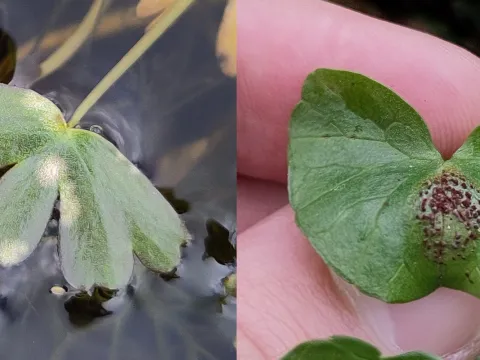
Entyloma disease manifests as distinct leaf spots on the foliage of host plants. These spots are often angular in shape, limited by the leaf veins, creating a characteristic mosaic pattern.
What the section contains
Entyloma
Within the infected tissue, the pathogen produces sporidia, which appear as small, often pale or whitish, raised patches on the leaf surface.
As the infection progresses, these patches can become grey or yellowish as the spores mature and are released into the environment.
Severe infestations often result in premature yellowing and necrosis of the leaf tissues, which significantly reduces the healthy leaf area.
Unlike many smut fungi that attack flowers or seeds, Entyloma species are primarily known for their impact on vegetative foliage.
The disease is caused by fungi belonging to the family Entylomataceae, which are part of the broader group of smut fungi (Ustilaginomycetes).
These pathogens are highly specialized obligate parasites, meaning they require living host tissue to complete their life cycle.
They propagate through teliospores that survive in plant debris or the soil, serving as the primary inoculum for future infection seasons.
The fungus develops mycelia either intercellularly or intracellularly within the leaf tissue, disrupting normal plant metabolism.
The taxonomy of this group is complex, as different species exhibit high host specificity, often affecting only a narrow range of plant species.
Entyloma development is strongly favored by high humidity conditions, including prolonged rainfall, heavy dew, or frequent foggy mornings.
Optimal temperatures for spore germination and colonization are generally moderate, typical of the early to mid-growing season.
Poor aeration in dense plantings creates a microclimate that retains moisture on leaf surfaces, allowing for rapid disease spread.
Weakened plants or those with mechanical damage from insects are generally more susceptible to infection by the pathogen.
Spore dispersal occurs primarily via wind and water splashing, facilitating the rapid movement of the fungus across a field.
The primary damage caused by Entyloma is the significant loss of functional photosynthetic surface area, leading to reduced plant vigor.
Infected plants may exhibit stunted growth and lower overall biomass production due to impaired nutrient processing and carbon assimilation.
For ornamental crops, the disease leads to a severe loss of aesthetic value, rendering the plants unsuitable for market sale.
Early leaf drop, triggered by severe infection, can significantly deplete the plant's carbohydrate reserves, impacting long-term survival.
In cases of chronic infection, the cumulative stress makes plants more vulnerable to secondary pathogens and abiotic environmental stressors.
Effective sanitation is critical, including the thorough removal and destruction of all infected plant materials after harvest to reduce the inoculum.
Implementing strict crop rotation schedules helps break the pathogen's life cycle and prevents it from building up in the soil.
The selection and cultivation of disease-resistant varieties is one of the most sustainable approaches to managing Entyloma.
Strategic use of fungicides can provide control in high-risk scenarios, though it should be guided by local disease monitoring and economic thresholds.
Maintaining proper plant spacing and managing weed populations improves airflow within the crop, which is essential for reducing humidity and disease pressure.