
Entorrhizaceae
Entorrhizaceae
Entorrhizaceae is a family of basidiomycete fungi that function as obligate parasites. Unlike many other smut fungi, they do not produce symptoms on leaves or seeds but instead restrict their life cycle to the subterranean parts of the host plant, specifically the roots.
What the section contains
Entorrhizaceae
The pathogen infects the host roots and triggers a process of hypertrophy and hyperplasia within the plant cells. This pathological transformation results in the formation of visible galls, which serve as the internal site for the fungus to develop its teliospores and reproduce.
These fungi are highly host-specific, primarily affecting plants within the Cyperaceae and Juncaceae families. Their evolutionary adaptation allows them to remain dormant in the soil for extended periods, waiting for the specific chemical cues from the host's root system to initiate infection.
The intracellular growth of the fungus ensures a constant supply of nutrients, as the parasite effectively redirects the plant's resources to support the development of the galls. This specialized interaction makes the fungus a persistent inhabitant of the host's rhizosphere.
Taxonomically, Entorrhizaceae occupy a distinct position within the smut fungi group. Their unique development inside root tissues and specific morphological characteristics differentiate them from other soil-borne pathogens, requiring specialized diagnostic methods to identify correctly.
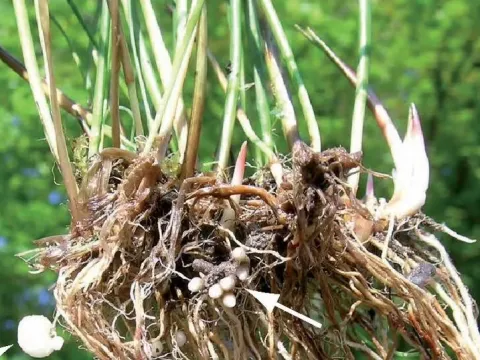
The most diagnostic sign of an Entorrhizaceae infection is the development of galls on the roots. These growths range from small, inconspicuous nodules to larger, irregularly shaped tumors that distort the root system, significantly altering its natural structure.
Symptoms are rarely visible above ground in the early stages, as the plant may continue to appear healthy. However, as the root infection progresses, the disruption of nutrient and water uptake becomes evident, leading to stunted growth and loss of vigor in the affected plants.
Infected plants often display signs of nutrient deficiency, such as yellowing of leaves or chlorosis, despite adequate fertilization. This occurs because the fungal galls interfere with the xylem and phloem transport, limiting the plant's ability to maintain its physiological functions.
Field observation can reveal patches of uneven growth or premature senescence in the crop. When these plants are carefully removed from the soil, the characteristic root galls can be observed, confirming the presence of the pathogen in the root zone.
In some cases, the tissue of the mature gall may rupture, releasing the spores of the fungus into the soil. This mass of spores can sometimes be detected as a dark, powdery substance within the necrotic or distorted root tissue during the late stages of the disease.
The development of Entorrhizaceae is highly dependent on environmental moisture. High soil moisture content is a primary driver of infection, as it facilitates the movement of spores towards the young roots and provides the necessary conditions for their germination.
Temperature plays a secondary but important role in the infection cycle. Optimal soil temperatures enhance the rate of fungal colonization and gall formation, whereas colder temperatures may slow down the metabolic activity of the fungus without eliminating its survival capability in the soil.
Soil texture and drainage are significant factors influencing the spread of the disease. Compact, poorly drained soils create an environment that retains moisture for longer periods, which is ideal for the survival and multiplication of the fungal spores within the host's root zone.
The presence of wild host plants, particularly weeds from the sedge or rush families, is a critical condition for the disease to persist. These weeds serve as environmental reservoirs, maintaining the fungal population in the absence of cultivated susceptible crops.
Poor agricultural practices, such as excessive irrigation and lack of proper soil aeration, further exacerbate the spread of the pathogen. These conditions allow the fungus to infect more hosts and increase the inoculum level in the field over multiple growing seasons.
The primary harm caused by Entorrhizaceae is the structural and functional impairment of the root system. By forming galls, the fungus obstructs the plant's ability to absorb essential water and minerals, leading to chronic physiological stress and reduced overall plant development.
Yield reduction is the most significant economic consequence of this disease. Plants affected by root galls have less energy available for seed or biomass production, resulting in lower harvest quality and total output per hectare in infected fields.
Infected crops are more susceptible to secondary stressors, including drought and attacks by other soil pathogens or pests. The weakened root system cannot support the plant adequately under adverse conditions, often leading to total crop failure in heavily infested patches.
The long-term persistence of fungal spores in the soil presents a major challenge for agricultural management. Fields infected with Entorrhizaceae may need to be withdrawn from the production of susceptible crops for several years to allow the inoculum density to decrease.
The necessity for complex crop rotation changes and the cost of implementing stricter sanitation measures can significantly affect the profitability of agricultural enterprises, especially when no direct chemical control methods are available for the field application.
A rigorous crop rotation strategy is the cornerstone of disease control. By removing susceptible species from the rotation cycle for several years, producers can effectively reduce the level of inoculum in the soil and mitigate the risk of severe infection in subsequent seasons.
Weed management targeting the families Cyperaceae and Juncaceae is essential for reducing the disease pressure. Eradicating these host plants from the field edges and within the crop area prevents the fungus from maintaining its population between the growth periods of cultivated plants.
Improving soil structure through adequate drainage and tillage practices can make the environment less favorable for the pathogen. Reducing standing water and increasing soil aeration helps to lower the risk of infection by preventing the conditions required for spore germination.
Farmers should prioritize the use of disease-free, certified seeds and planting materials to prevent the introduction of the fungus into clean fields. Periodic monitoring of the root systems in high-risk areas is recommended to catch infections before they become widespread.
As there are no effective broad-spectrum chemical fungicides for controlling these root-infecting fungi, the focus must remain on integrated management strategies. Combining preventative agrotechnical practices is the most reliable way to maintain productivity in areas where the disease is present.