
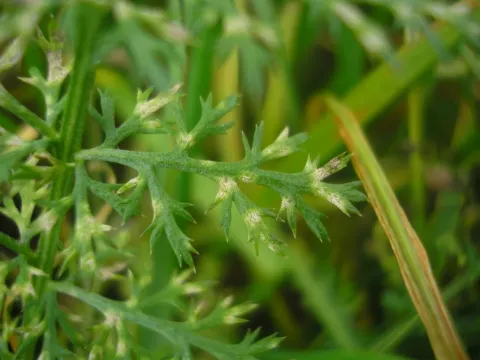
Entyloma achilleae leaf spot
Entyloma achilleae
The causative agent of this disease is the fungus Entyloma achilleae, which belongs to the smut fungi group. It is an obligate parasite that relies on living yarrow tissues to complete its biological cycle.
What the section contains
Entyloma achilleae leaf spot
The fungus propagates through teliospores, which remain viable in soil or crop residues. These spores serve as the primary inoculum for the infection of new shoots during the growing season.
The mycelium colonizes the intercellular spaces of the leaf epidermis. By extracting nutrients from the host plant, the fungus disrupts the plant's metabolic functions, leading to visible tissue damage.
Spore dispersal occurs primarily through rain splashes, wind currents, and mechanical contact. High humidity levels facilitate the rapid spread of spores throughout the field or garden bed.
Due to its high specificity, this pathogen is strictly associated with Achillea species. Scientific understanding of its biology is crucial for effective quarantine and management strategies in herbal production.
The first symptoms of Entyloma achilleae appear as small spots on the leaf blades. These spots are often pale yellow or chlorotic, gradually darkening as the infection progresses.
The leaf spots typically have blurred or indefinite margins, distinguishing them from other fungal leaf spot diseases. Affected tissues eventually become brittle and may undergo necrosis.
On the underside of the leaves, the pathogen forms visible spore masses. This appears as a fine, dusty layer consisting of teliospores, which can be easily detached by touch or environmental movement.
Severe infestations lead to premature yellowing, wilting, and dehydration of the leaves. This degradation of leaf tissue significantly reduces the plant's photosynthetic capacity.
- Presence of chlorotic spots with indistinct edges
- Formation of a powdery spore layer on leaf surfaces
- Premature tissue necrosis and leaf curling
- Overall reduction in plant vigor and aesthetics
The development of Entyloma achilleae is heavily favored by high moisture conditions. Prolonged rainfall, fog, or heavy dew provide the necessary environment for spore germination.
Moderate temperatures ranging from 15°C to 22°C are optimal for the fungus to colonize the host plant. Extremes in temperature can slow down the disease progression but rarely eradicate the pathogen.
Poor airflow, often caused by excessive planting density, is a significant risk factor. When plants are crowded, humidity stays high in the canopy, allowing the fungus to thrive.
Low light conditions and shaded areas significantly increase the likelihood of infection. Plants that are not exposed to sufficient sunlight dry out more slowly, prolonging the infection window.
Infected crop debris left in the field from previous seasons acts as a reservoir for the disease. If not managed properly, this residue ensures a continuous cycle of infection year after year.
The primary damage caused by Entyloma achilleae is the reduction of the active photosynthetic surface area. This results in stunted growth and a decrease in total plant biomass.
In the production of medicinal yarrow, this disease is economically damaging. The infection lowers the quality of the harvested material, making it unfit for commercial or pharmaceutical use.
The disease weakens the host's overall resistance, making it more susceptible to environmental stressors like drought, heat, or secondary pest infestations.
Financial losses occur due to decreased yields and the additional costs associated with implementing disease control measures and fungicides during the growing season.
If left unmanaged, the pathogen can weaken entire populations of plants, leading to a gradual decline in the long-term productivity and vitality of the plantation.
Effective crop rotation is the cornerstone of disease prevention. Avoiding the replanting of yarrow on the same plot for several years helps break the fungal life cycle.
Proper sanitation, including the thorough removal and disposal of infected plant material, is essential. Burying or destroying residues prevents the buildup of inoculum in the soil.
Maintaining proper spacing between plants ensures adequate ventilation, which keeps the leaf surfaces dry and inhibits fungal growth. Regular weeding further improves air circulation.
When necessary, fungicides approved for herbal crops can be applied preventively. It is critical to follow label instructions regarding application timing and pre-harvest intervals.
Selecting resistant cultivars or healthy mother plants for propagation is a sustainable strategy. Breeding programs focusing on resistance represent the best long-term approach to controlling this disease.