
Entyloma cosmi
Entyloma cosmi
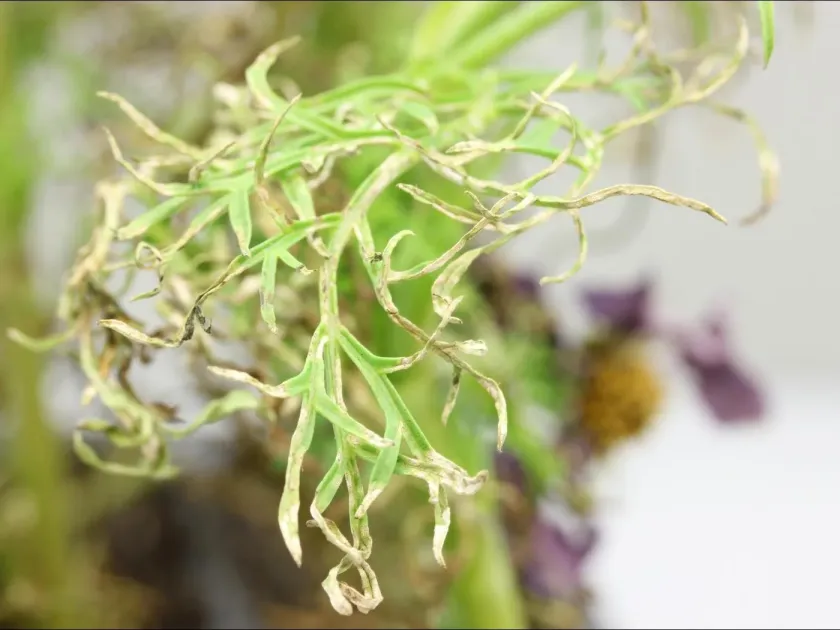
Description
Symptoms
Early symptoms appear as small, pale green or yellowish spots on the leaves. Over time, these spots expand, change color to brown or necrotic, and often develop a darker, defined margin.
As the infection progresses, the tissues within the spots begin to die. Under high humidity, a fine, powdery layer—representing the fungus's spore-producing structures—may become visible on the leaf underside.
The spots are characteristically localized between the leaf veins. As the disease advances, multiple spots can coalesce, covering large portions of the leaf surface and causing significant damage.
Visual decline includes premature yellowing and wilting of the affected foliage. If the disease remains unchecked, heavy infections lead to early leaf drop, stripping the plant of its aesthetic value.
- Light green to brown irregular leaf spots.
- Necrotic tissue development within lesions.
- Visible spore dust under high moisture conditions.
- Premature wilting and defoliation of the plant.
Pathogen
The causal agent of this disease is the fungus Entyloma cosmi, a member of the smut fungi order. It is a highly specialized parasite that primarily infects plants within the Cosmos genus.
The fungus develops its mycelium within the leaf tissue, colonizing the intercellular spaces. It produces teliospores, which are specialized survival structures that allow the pathogen to persist in various environmental conditions.
The pathogen's life cycle is tightly synchronized with the host plant's growth period, using moisture and host contact to propagate effectively throughout the canopy.
Persistence in soil and plant debris is a critical feature of Entyloma cosmi, posing a recurrent threat to gardens where host plants are grown repeatedly in the same location.
Understanding the biology of this pathogen is essential for effective sanitation, as its dispersal relies heavily on water splashes and wind-borne spores.
Conditions for development
The development of the disease is heavily favored by warm and humid weather conditions. Rainfall and prolonged leaf wetness create the perfect environment for spore germination.
Dense planting schemes are a primary risk factor. Reduced airflow and poor drying of foliage after rain facilitate rapid pathogen colonization and spread across the planting area.
Overhead irrigation is particularly risky, as water splashes easily transmit spores from the soil surface onto the foliage of healthy plants.
Inadequate sanitation practices, such as failing to remove infected plant debris, contribute significantly to the buildup of inoculum in the garden soil.
The optimal temperature range for the pathogen's growth typically falls between +18 and +25 degrees Celsius, aligning with the peak growing season of Cosmos plants.
Why it matters
The primary harm caused by Entyloma cosmi is the severe loss of decorative quality. Infected plants look unsightly, suffering from spotted foliage and premature dieback, which ruins the appearance of ornamental displays.
Damage to the leaf surface impairs the plant's photosynthetic capacity, leading to reduced vigor, stunted growth, and a significant decrease in flower production.
The disease weakens the host plant's overall immunity, making it more susceptible to secondary infections by other opportunistic pathogens and pest infestations.
Early leaf loss forces the plant to divert energy toward defensive responses rather than flowering, shortening the period of aesthetic display.
An unchecked infection can lead to an epidemic within the garden, necessitating the destruction of infected plants to protect surrounding vegetation from contamination.
Protection
Effective management begins with proper plant spacing to improve air circulation, allowing leaves to dry quickly after rain and reducing the likelihood of fungal colonization.
Strict sanitation is mandatory: remove and destroy any infected leaves or plants promptly. Do not incorporate diseased material into compost piles, as spores may survive.
The application of contact or systemic fungicides, particularly those containing copper or specialized organic ingredients, is recommended upon the first sign of symptoms.
Routine garden maintenance, such as regular weeding and soil cultivation, helps manage soil moisture and supports overall plant health by reducing environmental stress.
Implementing a crop rotation strategy is essential; avoiding the planting of Cosmos in the same spot for consecutive years effectively interrupts the pathogen's life cycle.
Discussion
No discussions yet — be the first.