
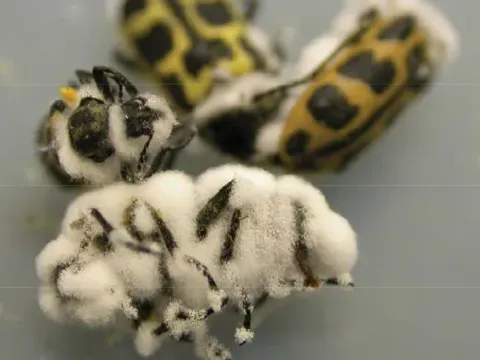
Aphid entomophthora
Entomophthora aphidis
The causative agent of this condition is the entomopathogenic fungus Entomophthora aphidis, which belongs to the order Entomophthorales. It is a highly specialized parasite that exclusively targets various aphid species.
What the section contains
Aphid entomophthora
The fungus invades the host by penetrating the insect's cuticle using specific enzymes, subsequently proliferating within the aphid's hemolymph to absorb vital nutrients.
After the death of the insect, the fungus develops conidiophores that emerge from the aphid's body to discharge conidia into the surrounding environment, infecting nearby aphids.
The fungus can also produce resting spores known as zygospores, which allow it to survive harsh conditions in the soil or on plant debris for extended periods.
Transmission of the pathogen occurs through physical contact or airborne dispersal of conidia within a dense colony of aphids.
The first signs of infection include reduced movement and cessation of feeding, as the infected aphid becomes lethargic and stops moving along the plant surface.
Dead aphids typically change color, often appearing grayish, brownish, or pale white due to the development of a fungal mycelial mat on their external surface.
Infected individuals are often observed attached firmly to the underside of leaves or stems, frequently in a stiff, unnatural-looking pose.
A colonized group of aphids may appear as a collection of "mummified" husks that contrast sharply with the surrounding healthy individuals.
Microscopic inspection reveals the dense growth of hyphae and conidiophores emerging from the joints of the insect's legs and the body's cuticle.
Development of Entomophthora aphidis is highly dependent on environmental humidity, with levels above 75-80% being optimal for spore germination and transmission.
Conditions such as morning dew, high rainfall, or persistent fog significantly facilitate the spread of the fungal disease throughout the aphid colony.
The ideal temperature range for rapid infection and growth of the fungus typically falls between +18°C and +24°C.
High aphid density is critical for an epizootic event, as the fungus requires close contact between hosts to successfully jump from one individual to another.
Conversely, hot and arid conditions serve as a limiting factor, slowing the fungal growth and potentially halting the spread of the infection.
From an agronomical perspective, this "disease" is not harmful to crops but is considered a beneficial biological agent that naturally regulates pest populations.
Outbreaks of Entomophthora aphidis can cause near-total collapse of aphid colonies, preventing significant yield losses without the need for chemical intervention.
Since the fungus is an obligate parasite of insects, it poses no threat to the physiology of the cultivated plants it inhabits.
Excessive use of broad-spectrum fungicides can inadvertently eliminate this natural ally, leading to secondary aphid outbreaks due to the loss of natural biological control.
The presence of this fungus is an indicator of a healthy and balanced agro-ecosystem where natural enemies effectively suppress potential pest infestations.
Agronomic strategies focus on the preservation and encouragement of the fungal population rather than its eradication.
Integrated Pest Management (IPM) practices should prioritize minimizing the application of fungicides that have a detrimental effect on beneficial entomopathogenic fungi.
Providing a favorable environment for the fungus, such as maintaining appropriate crop density and moisture management, helps sustain natural biological suppression.
- Reduced reliance on broad-spectrum chemical pesticides
- Conservation of the natural entomopathogenic fungal pool
- Regular monitoring for signs of mycotic aphid deaths
- Strategic irrigation to maintain necessary microclimatic humidity
- Adoption of bio-friendly pest management protocols
Research is ongoing into the development of biological products based on these fungal spores for intentional application in greenhouse environments to control aphid infestations.