
Apiognomonia
Apiognomonia
The disease is caused by fungi of the genus Apiognomonia, which belong to the Ascomycota division. These fungi survive the winter in fallen leaves and other organic debris.
What the section contains
Apiognomonia
It is classified as a fungal infection, characterized by a complex life cycle that involves both sexual and asexual stages of development.
During the spring, the pathogen releases spores that are dispersed by wind and splashing raindrops onto the emerging foliage of susceptible trees.
The fungus penetrates plant tissues, establishing a parasitic relationship that extracts nutrients at the expense of the host plant's vigor.
As the growing season progresses, the fungus produces more fruiting bodies, ensuring the continuation of the infection cycle throughout the year.
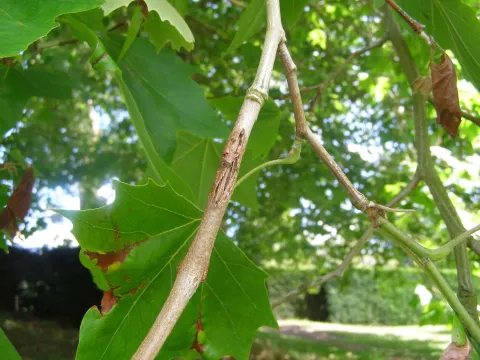
The most common symptoms include irregular brown or tan spots on the leaves, which often appear in the late spring or early summer.
These spots frequently exhibit a defined margin and can grow in size, eventually causing large sections of the leaf tissue to wither.
In many cases, the infection moves to the leaf petioles, leading to premature leaf drop and a sparse canopy appearance during the peak of summer.
Tiny, dark, pin-like fungal structures may become visible on the surface of infected leaves or stems when humidity levels remain high.
Heavily infected trees appear stunted, with scorched-looking foliage that significantly impacts their aesthetic and physiological health.
The development of Apiognomonia is highly favored by cool, wet weather conditions, particularly during the early leaf-out period in the spring.
Poor air circulation within the tree canopy due to lack of pruning creates a microenvironment that traps moisture, accelerating spore germination.
Frequent spring rainfall facilitates the transport of spores, allowing the disease to spread rapidly across individual trees and nearby plants.
Trees that are already stressed due to drought, nutrient deficiency, or physical damage are more susceptible to the initial fungal colonization.
The presence of overwintering inoculum in leaf litter beneath the tree is the primary factor that triggers infection at the start of the season.
The primary impact of the disease is the loss of photosynthetic area due to premature defoliation, which hampers the plant's food production.
Severe and repeated infections weaken the tree's immune system, making it more vulnerable to secondary infections by other pests and pathogens.
Reduction in vigor leads to poor shoot development and reduced winter hardiness, increasing the risk of cold damage in subsequent months.
In ornamental settings, the disease significantly detracts from the visual appeal, often rendering the trees unsuitable for landscape purposes.
Long-term infestation can lead to dieback of twigs and branches, potentially threatening the longevity of the entire specimen if left untreated.
Sanitation is the most critical control measure; raking and removing fallen leaves in the autumn is essential to eliminate the overwintering inoculum.
Proper pruning practices are necessary to improve canopy ventilation, which reduces the duration of leaf wetness and inhibits fungal growth.
Fungicide applications, such as copper-based sprays, can be effective if applied as a preventative measure at the time of bud break.
Improving overall tree health through adequate irrigation and fertilization helps the tree better withstand and recover from fungal pressure.
- Prune to increase airflow through the branches.
- Monitor trees for early signs of leaf spot.
- Use certified disease-free nursery stock.