
Aphanomyces root rot of clover
Aphanomyces trifolii
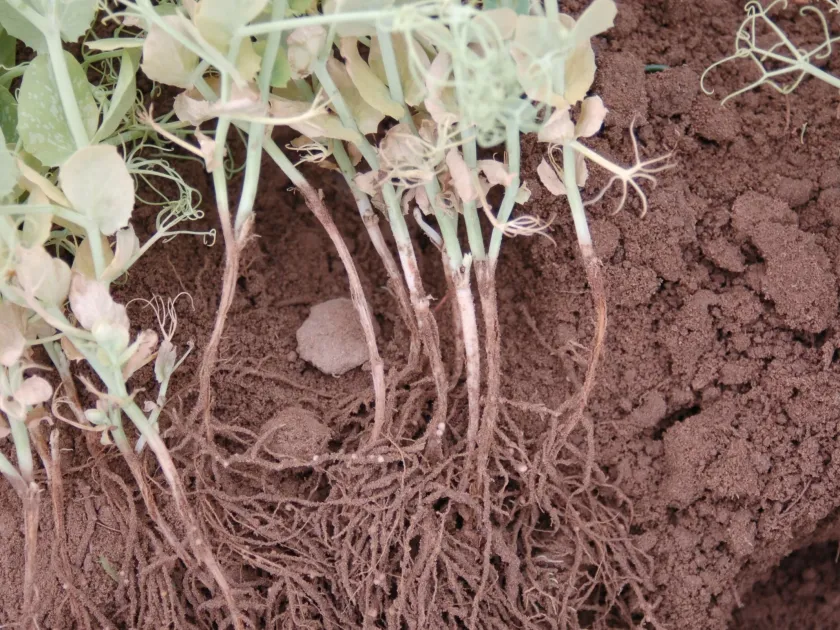
Description
Symptoms
The initial signs of infection appear as stunted plant growth and a characteristic chlorosis of the leaves, which is often misdiagnosed as nitrogen deficiency.
Upon closer examination, the root system shows brown or dark-colored lesions on the taproot and secondary roots, indicating the presence of the pathogen.
As the disease progresses, the cortex of the root begins to decay, allowing it to be easily detached from the inner central cylinder of the root.
Above-ground parts of the clover often begin to wilt, especially during the heat of the day, because the compromised root system cannot transport water effectively.
Severe infestations result in plant death, leading to thinning stands and bare patches in the field, which reduces overall forage yield.
Pathogen
The causal agent is the oomycete Aphanomyces trifolii, a soil-borne pathogen that thrives in moist environments and aquatic conditions.
The pathogen's life cycle involves the production of motile zoospores that use flagella to swim through soil water towards host roots by detecting chemical exudates.
Once it penetrates the root tissue, the oomycete spreads rapidly through the cortex, destroying cells and disrupting the plant's ability to absorb water and nutrients.
Inside the infected roots, the pathogen produces oospores, which are dormant, highly resistant structures that can survive in the soil for several years.
This pathogen is relatively host-specific, primarily targeting species within the Trifolium genus, posing a continuous threat to clover crops.
Conditions for development
The primary factor triggering the disease is high soil moisture, usually caused by heavy rainfall or over-irrigation during the early growing season.
The pathogen is most active at soil temperatures between 15 and 25 degrees Celsius, matching the optimal conditions for vigorous clover growth.
Soil compaction and poor aeration further exacerbate the situation by creating a stagnant environment where the pathogen can easily move and thrive.
Heavy clay soils with poor drainage are significantly more prone to severe outbreaks of Aphanomyces root rot compared to well-drained, sandy soils.
The disease spreads effectively through surface water runoff, contaminated soil movement on machinery, and the transfer of infected plant residues between fields.
Why it matters
The economic impact of Aphanomyces root rot is significant, as it leads to substantial yield losses in both biomass and seed production due to plant death.
Infestation reduces the longevity of the clover stand, forcing farmers to terminate the field earlier than expected, which disrupts production schedules.
Plants weakened by this root rot are highly susceptible to secondary infections by other soil-borne fungi like Fusarium or Pythium species.
The nutritional quality of the forage is diminished, as stressed plants produce less biomass and exhibit lower concentrations of essential proteins and minerals.
Reduced root health impairs the symbiotic relationship with nitrogen-fixing bacteria, negatively affecting the overall soil fertility for subsequent crops.
Protection
The primary management strategy is to implement a strict crop rotation schedule, avoiding clover or other susceptible legumes on the same field for at least 4-6 years.
- Improve soil drainage systems to eliminate waterlogged conditions that favor pathogen development.
- Select and plant clover varieties known for resistance or tolerance to root rot complexes.
- Apply balanced fertilization, particularly phosphorus and potassium, to boost the plant's natural immune response.
- Maintain optimal soil pH through liming, as this can create an environment less favorable for oomycete activity.
- Sanitize farm machinery thoroughly before moving from infected fields to clean ones to prevent the spread of dormant spores.
Chemical control options are limited and often ineffective as a standalone treatment, making cultural and preventative practices the foundation of disease management.
Discussion
No discussions yet — be the first.