
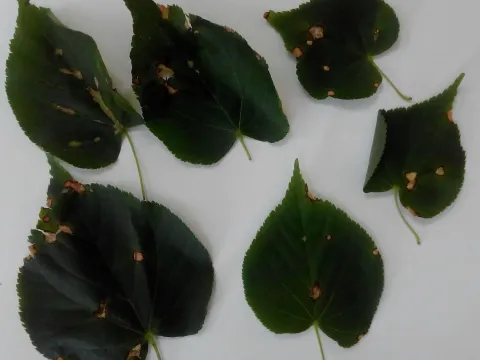
Linden discula
Discula kriegeriana
The disease is caused by the fungus Discula kriegeriana, which belongs to the category of pathogens affecting foliage in various broadleaf tree species.
What the section contains
Linden discula
This fungus acts as an opportunistic parasite, primarily targeting linden trees that are already suffering from environmental stress or poor site conditions.
The life cycle involves the production of conidia that are easily dispersed through wind currents and splashing rain, enabling rapid spread across the canopy.
The pathogen thrives during the growing season and manages to survive through the winter months in fallen leaves or infected twigs on the tree.
Its biological impact is linked to the disruption of the tree's metabolic processes due to the damage caused to the leaves and leaf petioles.
The primary symptom includes the formation of dark spots on the leaves, which often expand and develop irregular shapes over time.
A distinctive yellow halo or margin often appears around these spots, making the infection visible and easier to distinguish from other types of leaf damage.
As the infection progresses, affected leaves exhibit necrosis, turn brown, and eventually drop prematurely from the tree branches.
Under humid conditions, small fruiting structures of the fungus may emerge on the leaf surface, appearing as minute dots that release spores.
- Irregular necrotic spots on leaves.
- Yellowing margins around lesions.
- Premature leaf abscission.
High relative humidity and prolonged periods of rainfall are the most critical factors that trigger the development and spread of Discula kriegeriana.
Trees planted in high-density environments with poor air circulation are much more susceptible to the rapid colonization of this fungal pathogen.
Warm temperatures paired with moist foliage create an ideal microclimate for the germination of fungal spores on the surface of the linden leaves.
Structural damage or injuries to the tree caused by pests or pruning errors provide entry points for the fungus to establish infection.
Lack of proper maintenance, including inadequate soil moisture or nutrient deficiencies, decreases the tree's innate defense against the disease.
The disease causes significant foliage loss, which directly impairs the tree's ability to perform photosynthesis and generate energy for growth.
Persistent infection weakens the overall structure of the tree, leading to crown thinning and the potential dieback of younger, tender shoots.
The aesthetic value of linden trees in urban settings is significantly reduced due to the early onset of autumn-like colors and leaf drop in summer.
Chronic infestation makes the trees more susceptible to secondary pests and pathogens that can cause much more severe, permanent damage.
Without intervention, repetitive annual infections can lead to the slow decline and eventual mortality of weaker or younger linden specimens.
Sanitation is the cornerstone of management: all fallen leaves must be removed and destroyed to minimize the primary inoculum for the next season.
Pruning out infected branches improves air circulation within the canopy, which effectively discourages the development of the fungus.
Application of fungicides during the early stages of the growing season can protect new leaves from becoming infected during wet weather spells.
Maintaining optimal tree health through proper irrigation and balanced fertilization helps the tree resist attacks by Discula kriegeriana.
Monitoring urban landscapes during the early summer helps in identifying the initial symptoms and applying localized control measures promptly.