
Ditiola
Ditiola
Description
Symptoms
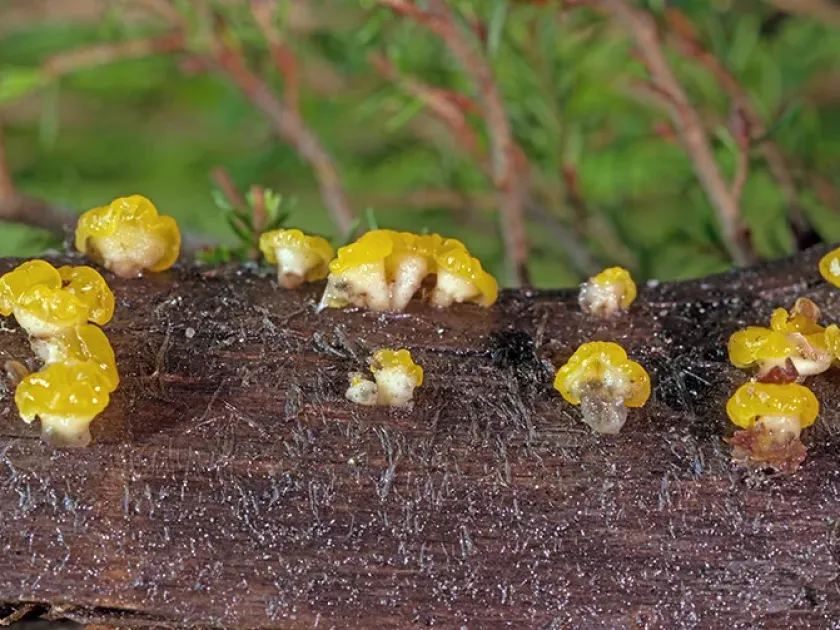
The most visible symptom of Ditiola infection is the presence of small, bright, jelly-like fruiting bodies protruding from the bark or exposed wood of the tree trunk and branches.
As the infection progresses, the internal wood structure becomes soft and loses its density. The wood may show signs of decay, becoming crumbly or spongy to the touch during physical inspection.
Bark peeling is a common late-stage symptom, exposing the degraded cambium layer underneath, which often appears discolored or shows a visible network of fungal mycelia.
Infected trees may exhibit signs of reduced vigor, such as yellowing foliage, dieback of distal branches, or an inability to properly transport nutrients throughout the crown.
A distinctive feature of the infected area is a noticeable fungal odor, especially in damp conditions, caused by the active decomposition of woody tissues by the fungus.
Pathogen
The disease is caused by the fungus Ditiola, which belongs to the Basidiomycota phylum. It acts as a wood-decaying organism, primarily colonizing weakened, stressed, or dead woody tissues.
Biologically, this fungus secretes enzymes capable of breaking down complex lignin and cellulose structures. Its fruiting bodies are often gelatinous or waxy in texture, appearing in shades of yellow or orange.
The fungus propagates through spores that are dispersed by wind, rain splashes, and sometimes insects, allowing it to easily colonize new hosts throughout a landscape or forest area.
The mycelium develops within the wood, slowly eroding the structural integrity of the host. While primarily a saprophyte, it can behave as an opportunistic pathogen when a tree's defenses are compromised.
Its ability to remain dormant during unfavorable periods and activate when moisture returns makes it a persistent inhabitant of damp wooded environments.
Conditions for development
High relative humidity and consistent moisture on the bark surface are the primary catalysts for Ditiola growth. Extended rainy seasons or foggy microclimates provide ideal conditions for sporulation.
Temperature plays a significant role, with moderate ranges (typically 15°C to 22°C) facilitating the fastest colonization of new wood tissues by the fungus.
Open wounds caused by pruning, ice damage, wind breakage, or animal feeding provide the necessary entry points for spores to infect the tree's interior.
Dense, poorly ventilated plantings impede natural drying processes, allowing moisture to linger on bark surfaces and encouraging the establishment of fungal colonies.
Trees already suffering from drought, nutrient deficiency, or pest infestations are significantly more susceptible to infection due to their lowered defensive capabilities.
Why it matters
The primary damage caused by Ditiola is the degradation of the wood's structural integrity, which significantly increases the risk of limb breakage or total tree collapse, posing safety hazards.
By interfering with the vascular system of the tree, the fungus restricts the flow of water and essential minerals, leading to the gradual decline and eventual death of branches.
For fruit orchards, the infection directly impacts productivity and reduces the lifespan of the trees, leading to economic losses and the need for early removal of infected stock.
The spread of the fungus into adjacent healthy trees can occur rapidly if the source of infection is not addressed, potentially decimating sections of an orchard or garden.
Over time, the cumulative impact of Ditiola leads to a total failure of the tree's physiological systems, resulting in complete death if left untreated by professional care.
Protection
Effective management begins with proper sanitation, including the prompt removal and destruction of infected branches and ensuring the health of remaining woody tissues.
Regular maintenance of open wounds with wound dressings or antifungal pastes helps prevent spore entry and promotes the natural healing of tree bark.
Strict hygiene protocols, such as disinfecting pruning tools with alcohol after every cut on an infected tree, are essential to prevent the mechanical spread of the fungus.
Copper-based fungicides can be used as a preventative treatment during the dormant season to reduce the overall spore count in the environment and protect exposed wood.
- Encourage crown ventilation through proper annual pruning.
- Remove any deadwood or debris from the vicinity of the trees.
- Monitor trees for early signs of decay and bark abnormalities.
- Maintain tree vigor through balanced fertilization and hydration.
Discussion
No discussions yet — be the first.