
Ditopella
Ditopella
Ditopella is a genus of ascomycete fungi that cause fungal infections in various woody plants. The species Ditopella ditopa is frequently associated with lesions on the bark of specific tree species.
What the section contains
Ditopella
The fungus colonizes the bark and cambium layers of the host plant, where it develops its mycelium, gradually invading the live tissues of stems and twigs.
Within the host tissue, the fungus forms small fruiting bodies known as perithecia, which serve as the primary reproductive structures for spreading the infection.
These fruiting bodies erupt through the host epidermis, facilitating the dispersal of spores into the surrounding environment during favorable conditions.
The lifecycle of the pathogen is closely synchronized with the seasonal development of its host, allowing the fungus to survive dormant periods directly within the infected woody parts.
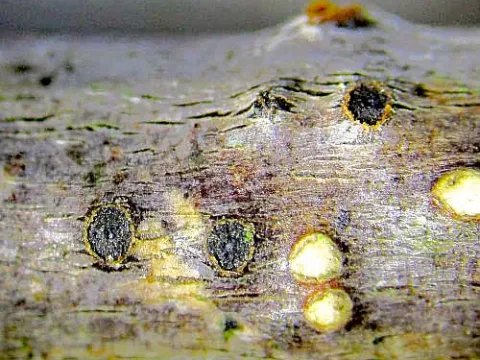
The most visible symptom of Ditopella infection is the presence of small, black, blister-like protrusions or bumps on the bark of infected twigs.
These protrusions represent the developing perithecia. As the infection progresses, the surrounding bark often appears necrotic, dry, and brittle, leading to cracks.
Infected trees typically show signs of thinning crowns, characterized by premature yellowing and shedding of leaves on affected branches.
At the intersection between healthy and diseased bark, one can observe distinct changes in wood coloration caused by the fungal metabolites produced during colonization.
Under humid conditions, the sites of spore emergence may display a slight discharge or dusting, which serves as a source of further contamination in the area.
High relative humidity and moderate temperatures are the primary environmental drivers for the germination and growth of Ditopella spores on the bark of trees.
Dense forest stands or plantations with poor air circulation create a localized microclimate that significantly favors the rapid spread of the pathogen.
Trees that are stressed due to nutrient deficiencies, drought, or poor soil conditions are much more susceptible to the fungal invasion than healthy individuals.
The presence of dead or dying woody debris within the stand acts as a permanent reservoir for the infection, from which spores are carried by rain splash or wind.
Periods of prolonged rain, especially during spring and autumn, are considered critical windows for the dispersal of spores and the initiation of new infections.
Ditopella primarily targets members of the Alnus genus (alder), causing significant long-term damage such as branch dieback and overall tree decline.
Chronic infections weaken the tree's physiological systems, reducing its growth rate and biomass production over several growing seasons.
By compromising the integrity of the bark, the fungus creates entry points for secondary pests and opportunistic pathogens, further accelerating the tree's deterioration.
From a forestry perspective, the disease degrades timber quality, as the necrotic lesions penetrate deep into the wood, making it unsuitable for high-quality use.
In urban forestry and landscaping, the aesthetic value of trees is severely reduced as crowns become sparse and disfigured, leading to premature tree removal.
The most effective strategy is rigorous sanitation, which involves pruning and destroying infected twigs to significantly reduce the inoculum load in the forest.
Minimizing mechanical damage to tree trunks and branches during maintenance activities is essential to prevent the pathogen from gaining entry into the plant.
In nursery settings, the application of copper-based fungicides during high-risk periods can provide protection and help manage the spread of the fungus.
Enhancing tree vitality through proper site selection and adequate nutrient management is vital to boosting the plant's natural defense mechanisms against infections.
Ongoing monitoring and phytosanitary inspections are necessary to identify early-stage outbreaks and localize the disease before it becomes widespread.