
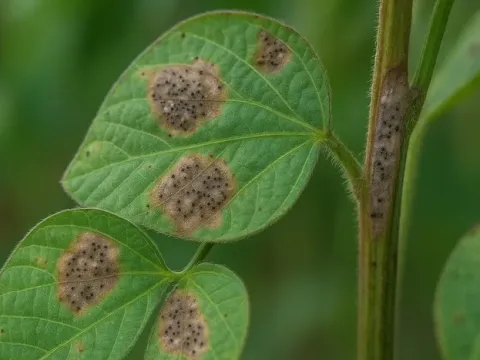
Phomopsis seed decay
Diaporthe nomurai
The disease is caused by the fungus Diaporthe nomurai (formerly associated with the Phomopsis complex). This pathogen is known as a significant parasite capable of overwintering in crop residues, seeds, and soil as mycelium or pycnidia.
What the section contains
Phomopsis seed decay
While primarily infecting soybeans, the fungus can impact other legume species. The infection can spread both within fields via wind and rain splashes and be introduced into new areas through infected seeds.
The pathogen's life cycle is closely linked to environmental factors. During the growing season, conidia are produced and disseminated, infecting healthy plant tissues through wounds or natural openings like stomata.
Once inside, the fungus colonizes the intercellular spaces, degrading plant structures. It often remains latent for long periods, making early visual detection difficult for field scouts and agronomists.
The ability of Diaporthe nomurai to survive in diverse conditions makes it a persistent threat in soybean-producing regions. Effective management requires understanding its biology and persistence in infected debris.
Symptoms typically become visible during the flowering or pod-filling stages. The most prominent signs include the development of brown or gray lesions on the lower stems, which eventually girdle the stem.
Infected stems become brittle, leading to premature wilting and lodging of the plants. A key diagnostic feature is the presence of small, black pycnidia arranged in rows or dense groups on the surface of the withered stems.
Pods often show signs of infection by becoming stunted, shriveled, and covered in fungal spores. Seeds inside these pods are typically lightweight, discolored, and may be covered with a white, mycelial mat.
Leaf symptoms may include yellowing and necrosis, often starting from the edges of the leaflets. These symptoms can be easily confused with nutrient deficiencies or natural senescence if the characteristic stem lesions are overlooked.
Detailed examination of the lower stem tissue is crucial for identification. If pycnidia are present, it confirms the involvement of Diaporthe species, distinguishing it from other fungal stem rots.
High humidity levels, typically above 70–80%, are the primary driver for the development and spread of the disease. Frequent rainfall provides the necessary moisture for sporulation and movement of spores across the canopy.
Warm temperatures ranging from 20 to 28 degrees Celsius create an optimal environment for mycelial growth. In such conditions, the fungus can rapidly colonize large sections of a field in a matter of weeks.
Dense crop stands often suffer more because of limited air movement, which keeps leaves and stems damp for longer periods. This microclimate promotes the transition of the fungus from latent stages to active infection.
Imbalanced soil nutrition, especially high nitrogen levels, can make soybean plants more susceptible by promoting lush, dense growth that hampers ventilation. Proper plant spacing is a key preventative measure.
Poor crop rotation and high levels of soybean residues on the soil surface significantly increase the primary inoculum load. The fungus persists in these residues, acting as a source for infection in subsequent years.
The economic impact of this disease is primarily felt through a drastic reduction in seed weight and quality. Because the vascular system of the plant is compromised, nutrients cannot effectively reach the developing pods.
Premature death of plants reduces the total harvestable yield. In severe outbreaks, yield losses can range from 20 to 50 percent, depending on the susceptibility of the cultivar and the environmental conditions during the season.
Harvested seeds often show poor germination and low vigor, making them unsuitable for use as future planting stock. Using infected seeds perpetuates the cycle of the disease and facilitates its spread to new fields.
Increased stem brittleness causes major challenges during harvesting, as plants break and fall, leading to additional grain loss at the header of the combine harvester.
Furthermore, international trade regulations may restrict the movement of infected grain. This limits marketing options for farmers and can lead to significant financial losses due to quality downgrading.
Selecting resistant or tolerant soybean varieties is the most effective long-term strategy for managing the disease. Breeding programs continue to prioritize stem strength and genetic resistance to Diaporthe species.
Crop rotation remains a fundamental practice. Planting non-host crops like corn or wheat for 3–4 years helps reduce the amount of inoculum present in the field, starving the pathogen of its host plant.
Good tillage practices that promote the burial of crop residues help speed up decomposition. By breaking down the host tissue, the survival of the fungus is significantly hindered, reducing the risk of infection in the following season.
Fungicide applications during critical growth stages, such as the R1–R3 stages (flowering to early pod development), can protect the yield. Triazoles and strobilurins are commonly recommended for effective control.
Always use high-quality, certified seeds treated with systemic fungicides. This practice ensures that the crop starts with a clean slate, preventing the introduction of the fungus via contaminated seed lots.