
Phomopsis stem blight
Phomopsis asparagi
Description
Symptoms
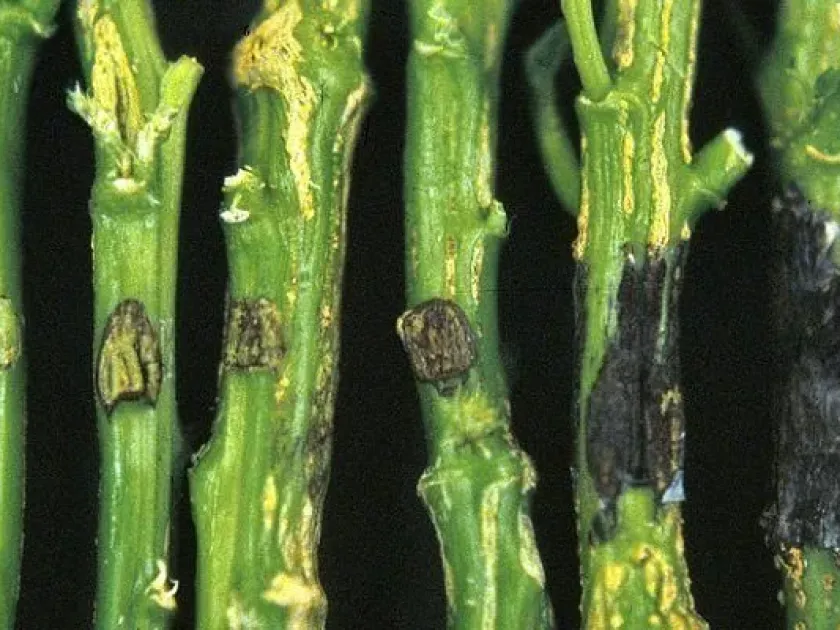
Symptoms typically begin as small, water-soaked spots on the stems. As the infection progresses, these spots expand into elongated, light brown to greyish lesions.
A hallmark of this disease is the appearance of tiny, black, speck-like dots on the surface of the lesions. These dots are the pycnidia, which are visible to the naked eye.
As the infection becomes severe, the lesions can girdle the stem, causing the upper portion of the asparagus shoot to yellow, wilt, and eventually die prematurely.
Stems affected by the fungus become weak and brittle at the infection site, frequently leading to breakage or lodging of the spears during strong winds or heavy rain.
In addition to stem damage, the disease can cause premature drop of the cladophylls, which reduces the plant's ability to photosynthesize and store energy in the crown.
Pathogen
The disease is caused by the fungus Phomopsis asparagi. It is a pathogen that specifically targets asparagus crops and is known for causing significant damage in various growing regions.
The fungus overwinters in infested plant debris left in the field or in the soil. It survives in the form of mycelium or as pycnidia, which are the fungal fruiting bodies that contain spores.
During the growing season, spores (conidia) are released from the pycnidia. They are disseminated primarily by splashing rain, irrigation water, and wind, which help them reach healthy asparagus shoots.
The fungus enters the plant through stomata or wounds caused by harvesting, wind damage, or insect feeding. Once inside, it colonizes the stem tissues and begins its reproductive cycle.
The rapid life cycle of Phomopsis asparagi allows it to complete multiple generations within a single season, leading to swift spread throughout the asparagus field.
Conditions for development
Phomopsis stem blight thrives in warm and humid conditions. High humidity, especially in the range of 80% to 90%, is essential for the germination and spread of fungal spores.
Frequent rainfall or overhead irrigation during the peak development stage of the asparagus spears provides the moisture necessary for the disease to flare up.
Poor air circulation within the field is a major contributing factor. Dense plantings or weed-infested rows slow down evaporation, keeping the stems wet for extended periods.
Temperatures ranging from 20 to 25 degrees Celsius are optimal for the growth of the fungus, making mid-season periods particularly dangerous for asparagus crops.
Lack of proper field sanitation, such as failing to remove infected plant tissues at the end of the season, ensures that a high concentration of inoculum persists for the next year.
Why it matters
The primary impact of Phomopsis is the reduction in marketable yield. Infected spears are often disfigured or wilted, making them unsuitable for fresh market sales.
Persistent infection significantly weakens the asparagus crowns over time. This reduces the vigor and longevity of the asparagus bed, leading to lower productivity year after year.
The necessity for frequent fungicide applications to manage the disease increases the cost of production and can put pressure on the economic viability of the farm.
Since the pathogen can be seed-borne, infested nursery stock poses a high risk of introducing the disease to new planting sites, potentially affecting entire regions.
Secondary damage often occurs when the weakening of the stem makes the plant more vulnerable to other opportunistic pathogens or environmental stresses.
Protection
The most important control measure is to start with high-quality, certified disease-free transplants. Buying from reputable nurseries helps minimize the risk of initial infection.
Sanitation is crucial. At the end of the growing season, all dead or infected stalks must be removed and destroyed by burning or deep burial to eliminate the primary source of inoculum.
Promote good airflow by maintaining proper plant spacing and managing weed growth within the field. This helps the foliage dry quickly after rainfall or dew.
When the disease is detected, use registered fungicides as part of an integrated pest management program, ensuring that rotation of chemical groups is practiced to prevent resistance.
- Ensure adequate soil drainage to prevent high humidity at the base of the plant.
- Implement a strict crop rotation schedule to break the disease cycle.
- Avoid overhead irrigation where possible to keep stems dry.
- Regularly inspect the fields for the first signs of lesions.
- Maintain proper soil fertility to support overall plant health and resilience.
Discussion
No discussions yet — be the first.