
Phomopsis stem canker
Diaporthe helianthi
Description
Symptoms
The first symptoms often appear as angular, gray-brown necrotic spots on the edges of lower leaves, which eventually lead to the wilting of the leaves.
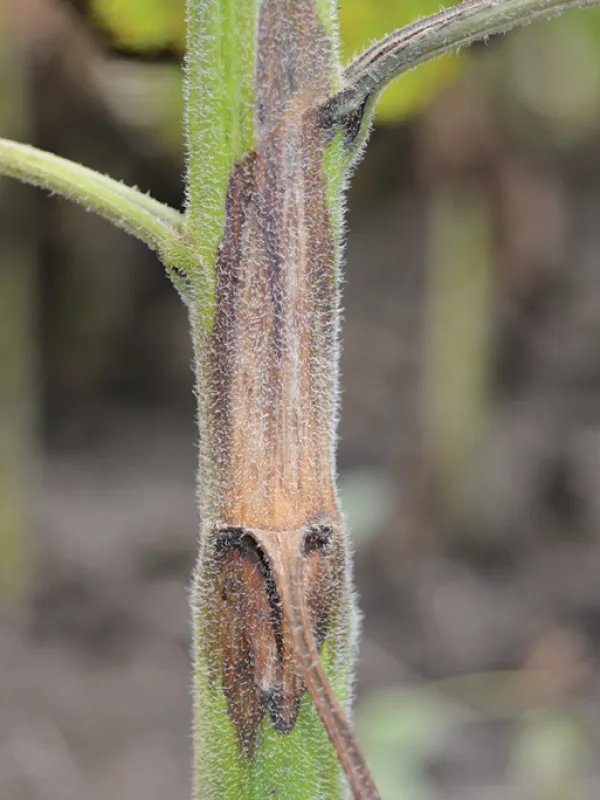
On the stem, the most characteristic sign is the development of a large, brown, necrotic lesion usually centered around the leaf petiole attachment site.
The affected area of the stem becomes hollow and brittle, causing the plant to lose its rigidity. This frequently results in the lodging of plants during windy weather.
The infection can reach the sunflower head, causing browning, tissue decay, and poor seed filling. In severe cases, the entire head may dry out prematurely.
Under humid conditions, small black pycnidia may become visible on the surface of the infected stems, indicating the production of the next generation of spores.
Pathogen
The disease is caused by the fungus Diaporthe helianthi (anamorph Phomopsis helianthi), which is one of the most destructive pathogens for sunflower crops worldwide.
The fungus survives in infected crop residues in the soil. It forms pycnidia and perithecia that can remain infectious for several years in the field environment.
Infection usually starts through the leaf stomata. Once the fungus enters the plant, it travels through the vascular system, spreading systemic infection across the stem.
As the fungus colonizes the plant tissues, it releases phytotoxins that weaken the structural integrity of the sunflower stem and block nutrient transport.
The ability of this pathogen to adapt to various environmental conditions makes it a persistent challenge for sunflower production in many regions.
Conditions for development
Phomopsis stem canker thrives in warm and humid conditions. Frequent rainfall during the vegetative growth phase is the primary trigger for rapid disease spread.
Temperatures ranging from 20°C to 25°C are ideal for spore germination and colonization of the host plant by Diaporthe helianthi.
High planting density contributes to increased humidity within the crop canopy, which promotes the development of the fungus and complicates effective control.
Lack of proper field sanitation and continuous sunflower cultivation significantly increase the primary inoculum levels in the soil.
Periods of prolonged dew or misty mornings can provide sufficient moisture for the fungus to penetrate the leaves even in the absence of heavy rainfall.
Why it matters
This disease can cause devastating yield losses, sometimes reaching up to 80% if the conditions favor severe outbreaks throughout the growing season.
Due to the collapse of the vascular system, plants die prematurely, which prevents normal seed development and results in low test weight and reduced oil content.
Lodging caused by the structural weakening of the stems makes mechanical harvesting difficult, leading to significant field losses for the farmers.
The infection negatively impacts the quality of the seed, reducing its viability and potentially spreading the fungus to new areas through contaminated seeds.
The economic impact is exacerbated by the need for expensive fungicide applications and the loss of crop value due to reduced oil quality and total output.
Protection
The most important control strategy is a long-term crop rotation, avoiding sunflower cultivation on the same land for at least 7-8 years to allow residues to decompose.
Planting resistant sunflower hybrids is the most effective way to manage the disease and mitigate yield losses in high-risk areas.
Deep plowing to bury infested crop residues helps speed up the decomposition process and reduces the survival of the pathogen in the soil.
Fungicide treatments applied at the critical growth stages (typically the 6-10 leaf stages) help in protecting the plants during the period of maximum susceptibility.
- Use of certified disease-free seeds
- Weed management to eliminate host sources
- Balanced nutrient supply to boost immunity
- Monitoring fields for early symptom detection
Discussion
No discussions yet — be the first.