
Phomopsis stem canker
Diaporthe novem
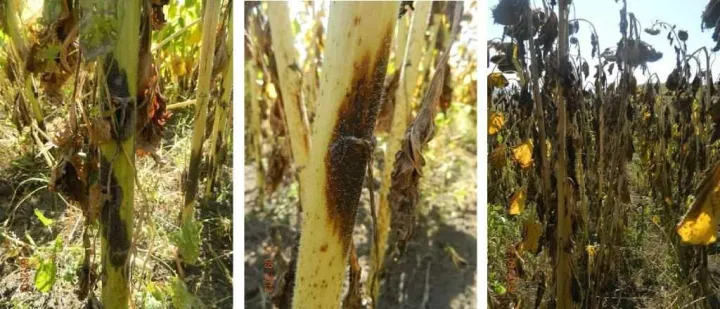
Description
Symptoms
The first symptoms typically appear on the lower leaves as dark, wedge-shaped necrotic spots. These spots expand along the veins towards the petiole, eventually causing the leaf to wilt and die.
Stem lesions are a hallmark of the disease; they appear as greyish-brown, elongated spots around the base of the leaf petioles. These lesions can extend several centimeters along the stem.
As the infection progresses, the internal pith of the stem decays, becoming hollow and dark. This significantly weakens the structural support of the plant, often leading to lodging.
During humid weather, black fruiting bodies (pycnidia) become visible on the surface of the stem lesions. These serve as centers for further spore production and spread within the field.
- Dark leaf necrosis
- Petiole decay
- Large stem cankers
- Premature stem lodging
- Hollowed-out stem interior
Pathogen
The causative agent of the disease is the fungus Diaporthe novem (formerly identified as Phomopsis helianthi). It is a destructive pathogen that attacks the vascular system and structural tissues of the sunflower plant.
The fungus survives in crop residues and soil, producing fruiting bodies such as pycnidia and perithecia. These structures allow the pathogen to remain viable through harsh winter conditions and prolonged dry periods.
During the growing season, conidia are dispersed by wind, splashing rain, and physical contact with infected debris. The pathogen readily infects leaves and then moves through the petiole into the stem.
Upon entry, the fungal hyphae colonize the plant tissues, leading to the destruction of the pith and the vascular bundles. This systemic infection severely compromises the integrity of the host plant.
Diaporthe novem is highly adaptable and can cause significant epidemics in various climatic zones, making it a major concern for sunflower cultivation worldwide.
Conditions for development
The disease development is heavily dependent on moisture. Warm temperatures ranging from 20°C to 25°C combined with frequent rainfall create ideal conditions for rapid fungal spread.
High planting density restricts airflow between plants, increasing the duration of leaf wetness and humidity. This allows spores to germinate and infect the plant tissue more effectively.
Excessive nitrogen fertilization can lead to vigorous, succulent vegetative growth that is more susceptible to fungal penetration and rapid colonization by the pathogen.
Frequent fog and dew are critical for the initial stages of infection. These conditions provide the necessary surface moisture for the conidia to infect the plant leaves.
Inadequate crop rotation or poor field hygiene allows the inoculum to build up in the soil, ensuring that the fungus is present for the next season's crop.
Why it matters
Phomopsis stem canker can cause devastating yield losses, sometimes reaching over 50% in heavily infested fields. The quality of the grain is also significantly reduced.
Due to the destruction of the plant's vascular system, the transport of water and nutrients to the head is interrupted, resulting in empty or undersized seeds.
Lodging caused by stem weakness makes mechanical harvesting extremely difficult. Much of the grain may be left on the ground, further increasing the total harvest loss.
The seed oil content is often lower in infected plants, which negatively impacts the market value and processing efficiency of the sunflower crop.
Infected seeds may harbor the pathogen, which poses a risk for spreading the disease to new, unaffected areas through contaminated planting material.
Protection
The use of genetically resistant sunflower hybrids is the primary strategy for managing Phomopsis stem canker. Breeding efforts continue to focus on improving tolerance to this fungus.
Long-term crop rotation (at least 6-8 years) is essential to break the infection cycle. This helps reduce the density of viable fungal inoculum in the soil.
Deep plowing of field residues is recommended to bury infected debris, which speeds up its decomposition and inhibits the production of airborne spores.
Application of foliar fungicides during critical growth stages, such as the 4-6 leaf stage or early budding, can protect the plants and suppress the development of fungal lesions.
Implementing effective weed management programs removes alternative hosts and improves the overall air circulation within the sunflower canopy.
Discussion
No discussions yet — be the first.