
Phomopsis seed decay
Diaporthe aspalathi
The disease is caused by the fungus Diaporthe aspalathi, which is a major concern for soybean producers globally as it affects both plant health and seed quality.
What the section contains
Phomopsis seed decay
The pathogen survives primarily as mycelium in infected crop residues, soil, and soybean seeds, serving as a persistent reservoir for the next season.
The life cycle involves the formation of pycnidia and perithecia, which produce conidia and ascospores that are disseminated by splashing rain and air currents.
It is a systemic pathogen, meaning that once the fungus gains entry into the plant tissues, it spreads through the vascular system, debilitating the host.
The ability of the fungus to remain dormant under adverse environmental conditions ensures its survival across various farming systems and geographic regions.
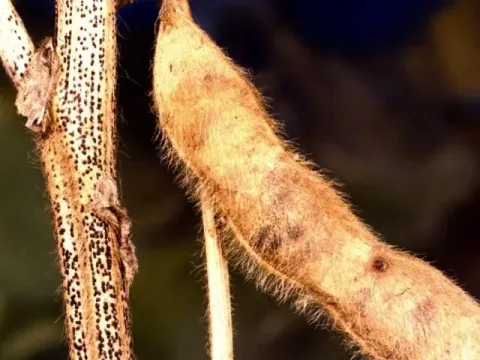
Symptoms typically become visible during the pod-filling stage, starting as dark brown or reddish-brown lesions near the nodes of the stem.
As the disease progresses, these lesions expand, and the infected area becomes covered with small, black, dot-like structures known as pycnidia.
Leaves on infected plants may show yellowing and wilting, often staying attached to the stem even after the plant begins to decline and wither.
Pods infected by the fungus appear underdeveloped, flat, and often exhibit a grey or bleached appearance with visible fungal growth inside.
Inside the stems, the pith tissue displays dark brown decay, which is a definitive sign of severe infection and systemic colonization by the fungus.
The development of Phomopsis is highly favored by warm temperatures ranging from 22°C to 28°C and high humidity or frequent rainfall during the growing season.
Periods of prolonged wet weather during pod development are particularly critical, as they promote the massive release and spread of fungal spores.
Poor agricultural practices, such as continuous cropping of soybeans, lead to a rapid buildup of the pathogen inoculum within the field soil.
Canopy density plays a significant role; thick, dense foliage prevents proper aeration and creates a trapped moisture zone ideal for fungal growth.
Stress factors, such as drought followed by excess moisture, can increase the susceptibility of plants to infection by weakening their natural defenses.
The primary impact of Phomopsis is a significant reduction in grain yield due to pod abortion and overall plant decline during critical growth stages.
Seed quality is severely compromised; affected seeds are often shriveled, discolored, and have low germination rates, rendering them unsuitable for replanting.
Economic losses occur due to the reduced oil and protein content in infected seeds, which diminishes the market value of the harvested soybean crop.
Stem lodging caused by the decay of internal tissues interferes with harvesting operations, leading to higher field losses and increased harvest costs.
Widespread outbreaks can severely impact the profitability of the entire enterprise, necessitating long-term management and expensive curative measures.
The most effective strategy is the use of resistant soybean varieties, which can withstand infection pressure better than susceptible commercial lines.
Crop rotation is essential; planting non-host crops such as corn or wheat for at least three years helps reduce the pathogen load in the field.
Treatment of seeds with high-quality systemic fungicides before planting is a fundamental requirement to prevent early-season seedling blight.
Effective management of crop residues, including deep tillage to bury infected debris, helps to accelerate the decomposition process and destroy overwintering sites.
Foliar application of fungicides during the R3–R5 growth stages can be effective in reducing disease progression if environmental conditions remain highly favorable for infection.