
Phomopsis
Diaporthe
The causative agent of the disease is the fungus Diaporthe (formerly classified as Phomopsis). This is an ascomycete fungus that affects a wide range of agricultural plants.
What the section contains
Phomopsis
The infection persists in soil, crop residues, and seeds. During the growing season, the pathogen spreads via conidia dispersed by wind and rain splashes.
The life cycle involves both asexual and sexual stages, allowing the fungus to survive under various environmental conditions.
The fungus penetrates plant tissues through stomata or mechanical wounds, systematically spreading through the vascular system.
High genetic variability makes the pathogen difficult to control, necessitating integrated management strategies for sustainable agriculture.
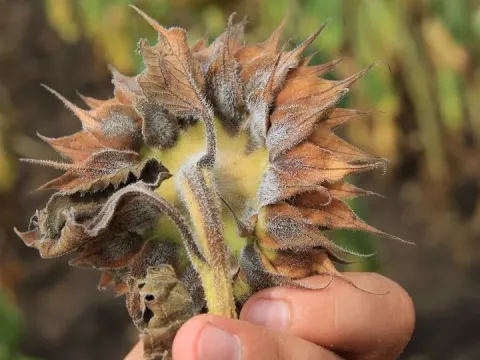
The first signs include brown or gray necrotic spots appearing on stems, usually around the leaf attachment sites.
As the disease progresses, these spots expand into girdling lesions, weakening the stem and leading to lodging.
Leaves show chlorosis followed by necrosis, eventually leading to premature wilting and death of the plant.
Black pycnidia, the reproductive structures of the fungus, appear as small dots on dead stem tissues.
- Stem necrosis and brown lesions
- Leaf chlorosis and premature wilting
- Formation of pycnidia on dead tissues
- Lodging and stem breakage
- Poor grain development and low yields
Phomopsis development is favored by high humidity and moderate temperatures, particularly during the flowering stage.
Frequent rainfall and persistent dew create an ideal environment for spore germination and spread between plants.
Poor agricultural practices, such as high planting density and inadequate weed control, significantly increase the risk of disease spread.
Infected crop residues left on the soil surface serve as the primary inoculum source for subsequent seasons.
Extended periods of foggy weather or moisture on the canopy facilitate the penetration of the fungus into the plant stem.
Phomopsis is a highly destructive pathogen capable of causing yield losses ranging from 50% to 80% in severe outbreaks.
Beyond yield reduction, the disease severely impacts seed quality, including oil content and overall nutritional value.
Lodging caused by the disease hinders mechanized harvesting, leading to significant field losses during operation.
Systemic infection disrupts the vascular system, leading to toxin accumulation and rapid plant collapse.
Infected seeds can harbor the pathogen, reducing germination rates and spreading the disease to new planting areas.
Strict adherence to crop rotation, with a break of 6–8 years before replanting susceptible crops, is the most effective management tool.
Deep plowing to incorporate crop residues into the soil helps reduce the primary inoculum load.
Application of systemic fungicides at critical growth stages is essential for protecting the crop during high-risk periods.
Selecting and planting resistant or tolerant hybrids remains a cornerstone of Phomopsis disease management.
Seed treatment with professional fungicides is recommended to protect seedlings from early-season infections.