
Phomopsis blight of eggplant
Diaporthe vexans
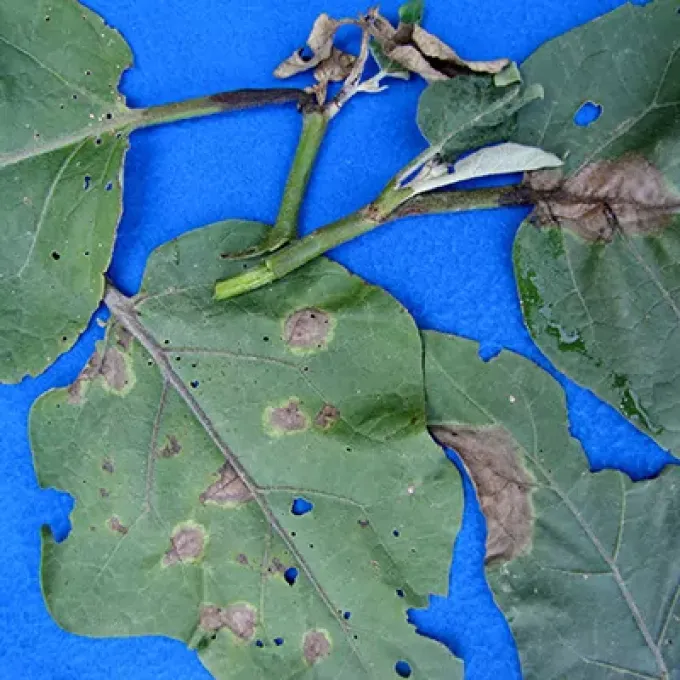
Description
Symptoms
Initial symptoms are often observed on seedlings, manifesting as damping-off or dark lesions on the hypocotyl near the soil line.
On leaves, the disease presents as small, circular, light-brown spots that eventually enlarge and develop a distinct dark brown border.
Stem cankers are a hallmark of this disease; they appear as sunken, elongated lesions that can eventually girdle the stem, causing the entire plant to wilt and collapse.
Fruits show circular, depressed lesions that increase in size, causing soft rot. The center of these spots is often covered with black pycnidia arranged in concentric rings.
In advanced stages, the infected fruit becomes soft and water-soaked, eventually turning into a mummified structure due to the intense fungal activity.
Pathogen
The disease is caused by the fungus Phomopsis vexans, which is the anamorph stage of the pathogen Diaporthe vexans. It is a highly specialized fungal parasite targeting Solanaceae plants.
The pathogen survives primarily in crop debris, infested soil, and can be seed-borne. Its longevity in the soil makes it a persistent challenge for farmers and gardeners.
Infection spreads through splash dispersal of spores by rain or irrigation, as well as via contaminated tools, equipment, or insects moving within the field.
The fungus enters the host through stomata, wounds, or direct penetration of the epidermal cells, initiating a rapid colonization of the plant tissue.
Pycnidia, the fruiting bodies of the fungus, facilitate the production of numerous conidia, allowing the disease to cycle rapidly throughout the growing season.
Conditions for development
Phomopsis blight thrives in warm and humid climates, with the optimum temperature for fungal growth ranging between 25 and 30 degrees Celsius.
High relative humidity levels, coupled with frequent rainfall, create perfect conditions for spore germination and infection of healthy plant tissues.
Poor agricultural practices, such as dense plant spacing and inadequate ventilation in greenhouses, lead to higher humidity around the plants, fostering disease outbreaks.
Lack of proper pruning and canopy management restricts airflow, causing moisture to persist on the foliage for extended periods, which promotes infection.
Mechanical damage caused by weeding, hoeing, or pruning provides easy entry points for the pathogen to establish itself within the healthy tissue.
Why it matters
This disease is considered one of the most destructive threats to eggplant production, as it can cause substantial yield losses in both open fields and greenhouses.
Infected fruits are rendered unmarketable due to unsightly lesions and rotting, significantly reducing the income potential for commercial growers.
Systemic infection in the plant leads to stunted growth, reduced photosynthetic activity, and premature death of the crop, resulting in low overall productivity.
The spread of the fungus to seeds can create a recurring cycle of infection, where future plantings are infested from the start of the season.
Economic impact is compounded by the necessity of repeated fungicide applications and the labor involved in removing infected plant materials from the site.
Protection
The primary control strategy involves the use of pathogen-free, certified seeds and seedlings, often treated with protective fungicides prior to planting.
Implementing a rigorous crop rotation program, avoiding Solanaceous hosts for at least 3 years, is essential to reduce the inoculum levels in the soil.
- Removal and destruction of all infected crop residues post-harvest to minimize survival sites for the fungus.
- Installation of proper ventilation systems in greenhouses to manage humidity and leaf wetness.
- Selection of resistant or tolerant cultivars that are proven effective in the local climate.
Regular monitoring of the field allows for early detection and the application of systemic fungicides to curb the spread of the pathogen.
Balanced fertilization and irrigation management help maintain plant vigor, enabling the crop to better resist the impact of the infection.
Discussion
No discussions yet — be the first.