
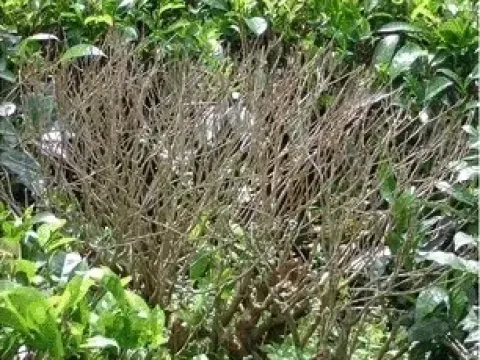
Phomopsis blight of tea
Diaporthe theae
The disease is caused by the ascomycetous fungus Diaporthe theae (formerly referred to as Phomopsis theae). It is a specialized pathogen that primarily targets tea bushes, causing significant stem necrosis.
What the section contains
Phomopsis blight of tea
The life cycle of the pathogen involves the production of pycnidia, which release conidia during humid conditions. These spores serve as the primary source of inoculum for the spread of the disease.
Diaporthe theae can survive as dormant mycelium or as fruiting bodies within infected woody tissues, allowing it to persist in the plantation throughout the year.
Infection occurs mainly through wounded surfaces, including pruning wounds, sunscald areas, or damage caused by harvesting machinery. Once inside, the fungus colonizes the vascular tissue.
The internal movement of the mycelium disrupts the transport of water and nutrients, which eventually leads to the dieback of the stems above the infection site.
The initial symptoms are characterized by small, dark, sunken lesions on the stems. These lesions gradually expand and can eventually girdle the entire stem.
Foliage on the affected branches begins to turn yellow, loses its luster, and eventually wilts. The leaves may remain attached to the dead branches for a period of time.
The bark in the infected area becomes brittle and may show vertical cracking. In advanced stages, small, black, pinhead-sized pycnidia appear on the surface of the bark.
A distinctive feature of the blight is the "burn-like" appearance of the terminal shoots, which often die back rapidly during periods of high humidity.
When the stems are cut longitudinally, internal browning and necrosis of the wood are clearly visible, indicating the deep penetration of the fungal mycelium.
High relative humidity and frequent rainfall are the most critical environmental factors that trigger the release and germination of fungal spores.
The optimal temperature for the development of Diaporthe theae is typically between 20°C and 25°C, which matches the common climate of major tea-growing regions.
Improper agronomic practices, such as pruning during wet weather, significantly increase the rate of infection as fresh wounds remain susceptible for several days.
Poor soil fertility and nutritional imbalances, particularly deficiencies in potassium, make the tea plants more susceptible to fungal colonisation.
Overcrowded plantations with poor air circulation retain excessive moisture, creating a perfect microclimate for the fungus to flourish and spread.
The primary damage caused by Phomopsis blight is the loss of productive stems, which directly reduces the total leaf yield and the economic viability of the tea garden.
Severe infestations lead to the progressive dieback of tea bushes, often necessitating intensive remedial pruning that delays future harvest cycles.
The quality of processed tea is affected, as infected tissues produce biochemical changes that negatively alter the flavor profile and aroma of the final beverage.
The disease acts as a major stress factor, making the tea plants more prone to infestation by other pests and opportunistic diseases.
Increased production costs arise from the need for labor-intensive sanitation, regular chemical spray applications, and the potential for premature replanting of entire sectors.
Sanitation is the most effective management practice. All infected branches must be pruned, collected, and burned to reduce the overall inoculum density.
Disinfecting pruning tools with appropriate fungicidal or alcohol-based solutions is essential to prevent the transfer of spores between individual plants.
Preventive fungicide applications, specifically copper-based sprays, should be timed before the onset of the monsoon or rainy season to protect vulnerable pruning wounds.
Proper canopy management, including regular pruning and thinning, improves air circulation and reduces the duration of leaf wetness within the bush.
- Applying balanced NPK fertilizers to maintain strong plant immunity.
- Scheduling pruning activities during dry, sunny weather conditions.
- Selecting and planting tea clones with known field resistance to Phomopsis.