
Phomopsis blight of juniper
Diaporthe juniperivora
The disease is caused by the fungus Diaporthe juniperivora (formerly known as Phomopsis juniperovora). This pathogen specifically targets the young, succulent shoots of juniper plants.
What the section contains
Phomopsis blight of juniper
The fungus reproduces by forming pycnidia — small, black, flask-shaped fruiting bodies. These structures release spores that are easily spread by splashing rain or overhead irrigation.
D. juniperivora can survive in dead twigs and leaf litter underneath infected shrubs for a significant period, making it a persistent threat in garden landscapes.
Infection occurs when spores land on susceptible new growth and penetrate through stomata or small wounds caused by mechanical damage or pruning.
This pathogen is highly aggressive during periods of active plant growth, meaning that spring and early summer are the most critical times for disease development.
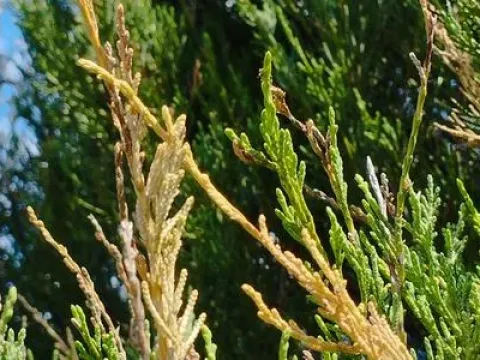
The first signs are the yellowing of the tips of young branches. As the infection progresses, the foliage turns brown or grayish-tan, contrasting sharply with healthy green growth.
A definitive sign of Phomopsis blight is a small, constricted canker at the base of the discolored twig, where the healthy and infected tissues meet.
Small, dark-colored pycnidia can often be seen on the affected stems or leaves if observed closely. These become more visible in humid or damp weather conditions.
The dieback usually moves from the tips inward, eventually leading to the death of entire branches and, in severe cases, the whole plant if it remains untreated.
Unlike other fungal diseases, Phomopsis blight shows a clear pattern of tip-to-base progression, distinguishing it from general physiological needle drop.
Phomopsis thrives in high humidity and moderate temperatures. Constant wetness on the foliage is the primary prerequisite for spore germination and infection.
Dense planting schemes that prevent proper air circulation around the plants create a humid microclimate that is ideal for the rapid spread of the fungus.
Plants that are frequently watered via overhead sprinklers are much more susceptible, as the water droplets splash spores onto the new, vulnerable growth.
Poorly maintained plants or those growing in shaded areas with stagnant air are at a significantly higher risk of experiencing severe outbreaks of the disease.
Periods of frequent rainfall or heavy morning dew are often followed by an increase in active disease symptoms as the environment favors the pathogen.
The disease causes significant aesthetic damage, ruining the visual appeal of landscape specimens and making them look diseased and straggly.
In nursery environments, Phomopsis blight can lead to high mortality rates among young plants, resulting in serious financial losses for growers.
Chronic infection weakens the overall vigor of the plant, making it more susceptible to other pests and opportunistic diseases that might further damage it.
Failure to manage the disease can result in the complete death of the juniper, requiring expensive removal and replacement of the plants.
The blight spreads quickly within a garden, turning a minor issue into a large-scale problem that can threaten the entire collection of conifers.
Sanitation is the most critical control measure; all infected branches should be pruned out, cutting into healthy wood, and destroyed or discarded far from the plants.
Fungicide treatments, particularly those based on copper, are effective when applied preventively during the spring flush of new growth to protect foliage.
Modifying irrigation practices by switching to drip or soaker hose systems prevents the foliage from staying wet and minimizes the spread of fungal spores.
Always sterilize pruning tools with alcohol or a bleach solution between cuts to ensure that you are not actively spreading the fungus during the cleaning process.
- Ensure adequate spacing between plants to improve airflow.
- Remove all dead plant material from the ground beneath the canopy.
- Avoid pruning when the foliage is wet to prevent spore transmission.