
Dacrymycetaceae
Dacrymycetaceae
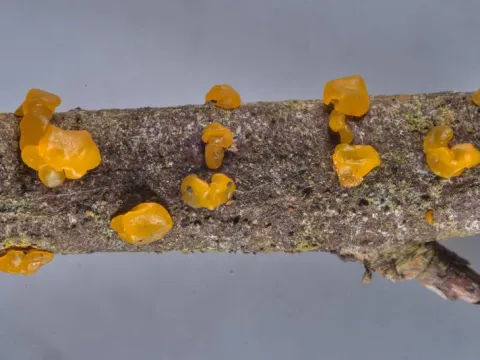
The presence of Dacrymycetaceae is most commonly signaled by the emergence of gelatinous, jelly-like fruiting bodies on the surface of decaying wood. These structures typically manifest as small cushions or discs, often exhibiting vibrant yellow or orange hues.
What the section contains
Dacrymycetaceae
During dry conditions, these fruiting bodies shrink significantly, becoming nearly invisible; however, they readily rehydrate and regain their original volume and brightness following rainfall or high humidity events.
The internal mycelium permeates the wood structure, causing a gradual discoloration and loss of structural integrity. Affected wood becomes brittle and prone to crumbling, as the fungus breaks down essential cellulose components.
Visual inspection often reveals spore deposits forming a thin, dusty layer near the areas where the fungus is actively growing. Infections are frequently observed along cracks, fissures, or areas of dead bark on coniferous trees.
In advanced stages, the weakened state of the wood often attracts secondary pests, such as wood-boring insects, which further exacerbate the decomposition process and compromise the tree's overall stability.
Dacrymycetaceae is a family of basidiomycete fungi belonging to the order Dacrymycetales. These fungi are primarily saprotrophs, playing a vital role in the decomposition of cellulose and lignin within coniferous timber.
The biological lifecycle revolves around the vegetative growth of mycelium within the substrate. By secreting specialized enzymes, the fungus breaks down the complex cell walls of the wood, utilizing the nutrients released for its growth.
Reproduction occurs through the dispersal of basidiospores, which are carried by wind or raindrops to new suitable surfaces. High moisture levels are essential for these spores to successfully germinate and establish new colonies.
While typically saprotrophic, these fungi can act as opportunistic pathogens on stressed or injured trees, accelerating the decline of the host tree by colonizing vulnerable parts of the trunk or branches.
Their high adaptive capacity allows members of this family to thrive in diverse forest ecosystems, rapidly colonizing deadwood and maintaining a presence even under fluctuating environmental conditions.
The development of Dacrymycetaceae is highly dependent on moisture levels. They prefer damp, shaded environments, such as those found in dense forest understories where wood remains consistently wet.
Temperatures that are moderately cool to warm are optimal for the metabolic processes of these fungi. In such environments, colonies can proliferate quickly across the surface of logs, stumps, and standing dead trees.
Mechanical injuries, including pruning wounds, broken branches, or frost cracks, serve as primary entry points for the fungus. Freshly exposed wood is highly susceptible to initial colonization by spores.
Poorly ventilated stands with limited airflow create the stable microclimate that these fungi require. Consequently, lack of proper forest maintenance often leads to higher infection rates within a population.
Environmental stress factors, such as prolonged drought followed by heavy rain or infestation by other pests, can significantly lower a tree's resistance, rendering it more vulnerable to fungal colonization.
The primary harm caused by Dacrymycetaceae is the accelerated decay of wood, which renders timber economically worthless. In commercial forestry, this leads to significant losses in harvested yield and product quality.
In urban landscapes, infected trees pose a major safety risk. As the internal structure of the wood is compromised, the tree may become structurally unsound and prone to collapsing under wind load, risking human injury.
The fungus can spread vertically throughout the trunk, causing extensive internal rot that is often difficult to detect until the tree's health is severely degraded, making successful treatment nearly impossible.
By producing massive amounts of spores, infected sites serve as a continuous source of inoculum, increasing the risk of infection for neighboring healthy trees, especially those with existing micro-wounds.
While these fungi are ecologically beneficial in natural forest cycles by recycling nutrients, their impact in managed landscapes is considered a severe pathology that requires active monitoring and intervention.
Effective management begins with strict forest hygiene, which includes the prompt removal of heavily infested deadwood and stumps that serve as breeding grounds for the fungus.
Minimizing mechanical damage during forest operations is crucial. If branches must be pruned or wounds occur, the exposed surfaces should be treated with protective sealants or fungicides to prevent spore entry.
Thinning operations help improve stand ventilation and increase sunlight penetration, creating a less hospitable environment for jelly fungi and improving the overall vigor of the remaining trees.
Maintaining tree vitality through proper fertilization and irrigation helps trees form natural barriers against fungal intrusion, increasing their overall resistance to opportunistic infections.
When localized infections are found on ornamental trees, the affected area should be excised to reach healthy tissue, and pruning tools must be thoroughly disinfected with alcohol to prevent the cross-contamination of other plants.