
Dacrymyces
Dacrymyces
Description
Symptoms
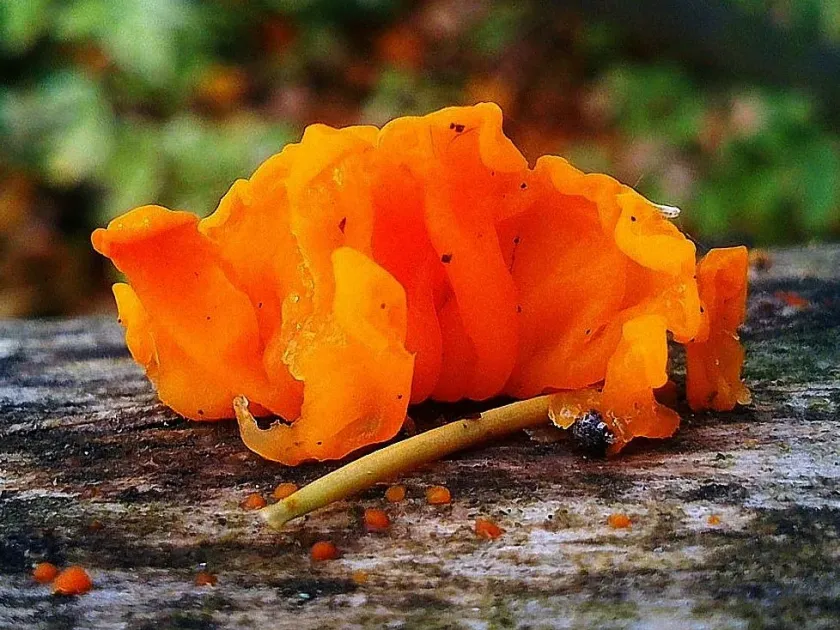
The most visible sign of infection is the appearance of bright, jelly-like pustules on the bark or exposed wood surface. These fruiting bodies are small and distinctively colored.
In dry weather, the fruiting bodies often shrink and become hard or almost invisible. However, they rapidly rehydrate and regain their jelly-like appearance when moisture levels rise.
Internal symptoms involve the gradual softening of the wood. As the fungus digests the cell walls, the wood loses its density and structural integrity, becoming fragile and prone to crumbling.
Surface cracking is a common secondary symptom as the wood structure weakens and dries unevenly, creating gaps for further moisture ingress and pathogen development.
The fungus does not typically cause a strong pungent odor, but its continuous presence indicates an environment that is consistently favorable for decay, often accompanied by other wood-rotting species.
Pathogen
Dacrymyces is a genus of fungi belonging to the order Dacrymycetales. These are typically saprotrophic organisms that play a crucial role in decomposing woody organic matter in forest ecosystems.
The fungus mainly targets dead or weakened wood from both coniferous and deciduous trees. The mycelium penetrates the wood structure, gradually breaking down the organic components that provide the material's strength.
Taxonomically, they are classified as Basidiomycetes. A hallmark of the genus is the formation of small, gelatinous, or waxy fruit bodies that are often bright yellow, orange, or reddish in color.
The biology of Dacrymyces is highly dependent on environmental moisture. Its life cycle involves the production of basidiospores that are dispersed by wind or rain to infect new suitable wood substrates.
While often seen as part of the natural decay process in forests, the presence of these fungi in wood storage facilities or on structural timber can signal poor environmental conditions and potential decay risks.
Conditions for development
High moisture levels are the most critical factor for the growth of Dacrymyces. The fungus requires persistent humidity within the wood substrate to remain active and produce reproductive structures.
Optimal temperatures for mycelial growth are generally within the moderate range, yet the fungus is surprisingly resilient to wide temperature fluctuations, including cool autumn conditions.
Wounds, insect galleries, or mechanical cracks in the wood serve as primary entry points for the fungus. Once inside, the fungus can thrive if the moisture balance remains constant.
Poor ventilation and lack of air circulation in storage areas or around wood structures create a microclimate that prevents wood from drying out, facilitating rapid colonization by the fungus.
The presence of decaying debris, such as logs and stumps, nearby provides a constant reservoir of spores, increasing the risk of infection for susceptible wood and trees in the vicinity.
Why it matters
The primary harm caused by Dacrymyces is the degradation of structural timber. By breaking down cellulose and lignin, the fungus compromises the load-bearing capacity of wood materials.
In gardens and landscaping, the fungus can damage ornamental wooden structures, fences, and garden furniture, causing them to deteriorate and lose their decorative appearance prematurely.
When colonizing weakened live trees, the fungus accelerates the decay process, making the tree more susceptible to windthrow and further infestations by wood-boring insects.
The decay caused by Dacrymyces often paves the way for other more aggressive fungi to establish, leading to even more extensive damage to the tree's health or timber quality.
In nurseries, the presence of these fungi on saplings can lead to rejection of stock, causing direct economic losses and requiring costly disposal of contaminated plant materials.
Protection
The most effective strategy for control is rigorous sanitation. Removing dead wood, stumps, and logging debris from the site significantly reduces the source of spores in the environment.
For structural timber, the application of high-quality wood preservatives and fungicides is essential. These treatments create a protective layer that prevents fungal spores from penetrating the wood fibers.
Ensuring proper ventilation and drainage around wooden structures is crucial. Keeping wood off the ground and away from constant moisture sources helps to deny the fungus the conditions it needs to thrive.
If infection is detected on a tree, mechanical removal of the affected area down to healthy wood, followed by a disinfectant treatment, can help contain the spread of the fungus.
Regular monitoring of wooden structures and tree health allows for early detection of fungal growth, making it easier to manage the problem before it causes significant structural or biological damage.
Discussion
No discussions yet — be the first.