
Dactuliochaeta leaf spot
Dactuliochaeta
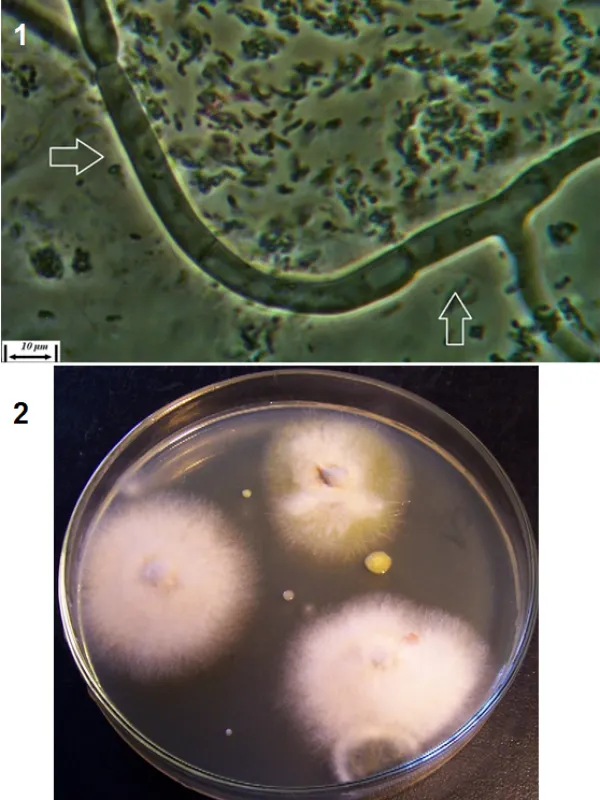
Description
Symptoms
Symptoms typically manifest as small, brown-to-reddish spots on the leaves. These spots are often surrounded by a darker border, marking the boundary of necrotic tissue.
As the disease progresses, these individual lesions coalesce into larger necrotic areas, which can lead to significant yellowing of the foliage and eventual leaf senescence.
A key diagnostic feature is the presence of tiny, black, flask-shaped pycnidia within the necrotic spots, which can be easily observed under a simple hand lens.
In humid conditions, a fine fungal growth or exudate may be visible, which is often associated with the production of spores by the pathogen.
- Initial formation of small, scattered leaf lesions.
- Necrosis spreading across the leaf surface during favorable conditions.
- Premature defoliation resulting from severe and widespread infections.
Pathogen
The causal agent of this disease is the fungus Dactuliochaeta glycines (formerly Pyrenochaeta glycines). It is a well-known pathogen that primarily affects the foliage of legumes and other susceptible species.
This fungus is characterized by its ability to persist in plant debris and soil for extended periods. It relies on the formation of pycnidia, which act as the primary source of infection in the next season.
The lifecycle involves the production of conidia that are dispersed by water splashes or wind currents. Upon landing on a suitable host, the spores germinate and penetrate the leaf epidermis.
The biology of the pathogen is highly sensitive to environmental stressors, yet it possesses robust survival mechanisms that allow it to remain viable even in the absence of a host.
Understanding the life cycle of Dactuliochaeta is essential for developing effective timing for fungicide applications and implementing cultural control practices.
Conditions for development
The development of Dactuliochaeta leaf spot is highly favored by periods of high relative humidity and frequent rainfall, which are necessary for spore germination.
Warm temperatures, generally ranging from 20°C to 28°C, accelerate the metabolic rate of the fungus, leading to rapid colonization of host tissues.
Poor ventilation within the crop canopy, caused by high seeding rates or excessive weed competition, creates a micro-environment that significantly increases disease pressure.
High levels of soil moisture and heavy dew provide the necessary surface wetness for the fungus to establish itself on the plant leaves successfully.
In fields with high disease history, the accumulation of infected crop debris provides a constant source of inoculum, fueling repeat infections throughout the season.
Why it matters
The primary damage caused by this disease is the destruction of leaf tissue, which drastically reduces the photosynthetic efficiency of the affected plants.
Reduced photosynthesis leads to stunted growth, poor vigor, and ultimately, a significant decrease in total biomass and overall crop yield at harvest time.
In severe cases, premature leaf drop occurs, which denies the plant the energy required to support seed development, resulting in smaller and lighter seeds.
The quality of the harvested product is often compromised, as the plant lacks the resources to fill the pods or fruits effectively throughout the growth stage.
Economic impact is particularly high during seasons with prolonged wet spells, where the disease can cause major losses across large field areas.
Protection
Implementing a proper crop rotation strategy, typically involving a break of several years between susceptible crops, is the most effective cultural control method.
Effective management of crop residue through deep plowing or burning (where permitted) reduces the amount of primary inoculum available for the next season.
Using certified, disease-free seed and applying appropriate seed treatments can prevent early-season infections that weaken the crop from the beginning.
Choosing resistant or tolerant crop varieties is a cornerstone of integrated pest management, providing long-term protection without additional chemical inputs.
If disease thresholds are exceeded, targeted applications of systemic fungicides, particularly those containing triazoles or strobilurins, are recommended to curb the spread.
Discussion
No discussions yet — be the first.