
Dacrymycetales
Dacrymycetales
Description
Symptoms
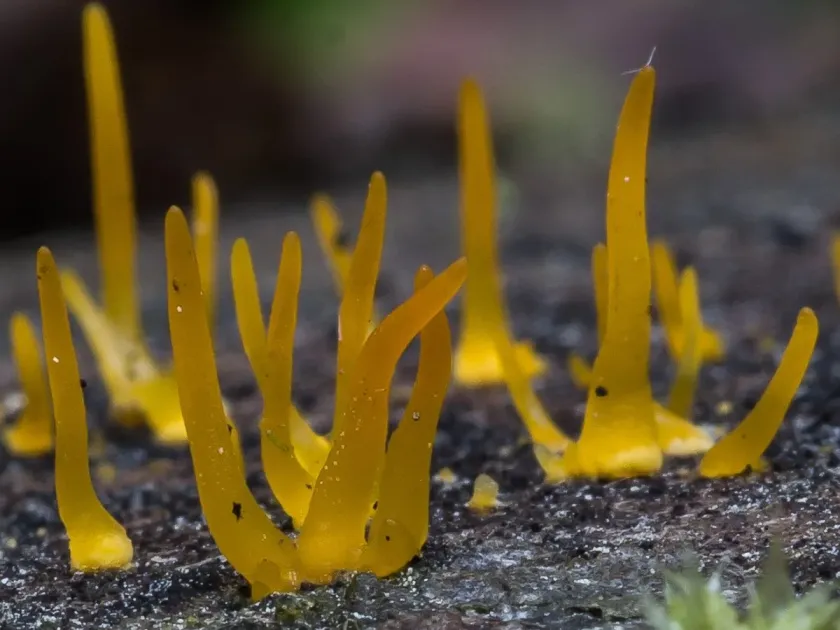
The most visible sign of Dacrymycetales infection is the appearance of vibrant, often yellow, orange, or reddish jelly-like fruiting bodies on the bark.
These fruiting bodies are typically small and can take the shape of cushions, discs, or horns clustered on wood surfaces.
In dry weather, these structures may shrink and become obscure, but they quickly regain their gelatinous, swollen form after rainfall.
Infected wood exhibits internal structural degradation, often characterized by the development of brown rot and increased brittleness.
Over time, deep cracks may appear along the grain of the wood, indicating advanced decay and weakening of the tree's internal tissues.
Pathogen
Dacrymycetales are basidiomycete fungi, commonly known as jelly fungi, which function primarily as wood-decay agents.
They are specialized in breaking down the complex lignocellulosic matrix of wood, utilizing extracellular enzymes for decomposition.
The fungi spread through the production of basidiospores, which are dispersed efficiently by wind and splashing water to colonize new substrates.
Upon entry, the mycelium penetrates deep into the sapwood and heartwood, gradually dismantling the structural integrity of the plant cells.
Although they often act as saprotrophs on dead wood, they frequently transition to opportunistic pathogens on stressed or injured living trees.
Conditions for development
High moisture levels are the most critical environmental requirement for the active growth and sporulation of Dacrymycetales fungi.
Persistent wet weather, high humidity, and temperate conditions provide the optimal environment for the fungi to thrive and colonize wood.
Trees with pre-existing mechanical wounds, frost cracks, or sunscald are highly susceptible to initial infection by these fungi.
Poor ventilation within dense tree canopies creates micro-climates where humidity remains high, favoring the proliferation of the pathogen.
The presence of decaying stumps, fallen logs, or untreated dead branches on a site provides a significant reservoir for fungal inoculum.
Why it matters
The primary damage caused by these fungi is the gradual but steady destruction of the wood's structural support tissues.
As decay progresses, the tree loses its mechanical strength, increasing the risk of branch breakage or trunk failure during adverse weather conditions.
Mycelial growth interferes with the tree's vascular system, hindering the transport of water and nutrients, which results in overall tree decline.
Infected trees exhibit reduced vitality, poor growth, and eventually, the dieback of major limbs, which can lead to the death of the entire plant.
The presence of Dacrymycetales on a tree indicates a compromised defense system, making the plant more vulnerable to secondary pest infestations.
Protection
Proactive management includes regular sanitary pruning to remove all dead, diseased, or damaged wood from the orchard or landscape.
All pruning cuts and accidental wounds should be promptly treated with appropriate wound dressings or fungicidal paints to create a protective barrier.
Implementing proper canopy management to ensure adequate airflow and sunlight penetration helps to keep surfaces dry and inhospitable to fungi.
Removing potential inoculum sources, such as piles of wood debris or rotting stumps, is essential to minimize the risk of spreading spores.
While chemical control with fungicides can be used on surfaces, preventive measures focused on tree vigor and wound care are far more effective.
Discussion
No discussions yet — be the first.