
Dacrymyces stillatus
Dacrymyces stillatus
Description
Symptoms
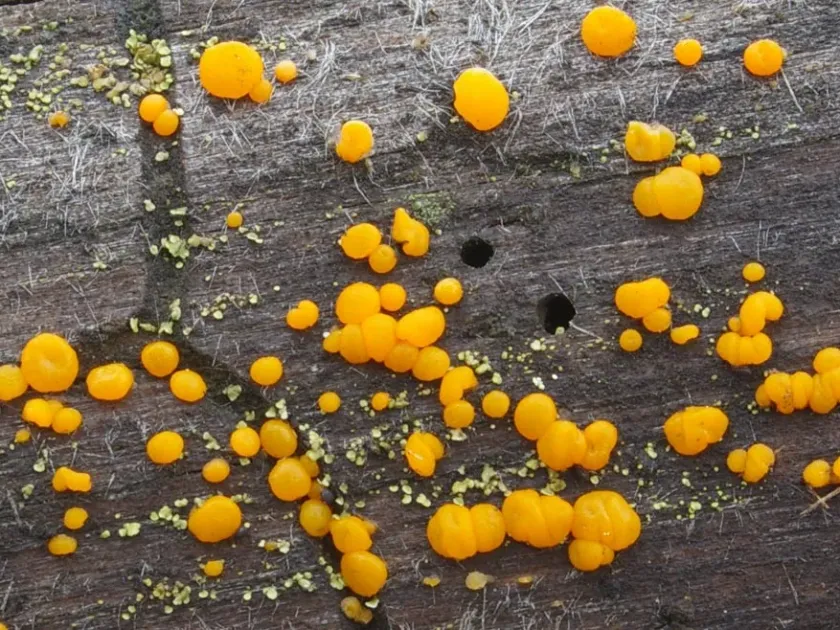
The most recognizable symptoms are the small, bright yellow to orange gelatinous fruiting bodies that appear on the surface of wood. They often resemble small droplets or splashes of jelly.
During dry weather, these fruiting bodies shrink significantly, hardening into inconspicuous reddish or brownish crusts that are easily overlooked by casual observers.
Affected wood displays signs of softening and structural degradation. As the decay progresses, the wood loses its tensile strength, turns brownish, and often cracks or crumbles into small, brittle segments.
Infection sites are typically found in fissures, bark wounds, or on cut ends of branches where water accumulation creates a favorable environment for the growth of the fungus.
Visually, the presence of these fungal colonies indicates that the wood has already started to decompose internally, which can compromise the integrity of the affected limb or trunk.
Pathogen
The pathogen Dacrymyces stillatus is a basidiomycete fungus belonging to the Dacrymycetaceae family. It is a common saprotrophic organism specialized in the decomposition of wood tissues.
The fungus produces a mycelium that permeates wood fibers, secreting enzymes that break down lignin and cellulose. This process is essential for its survival, allowing it to extract nutrients from decaying plant material.
Reproduction is achieved through spores that are dispersed by wind and rain splashes. These spores are highly resistant to environmental stress, ensuring the fungus can persist and colonize new surfaces.
Although typically found on deadwood, the fungus can opportunistically colonize living trees at points of injury, where protective bark is missing and moisture levels are elevated.
The life cycle of Dacrymyces stillatus includes the production of distinctive fruiting bodies, which serve as the primary indicator of its presence in wood-based ecosystems.
Conditions for development
Dacrymyces stillatus thrives in high-humidity environments. Constant moisture contact or exposure to frequent rainfall is necessary for the fungus to maintain its gelatinous state and active reproduction.
Temperatures ranging from +15°C to +25°C are optimal for vegetative growth. However, the fungus is highly adaptable and can survive in a wide variety of climatic zones, even those with significant temperature variations.
Poor aeration in dense plantings or wood storage areas prevents rapid drying, creating stagnant microclimates that encourage the rapid colonization and spread of fungal spores.
Mechanical damage to tree bark, such as pruning cuts or storm damage, provides a direct entry point for spores. If these wounds are not protected, they become ideal colonization sites.
The proximity of infected wood debris, such as old logs, stumps, or dead twigs, ensures a continuous supply of spores, keeping the infection pressure high in the surrounding environment.
Why it matters
The primary damage caused by Dacrymyces stillatus is the systematic destruction of wood structure, which can eventually lead to the loss of entire tree limbs or structural decay of the wood.
For live trees, the presence of this fungus signifies a compromise in the tree's health and can lead to increased limb breakage, which poses a safety risk in gardens or forested areas.
The fungus accelerates the decay process, making the wood more susceptible to further colonization by secondary pathogens, including aggressive species that might kill the remaining living tissue.
In terms of economic value, timber or ornamental wood colonized by this fungus loses its durability and aesthetic appeal, making it unfit for high-quality wood processing.
Significant infestations can lead to a decline in the tree's overall vitality, as the loss of functional wood tissue affects nutrient and water transport pathways.
Protection
Effective management begins with sanitation. Removing deadwood, stumps, and fallen branches is the most critical step to eliminate sources of fungal spores and prevent spread.
- Regularly inspect trees for signs of decay or moisture trapped in wounds.
- Perform pruning cuts correctly to promote rapid healing and prevent moisture accumulation.
- Sterilize pruning tools between cuts to avoid cross-contamination of healthy tissue.
- Apply protective wound dressings or antifungal treatments to large pruning cuts.
- Improve air circulation in dense canopy areas through thinning.
When fruiting bodies are discovered, they should be removed mechanically, and the surrounding wood should be cleaned down to healthy, intact tissue to prevent further mycelial spread.
For structural wood, applying antifungal wood preservatives is essential to prevent moisture absorption and inhibit the establishment of Dacrymyces stillatus colonies.
Maintaining high tree vigor through proper fertilization and watering helps the tree generate defensive responses, making it more resilient against opportunistic wood-decay fungi.
Discussion
No discussions yet — be the first.