
Dacrymycetes
Dacrymycetes
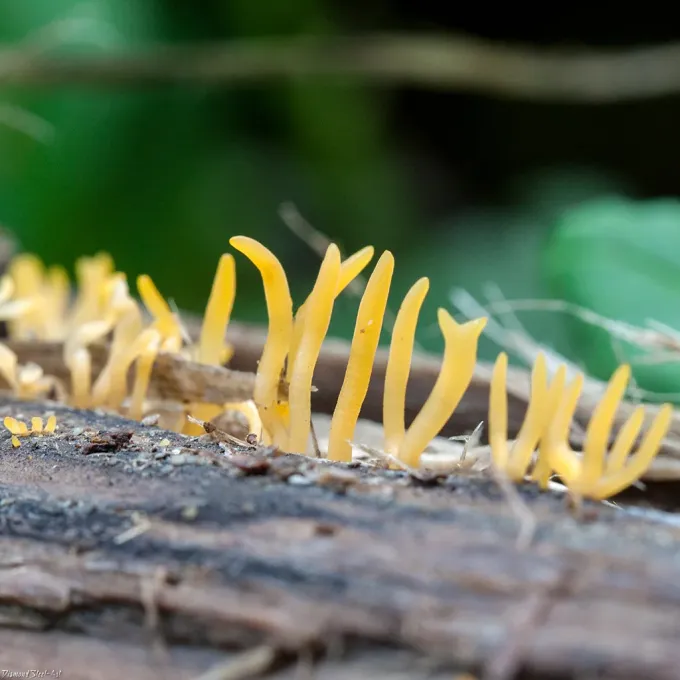
Description
Symptoms
The first visual sign of infestation is the appearance of bright fruiting bodies on the bark or wood, most commonly yellow, orange, or red. When dry, they often shrivel, becoming nearly invisible, but they swell again when moistened.
Wood in the affected area begins to change its structure and density. Characteristic discoloration appears, accompanied by fiber splitting, which makes the wood brittle and prone to mechanical breakage under the weight of the crown or during strong winds.
The inner part of the trunk may take on a brownish tint, indicating the development of brown rot. In the later stages, deep cracks filled with mycelium form within the wood.
Depressed spots are often visible on the surface of the affected bark, which eventually crack. The bark may peel off, exposing the destroyed wood, which is a critical signal of a loss of tree viability.
Visual monitoring should be carried out particularly carefully after periods of heavy rain, as this is when the fruiting bodies of Dacrymycetes become most visible to the naked eye.
Pathogen
Dacrymycetes is a class of basidiomycete fungi classified as wood-decay organisms. These are specific pathogens that cause the destruction of wood in forest ecosystems and landscape gardening.
Biologically, these fungi specialize in breaking down wood components such as cellulose and lignin. They are heterotrophs that absorb nutrients from dead or weakened tree tissues by secreting specific enzymes.
Unlike many phytopathogens that affect leaves or fruits, Dacrymycetes primarily act on the structural level of the tree trunk or branches. They form fruiting bodies that often have a characteristic gelatinous, waxy, or horn-like consistency.
The fungus life cycle includes the formation of basidia on which spores are produced. Once mature, the spores are dispersed by air currents, ensuring wide dissemination of the species far from the primary infection site.
These fungi are grouped as xylotrophs; their presence indicates a violation of the bark's integrity or physiological stress in the host plant, which opens a path for infection.
Conditions for development
The main factor promoting the development of these fungi is high environmental humidity. Dacrymycetes are extremely sensitive to moisture levels and prefer to grow on damp wood.
Bark damage is required for spore germination and active mycelial growth. Mechanical injuries, frost cracks, sunburn, or damage caused by pests serve as entry points for the infection.
The temperature optimum for most species in this class is in the moderate range. They most actively colonize weakened trees in dense plantings where air circulation is poor and humidity levels remain high.
A lack of sanitary maintenance in the garden, the presence of dead wood, and uncleared wood debris create a favorable base for the accumulation of fungal spore load in the soil and air.
Water stagnation in the crown or the root zone due to improper irrigation or terrain features significantly increases the risk of trees becoming infected with this pathogen.
Why it matters
Dacrymycetes cause progressive rot that leads to the gradual death of the plant's conductive tissues. As a result, the tree stops receiving necessary nutrition, leading to branch dieback and premature leaf drop.
Violation of the structural integrity of the wood poses a direct threat to safety. Affected areas become centers for breakage, which is especially dangerous for tall trees near buildings or walkways.
Infestation can significantly reduce the commercial quality of wood and the longevity of ornamental or fruit crops. The gradual spread of the fungus along the trunk can lead to the complete death of the plant within a few years.
A weakened tree becomes more vulnerable to secondary pests, such as bark beetles, which accelerates the process of tree destruction and complicates the management of the complex of problems.
The fungus is capable of existing for a long time as mycelium inside the wood, so even if external signs temporarily disappear, the internal destruction process continues covertly.
Protection
Effective protection begins with proper sanitary pruning. Affected branches must be removed in a timely manner, including healthy tissue, and must be disposed of away from the site.
Cut sites and any mechanical bark damage should be treated immediately with protective compounds: horticultural wax, lac-balsams, or copper-based fungicides to prevent spore penetration.
Maintaining tree health through proper fertilization and regular irrigation boosts plant immunity, making them less susceptible to fungal infections of any type.
In the event of a mass appearance of fruiting bodies, preventive spraying with broad-spectrum fungicides during dormancy or in early spring is recommended to reduce the infection background.
- Regular disinfection of garden tools.
- Timely cleaning of trunks from dead bark.
- Thinning of dense crowns.
Discussion
No discussions yet — be the first.